What does the UN high seas treaty mean for protecting the ocean? / Photo: PATRICK HERTZOG - AFP

 Hundreds arrested in French school protests as Macron summons ministers
 WADA seeks tough anti-doping stance from Kenya
 German ex-spy chief arrested for suspected espionage, treason

 Furyk vows US will 'do more' to end Ryder Cup losing streak

 Iyer hits ton as India hammer West Indies in T20 opener

 Mandhana named India women's team captain after Kaur quits

 'The sound keeps coming back': children maimed in Ethiopia's Tigray clashes

 Paris Women's Fashion Week: the key trends

 i-payout Introduces a New Approach to Payments, Closing the Beneficiary Information Gap

 New Generation of Crypto Miners Released by ASICID

 New investor forecasts LIV Golf teams could be worth $100 mn each
 Shakira, Pique return to court over children visit arrangements

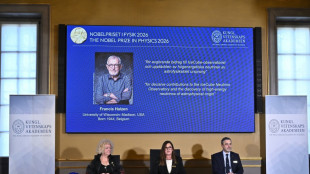 Nobel physics prize hails 'ghostly messengers' from space
 France's Mistral unveils latest model in sovereign AI push

 Stocks climb as oil prices retreat

 Vstock Transfer Names Securities Industry Veteran Erica Goodstein General Counsel and Chief Compliance Officer

 Four Indonesian seamen return home after Somali pirate ordeal

 Crisis-striken Haiti postpones elections

 Germany arrests ex-spy chief on suspicion of giving secrets to foreign powers

 Djokovic wins China Open after de Minaur retires
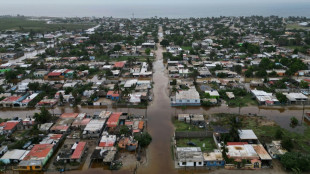
 IMF warns cost-of-living shocks cause 'lasting deterioration' in affordability

 Alcaraz wins Japan Open for first title since injury return

 'We're working to keep football clean', Turkish minister says

 FIFA chief Infantino hit by Norwegian double complaint

 Exiled Catalan separatist leader Puigdemont cleared to return to Spain
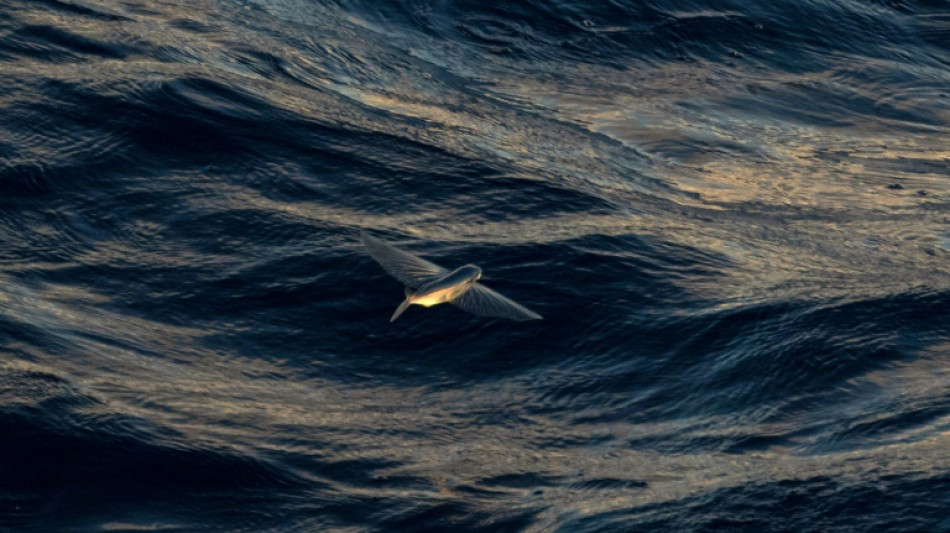
The world's first international treaty to protect the high seas, adopted by the United Nations on Monday, contains landmark tools for the conservation and management of international waters.
International waters -- outside the jurisdiction of any single state -- cover more than 60 percent of the world's oceans.
Ocean ecosystems create half the oxygen humans breathe and limit global warming by absorbing much of the carbon dioxide emitted by human activities.
The UN treaty, which will open for signatures on September 20, will go into force 120 days after 60 countries have ratified it.
Here are the key points of the text approved in March.
- Ocean under threat -
The treaty begins by recognizing "the need to address, in a coherent and cooperative manner, biodiversity loss and degradation of ecosystems of the ocean."
These impacts include the warming of ocean waters along with their loss of oxygen, acidification, mounting plastics and other pollutants, as well as overfishing.
The text specifies that it will apply to waters beyond countries' exclusive economic zones, which extend to a maximum of 200 nautical miles from the coasts.
It also covers what is known as "the Area", shorthand for seabed and subsoil beyond the limits of national jurisdiction. The Area comprises just over half of the planet's seabed.
The Conference of the Parties (COP) will have to navigate the authority of other regional and global organizations.
Chief among these are regional fisheries bodies and the International Seabed Authority, which oversees permits for deep-sea mining exploration in some areas and may soon make the controversial move of allowing companies to mine beyond current test runs.
- Marine protected areas -
Currently, almost all protected marine areas (MPAs) are within national territorial waters.
The treaty, however, allows for these reserves to be created in the open ocean.
Most decisions would be taken by a consensus of the COP, but an MPA can be voted into existence with a three-quarters majority, to prevent deadlock caused by a single country.
One crucial shortcoming: the text does not say how these conservation measures will be monitored and enforced over remote swathes of the ocean -- a task that will fall to the COP.
Some experts say satellites could be used to spot infractions.
Individual countries are already responsible for certain activities on the high seas that they have jurisdiction over, such as those of ships flying their flags.
- Sharing the bounty? -
On the high seas, countries and entities under their jurisdiction will be allowed to collect animal, plant, or microbial matter whose genetic material might prove useful, even commercially.
Scientists, for example, have discovered molecules with the potential to treat cancer or other diseases in microbes scooped up in sediment, or produced by sponges or marine mollusks.
Benefits-sharing of those resources has been a key point of contention between wealthy and poorer nations.
The treaty establishes frameworks for the transfer of marine research technologies to developing countries and a strengthening of their research capacities, as well as open access to data.
But it's left to the COP to decide exactly how any monetary benefits will eventually be shared, with options including a system based on specific commercialized products, or more generalized payment systems.
- Environmental impact studies -
The treaty requires signatories to assess the environmental impacts of planned activities under their control on the high seas before they are authorized in instances when such activities may have more than a minor or transitory effect.
It also calls for countries to assess the potential impact on international waters of activities within national jurisdictions that may cause "substantial pollution" or harm the high sea marine environment.
Ultimately, states are responsible for giving the green light to any potentially harmful activity -- a role NGOs hoped would go to the COP, to make controversial approvals more difficult.
The treaty also requires states to publish updates on an activity's environmental impacts. Approvals can be called into question if unanticipated impacts arise.
Though they are not specifically listed in the treaty, activities that could come under regulation include transport and fishing, as well as more controversial subjects such as deep-sea mining or even geo-engineering initiatives to mitigate global warming.
D.Johnson--AT