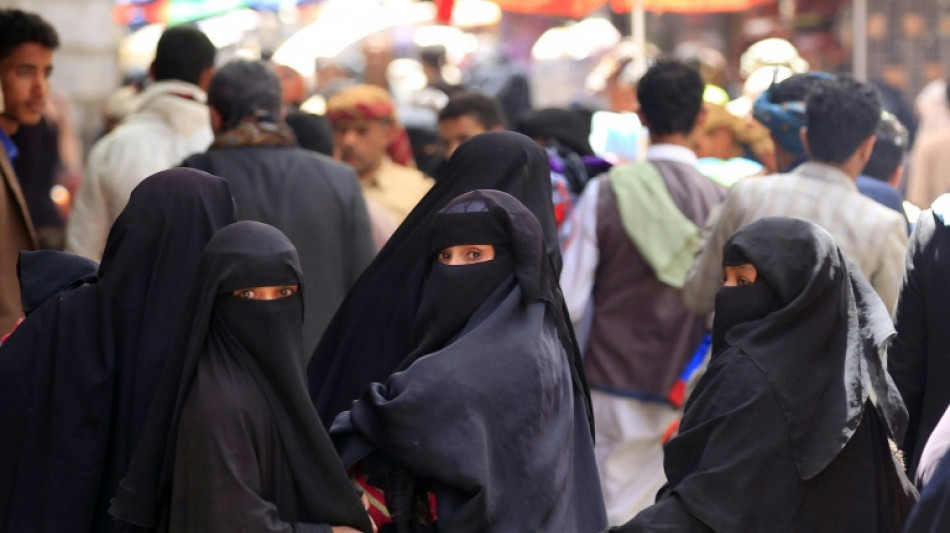
Repression of women on rise in rebel-held Yemen

 Govt takes control of Turkey's most-watched news channel

 FIFA to offer members $6.35-billion development fund windfall

 US consumer inflation hotter than expected as midterms loom

 INmune Bio Inc. and Quantum Computing Inc. Partner to Apply Quantum Optimization and AI to Advance Alzheimer’s Drug Research and Explore New Applications for XPro

 Hot US inflation data dents Wall Street stocks

 India sends 'cockroach' leaders to jail after protest

 'Sinners' director Ryan Coogler to reboot 'X-Files' for Disney
 Lufthansa wins contest for TAP Air Portugal stake

 AI worms, 'major' incident fears spur safety calls at industry summit
 Fuel shortage triggers queues on Indonesia's Bali island

 Evolution Metals & Technologies Corp. Reaffirms $400 Million to $460 Million FY2027 Revenue Guidance, Unveils Eight Sintered Magnet Grades Covering an Estimated 75% of Global NdFeB Revenue, and Moves to Answer U.S. Army Call for Rare Earth Magnets

 Trial defence says Russia used Nord Stream pipelines as 'weapon'

 Israeli settlers set fire to mosque in occupied West Bank

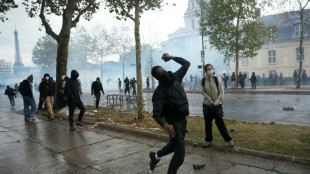 Macron says French student protesters 'exploited' by political forces: spokeswoman

 Stocks diverge ahead of key US inflation data
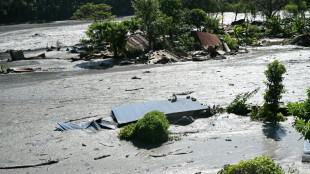
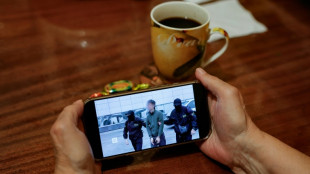 Japan summons Russian ambassador to protest journalist's arrest

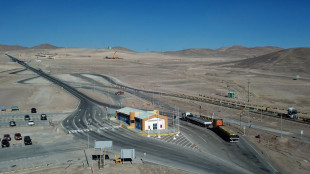 Workers to strike at world's largest copper mine in Chile

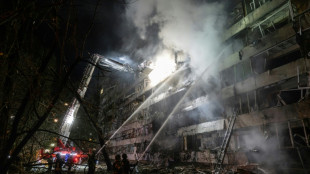 Ukraine accuses US of helping Russia as missiles hit Kyiv

 Drone hits data centre of Russia's largest bank

 Bivial AG Brings Its Complete Dashboard to Mobile
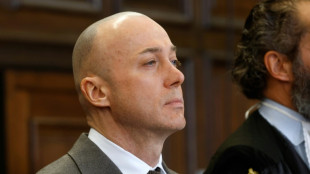
 Mont Blanc nearly two metres taller than in 2023: French surveyors

 Pope recovering after lung cancer operation that rattles Church
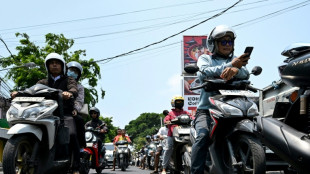
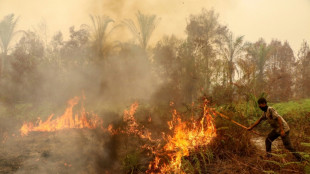 Indonesia haze spikes Singapore pollution, shuts East Timor schools
 Higher borrowing costs an 'alarm signal' for France: finance minister

 Zelensky accuses Putin of disrespecting Trump after latest attacks

Her voice shaking, 26-year-old Balqees recounts her ordeal at a Huthi rebel checkpoint in northern Yemen, where experts say repression of women is rampant after years of civil war.
"There is no limit to their shame," she said, asking to use a pseudonym for fear of reprisal.
The Huthis, from the Zaidi Shiite sect of Islam, whose traditional stronghold is Yemen's mountainous north, control the capital Sanaa as well as swathes of the country.
Yemen has long been a deeply conservative society, but the Iran-backed Huthis are enforcing their austere brand of Islam with an iron fist, witnesses say.
It is rare for women to speak out, but Balqees described how a Huthi official stopped her at a checkpoint leaving Sanaa when travelling by bus with female friends.
All were aged over 20 but Balqees said he referred to them as "minors".
"He was asking us questions and yelling," she said. "He accused us of violating public morality."
Balqees said they were dressed in modest clothes, but not the plain black flowing robes and face veil women have traditionally worn in Sanaa for decades, and which the Huthis prefer.
"He had a problem with the way we were dressed," she said, complaining their clothes were too colourful.
Violations of women's rights in Huthi-controlled areas grew "more acute" last year, according to Yemeni non-governmental organisation Mwatana for Human Rights.
The clampdown on freedoms includes prohibiting the use of contraception and restricting women's right to work, it said.
"The situation is bad for women all over the country, but it is worse in the areas under Huthi control," Mwatana's Noria Sultan told AFP.
- 'Imprison and humiliate' -
One resident in Sanaa, also speaking on condition of anonymity, said rebels used the smallest apparent infringement of their rules as an excuse to "beat, imprison and humiliate women".
In Balqees's case, rebel officials also objected to the women travelling without a male guardian -- which although not law in Yemen, is demanded by Huthi forces. "It used to be normal for women to travel," she said.
When Balqees said she planned to cross the front lines to travel to the government-controlled southern port of Aden, things turned worse.
"He said, 'God willing, you'll be going to hell'," she said.
Huthi forces seized their identification papers and ordered them back to Sanaa.
"I felt like I was being interrogated like a criminal," she said, adding the soldiers were staring and leering at them in an unpleasant manner.
"If there were proper institutions, we could have insisted on our rights, but there's no one to complain to," she added. "It's humiliating."
Yemen's grinding civil war, which erupted in 2014 after the Huthis captured Sanaa, pits the rebels against the internationally recognised government, which is supported by a Saudi-led military coalition.
Hundreds of thousands of people have died as a direct or indirect consequence, and millions have been displaced, triggering what the United Nations calls the world's worst humanitarian crisis.
The Huthi authorities declined to respond to AFP requests for comment.
B.Torres--AT