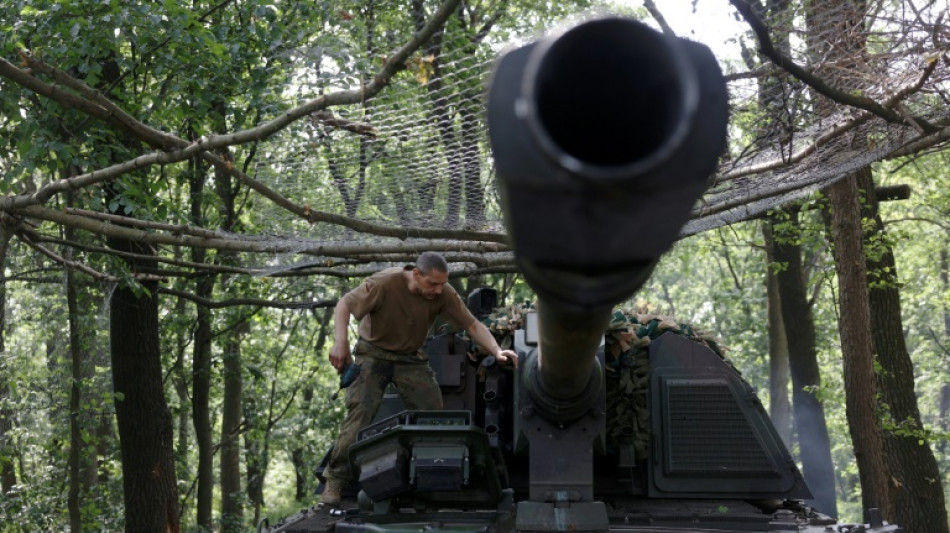
Ukraine's long battle for Bakhmut takes toll on German gun / Photo: Anatolii Stepanov - AFP

 All Blacks make five changes for Italy Nations Championship clash

 Western Europe records its hottest June as heatwaves surge: EU monitor
 Fashion's mystery man Margiela sells off his archives
 Nuclear test-scarred Marshall Islands criticises China missile

 Chip titan SK hynix to set price for mega US listing

 Crude extends rally as US-Iran flare-up rocks peace hopes

 Democrat accused of rape exits key US Senate race
 Japan student Ito keeps place against Ireland as Jones returns

 Belgium bid to crack Spain's ironclad defence in World Cup quarter-final

 US man sentenced after swapping 17th century manuscript
 US launches new strikes on Iran after Trump vows to hit 'hard'

 Taylor Swift fans pay $25 for garbage from outside wedding

 After quakes, Venezuelans fear losing damaged homes

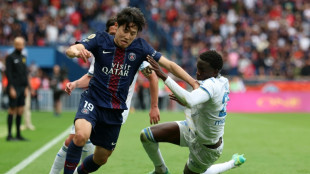 PSG's Lee set to join Athletico

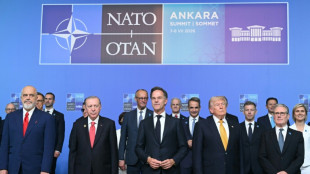 Erdogan gave pistols to NATO leaders, Starmer says

 Nocera Expands Diversified Technology Strategy With Binding Agreement to Acquire an Equity Interest in INERGX, an Integrated Energy Storage and Power Platform for AI, Defense and Mission-Critical Demand
 China sends nuclear missile message as US looks elsewhere

 Justin Bieber added to 11-minute World Cup final halftime show

 Fery targets Wimbledon final birthday present after royal seal of approval

 Egypt file complaint against referee after World Cup exit

 Women's semi-finalists in uncharted territory at Wimbledon
 US man jailed after swapping 17th century manuscript

 UN maritime head urges halt to Hormuz transit to protect seafarers

 Trump skips new Air Force One on return from Turkey NATO summit
 New York building that buckled now 'stable,' says mayor
The fighting around the eastern Ukrainian city of Bakhmut has been going on so long that even recently delivered Western weapons like the German Pzh2000 howitzer are showing wear and tear.
The city fell to Russian forces in May after an eight-month struggle that saw heavy casualties on both sides, especially among Moscow's Wagner mercenary force leading the assault.
But the fight did not end there.
With Bakhmut itself in Russian hands, Ukrainian units quickly changed tack, pressing forward on the northern and southern approaches to the town.
While elsewhere in Ukraine newly trained brigades equipped with NATO-supplied tanks prepared a broader counteroffensive, outside Bakhmut older, tired but battle-hardened units fought on.
Assault infantry brigades are now making slow but steady progress in the woods and fields around the city, backed by heavy artillery targeting Russian trenches and positions.
The 43rd Artillery Brigade is armed with the German-built Panzerhaubitze 2000, a self-propelled howitzer that looks like an outsized tank with a huge 155 mm gun.
Donated to Ukraine last year by Kyiv's western European allies, it has proved to fire more accurately at longer ranges than the country's previous Soviet-designed guns.
But fewer than 30 Pzh2000s have been delivered so far, and Ukraine's gunners have kept up a far higher rate of fire than the German engineers had bargained for.
Units like the gunnery team led by a young officer using the call sign "Pravda" have already set one howitzer back for servicing, and mechanics have to work hard to keep its replacement running.
The turret of the gun is pock-marked with shrapnel from a Russian shell that exploded among tree branches overhead, and the complex automatic loading system needs constant maintenance.
Like soldiers everywhere, Pravda's team -- many of them trained in Germany -- grumble about their kit, arguing it was designed for German roads, not Ukraine's muddy forests.
The group has had 10 days' leave each during more than a year of fighting -- and of living in the trenches and bunkers they had to dig themselves.
"The quicker this ends the quicker we can go home. We will kick out the occupiers and go home, what else can we do?" said Pravda.
"I want to walk on paved roads again, but I might have forgotten how," he joked.
- Shovel therapy -
Another member of the platoon, who has had the same call sign Krasavchik, or "Dreamboat", since 2015, seeks solace in even less exotic comforts.
"Don't touch that shovel," he shouts at a visitor to the position. "That shovel is like therapy. You forget yourself when you're shovelling."
But despite their fatigue, they squeeze effective service out of the gun.
Living in bunkers dug into the forest floor, shielded by earth and camouflage netting from the eyes of Russian drones, the men receive coordinates from command.
Quickly, they fire up the 1,000-horsepower motor of the Pzh2000 and roll out from under tree cover into a meadow -- distancing their firing position from the vulnerable hide-out.
The enormous barrel is raised, and four sharp bangs echo around the hills.
The fire team does not always know what their target is, just some coordinates sent to a phone -- but sometimes military intelligence sends them drone pictures of the aftermath.
On a cracked smartphone screen, Pravda showed AFP reporters a grainy image of a cratered Russian position with at least one dead soldier in it.
G.P.Martin--AT