No safe corridor, just a plank for those fleeing to Kyiv

 Lufthansa wins contest for TAP Air Portugal stake

 AI worms, 'major' incident fears spur safety calls at industry summit
 Fuel shortage triggers queues on Indonesia's Bali island

 Evolution Metals & Technologies Corp. Reaffirms $400 Million to $460 Million FY2027 Revenue Guidance, Unveils Eight Sintered Magnet Grades Covering an Estimated 75% of Global NdFeB Revenue, and Moves to Answer U.S. Army Call for Rare Earth Magnets

 Trial defence says Russia used Nord Stream pipelines as 'weapon'

 Israeli settlers set fire to mosque in occupied West Bank

 Macron says French student protesters 'exploited' by political forces: spokeswoman

 Stocks diverge ahead of key US inflation data
 Japan summons Russian ambassador to protest journalist's arrest

 Workers to strike at world's largest copper mine in Chile
 Ukraine accuses US of helping Russia as missiles hit Kyiv

 Drone hits data centre of Russia's largest bank

 Bivial AG Brings Its Complete Dashboard to Mobile

 Mont Blanc nearly two metres taller than in 2023: French surveyors

 Pope recovering after lung cancer operation that rattles Church
 Indonesia haze spikes Singapore pollution, shuts East Timor schools

 Higher borrowing costs an 'alarm signal' for France: finance minister
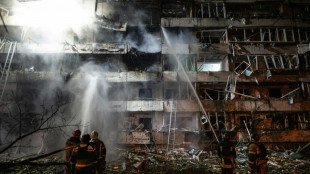 Zelensky accuses Putin of disrespecting Trump after latest attacks

 Japan PM says housework makes her busier than male predecessors

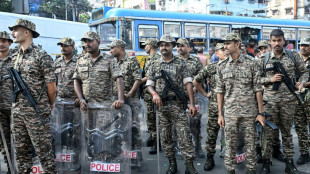 Top Indian 'cockroach' leaders sent to jail after protest

 Ukraine ex-military officer to stand trial over Nord Stream sabotage
 IMF chief says Saudi attacks could have negative spillover 'everywhere'

 Premier League move a Sage decision for new Palace boss

 South Korean FA condemns 'personal attacks' as rift rumours grow

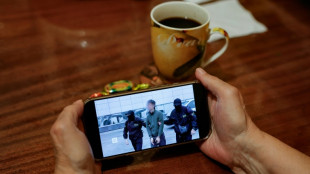 Japan urges 'impartial treatment' of journalist arrested in Russia

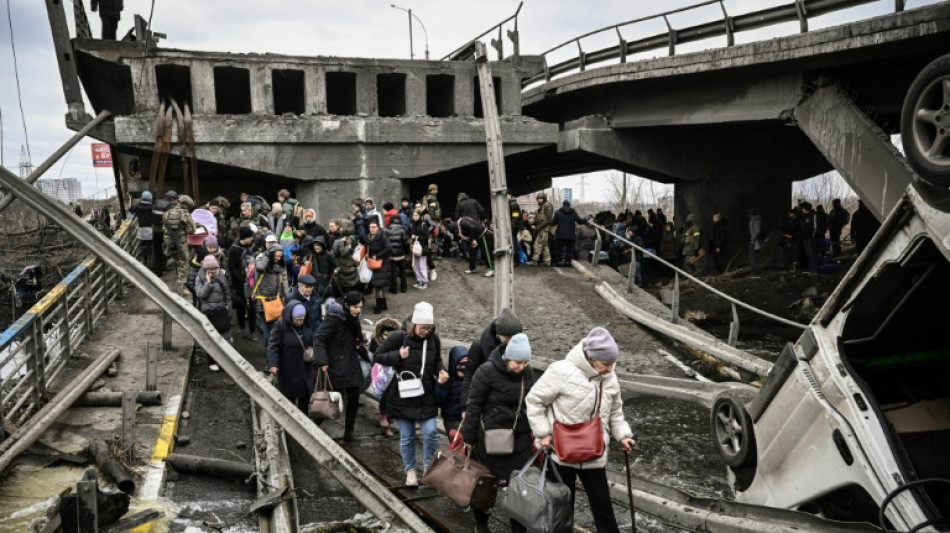
The rickety plank is barely 50 centimetres wide and half submerged in icy water, but already 10,000 people have used it to cross a river and flee Russian bombardment.
Moving ever closer behind the citizens of Irpin come Russian tanks and guns, and ahead of them -- over this last crowded obstacle -- lies the road into Kyiv, still in Ukrainian hands.
The huge concrete bridge dominating the scene has already been demolished by Ukrainian forces to slow the Russian advance, but terrified civilians still pour over the plank.
On Monday, the Russian army declared it would hold a ceasefire to allow civilians to flee some of the cities its invasion force is targeting -- but Ukraine rejected the idea.
In any case, the citizens of Irpin are trying to get into the Ukrainian capital for safety, not to follow Moscow-approved escape routes north into Belarus or Russia.
At the weekend, several of those fleeing were killed at the bridge by shells fired from the Russian side, but still more civilians make the perilous trip.
Everything and everyone goes over the plank: women, babies, dogs, push chairs, wheeled suitcases, bikes, the wounded and even corpses rolled in carpets.
"A friend brought us here in a car as far as the bridge and we crossed. He hid his car and left on foot," explained 51-year-old Tetyana as she arrived on the Kyiv bank.
"There was firing on all sides when we were on the road, but we got across," she said, strangely calm as she dragged her wheeled case. "I was frightened."
"I told myself that if I was killed on the spot, so be it, but if I'm wounded, I'll have to crawl, and that's no good at all."
The danger is not over yet. First, she has to pass an exposed crossroads where on Sunday AFP saw two corpses of civilians killed. Local authorities gave the total toll at eight dead, including two children.
At this stage of the journey now, the escape route is strewn with abandoned push chairs, shopping trolleys, luggage and confused pets.
- Life or death -
Some of the wreckage is still smoking after recent shell impacts, but once past it, Vasyl Povoroznyuk is waiting with a white van to lend a hand.
The 49-year-old military chaplain has volunteered to shuttle refugees from the exposed frontline two kilometres (1.2 miles) to a safer area where ambulances and paramedics await the wounded.
"I feel neither fear nor panic," he insists, despite racing the route at speeds of up to 100 kilometres per hour (60 mph).
"They need help. If we don't, who will. It's a matter of life and death, the more we can save the better," he says, under his khaki beanie.
"Children first!" Vasyl yells at the group of 30 evacuees waiting for him, queueing in disconcerting calm, as if at the post office.
"Come on little hero," he says to a little boy running with a plastic sword, slipping him a chocolate bar.
Before boarding the van, little Ania, no more than five years old, is separated from her father, who has gone to look for other members of the family.
"Stay!" she pleads, clinging to her mother as a menacing whoosh echoes from the forest.
The explosion makes the heart miss a beat.
- 'Bring the buses!' -
"Just a boom, it's us. A whistle then a boom, that's their artillery," explains Vasyl.
Despite the shelling, evacuees are arriving by the hundreds and some are in very poor condition. An elderly woman is carried on a carpet by six soldiers.
"We're bringing the school buses!" a policeman barks into his walkie-talkie.
In a few minutes, the yellow buses are there as well as the mayor of Irpin, Oleksandr Markushyn, who is organising this unofficial "humanitarian corridor" as best he can, uncoordinated with enemy forces.
"Here nobody talked about a 'green corridor', I think because Irpin is in the middle of a battle and has no intention of surrendering," the young mayor says.
He jumps from bus to bus with a Kalashnikov in hand and a helmet on his head, trying his best to reassure his people.
Already 10,000 people have left the dormitory suburbs with the high towers now collapsed for five days.
"There are still 10,000 to evacuate, probably in two or three days," estimates the mayor, before adding, "and as many who refuse to leave".
R.Garcia--AT