Lacking other options, UN Security Council takes watchdog role in Ukraine war

 Lufthansa wins contest for TAP Air Portugal stake
 AI worms, 'major' incident fears spur safety calls at industry summit
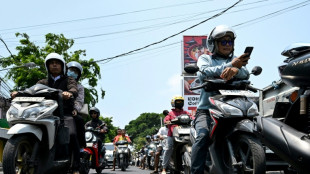
 Fuel shortage triggers queues on Indonesia's Bali island
 Evolution Metals & Technologies Corp. Reaffirms $400 Million to $460 Million FY2027 Revenue Guidance, Unveils Eight Sintered Magnet Grades Covering an Estimated 75% of Global NdFeB Revenue, and Moves to Answer U.S. Army Call for Rare Earth Magnets

 Trial defence says Russia used Nord Stream pipelines as 'weapon'
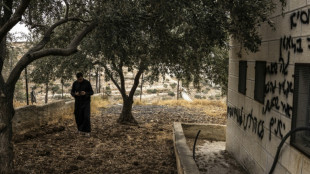 Israeli settlers set fire to mosque in occupied West Bank
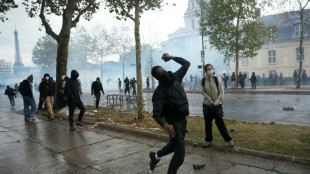 Macron says French student protesters 'exploited' by political forces: spokeswoman
 Stocks diverge ahead of key US inflation data
 Japan summons Russian ambassador to protest journalist's arrest

 Workers to strike at world's largest copper mine in Chile
 Ukraine accuses US of helping Russia as missiles hit Kyiv
 Drone hits data centre of Russia's largest bank
 Bivial AG Brings Its Complete Dashboard to Mobile
 Mont Blanc nearly two metres taller than in 2023: French surveyors
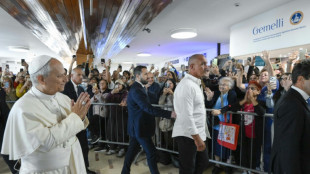 Pope recovering after lung cancer operation that rattles Church
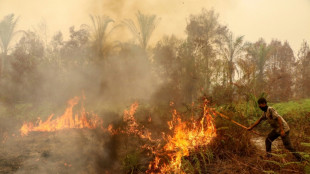 Indonesia haze spikes Singapore pollution, shuts East Timor schools
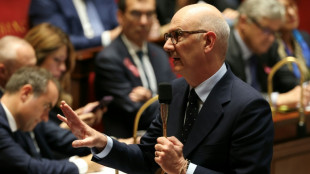 Higher borrowing costs an 'alarm signal' for France: finance minister
 Zelensky accuses Putin of disrespecting Trump after latest attacks

 Japan PM says housework makes her busier than male predecessors
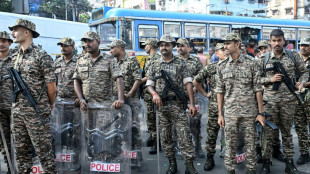 Top Indian 'cockroach' leaders sent to jail after protest
 Ukraine ex-military officer to stand trial over Nord Stream sabotage
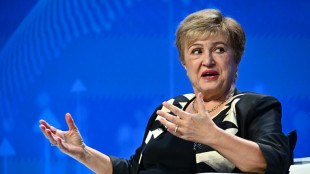 IMF chief says Saudi attacks could have negative spillover 'everywhere'
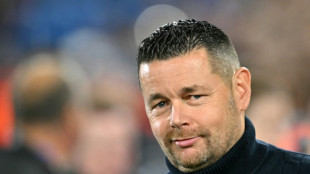 Premier League move a Sage decision for new Palace boss
 South Korean FA condemns 'personal attacks' as rift rumours grow
 Japan urges 'impartial treatment' of journalist arrested in Russia
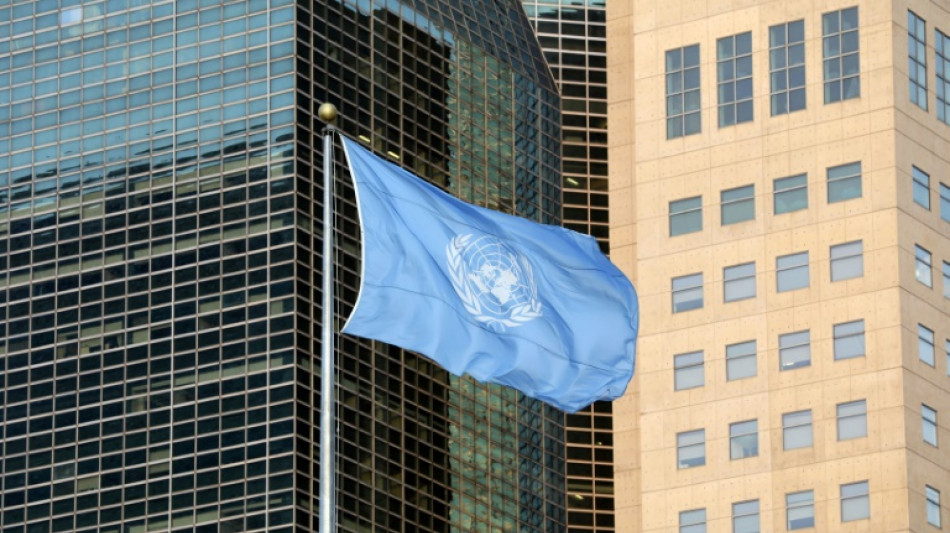
Unable to assure global peace, the UN Security Council is consigned to a watchdog role in the Russia-Ukraine conflict, with little else to do but set more urgent sessions this week on the crisis.
After five meetings since Russia's invasion of its eastern European neighbor on February 24, the 15-member council will gather again on Monday for two sessions on humanitarian aid -- one public and one behind closed doors.
"Exposing the situation in the Security Council, even if you know that the outcome is going to be stopped through a veto, is still worthwhile," said the European Union's ambassador to the UN, Olof Skoog.
"Pressure" is the aim, several council members told AFP, with representatives even vying to call for sessions. The United States and Albania joined together to convene the first meeting on the conflict, while France and Mexico are pushing for a resolution, though its future is unclear.
With its veto power, Russia -- one of the five permanent members of the council that also includes 10 other members elected for two years -- has the power to block any declaration or resolution.
As the founding document of the organization established after World War II, the UN Charter cannot oust one of the five permanent members even if the state violates the body's fundamental principle of not resorting to violence to resolve a crisis -- as Russia stands accused of doing.
However, the charter does provide for cases in which the Security Council can take action.
Article 27 stipulates that a council member can abstain from voting when it is party to a conflict on which there is a vote. In practice, this doesn't always happen.
Russia has never abstained from a vote on Syria -- deploying its veto some 15 times in 10 years -- nor has the United States or Britain on Iraq, France on Mali or the United Arab Emirates over Yemen.
"There has not been any real appetite to go after" Article 27, said a Western ambassador on condition of anonymity.
- 'Privilege' of permanence -
A spokesperson for British Prime Minister Boris Johnson recently said that expelling Russia from the Security Council figures among the "options."
But in reality, "no," it's not on the table, said another diplomat, also speaking on condition of anonymity.
Article 6 of the UN Charter says if a member "has persistently violated the Principles" of the document, it "may be expelled from the Organization by the General Assembly upon recommendation of the Security Council."
Therein lies the issue: veto-wielding Russia will never recommend its own expulsion to the 193-member General Assembly.
Such an attempt has only been made once in the history of the global body, in 1974, when several countries urged the Security Council to exclude South Africa, according to SC Procedure, a specialized news outlet.
The resolution received 10 votes in favor, but France, Britain and the United States vetoed, it added.
The permanent members, which also include China, sometimes "have each other's back," the Western ambassador said.
"They don't agree with all substance always, but they do agree that the privilege is something that sets them a little bit above the rest of us."
Under the impetus of the EU, the General Assembly -- where there are no vetoes -- had looked to succeed where the Security Council failed by adopting a resolution condemning Russia on March 2.
A record 141 countries from across every continent approved the non-binding text, with just five in opposition: Russia, Belarus, Eritrea, Syria and North Korea.
Beyond the council and the assembly, the UN has deployed other wings to try to help mitigate the fallout of the war.
The UN humanitarian affairs agency OCHA, the refugees body UNHCR and the World Food Programme have stepped up responses to the crisis, while the Human Rights Council recently backed the creation of an international commission of inquiry into abuses in Ukraine.
UN chief Antonio Guterres, who has long denounced the "dysfunction" of global governance, is working behind the scenes but to little avail so far, having offered mediation to Russia, which rebuffed any idea of the secretary-general going to Moscow, according to an official.
Ch.Campbell--AT