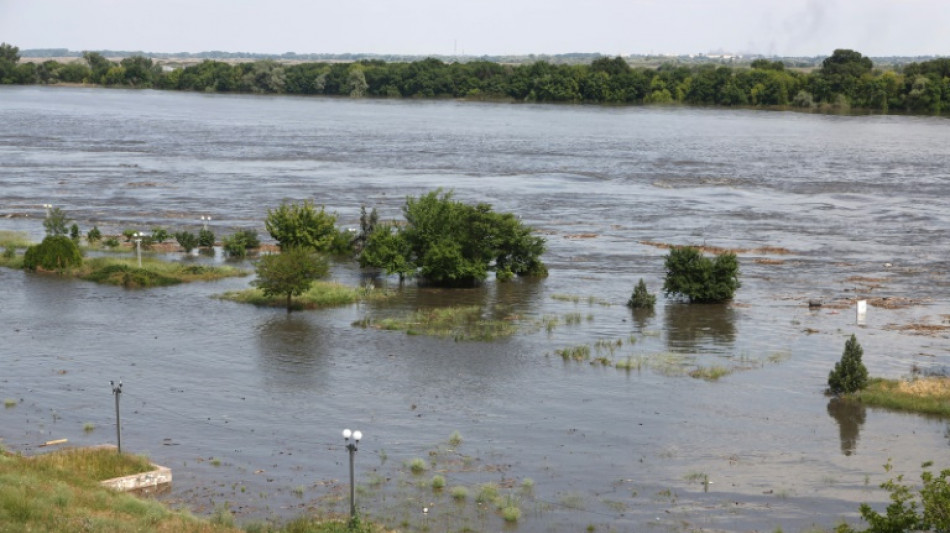
Destroyed dam likely to hinder Ukraine before Russia / Photo: STRINGER - AFP

 'Champion' Daryz wins second successive Arc in fine style

 Daryz wins second successive Prix de l'Arc de Triomphe

 England's seven-goal spree sends message to Euro rivals: Kane

 Trump confirms national intelligence chief as new AI czar

 Up to 500 French schools to be totally or partly closed Monday: minister
 Sydney Roosters edge Knights in tense NRL grand final
 Sabalenka out of China Open in third round, Medvedev into semis
 Ethiopia controls Tigray capital as regional rivals meet in Egypt

 Ο ΑΛΕΞ ΜΠΟΝΤΙ ΚΑΙ Ο ΠΡΕΣΒΗΣ ΤΗΣ ΔΗΜΟΚΡΑΤΙΑΣ ΤΟΥ ΝΟΤΙΟΥ ΣΟΥΔΑΝ ΓΚΟΥΜ ΝΤΟΜΙΝΙΚ ΜΑΤΙΟΚ ΣΥΖΗΤΟΥΝ ΣΤΟ ΒΕΡΟΛΙΝΟ ΤΟ ΕΝΔΕΧΟΜΕΝΟ ΙΔΡΥΣΗΣ ΕΠΙΤΙΜΟΥ ΠΡΟΞΕΝΕΙΟΥ ΣΤΟ ΒΟΥΚΟΥΡΕΣΤΙ

 Asian Games close in Japan after records, rancour and rain

 Pro-Europe Latvian PM wins poll dominated by Russia, social worries

 ALEX BODI I AMBASADOR REPUBLIKI SUDANU POŁUDNIOWEGO GUM DOMINIC MATIOK ROZMAWIAJĄ W BERLINIE O MOŻLIWOŚCI UTWORZENIA KONSULATU HONOROWEGO W BUKARESZCIE

 Iran tells US there is no military solution to Middle East war

 ALEX BODI VE GÜNEY SUDAN CUMHURİYETİ BÜYÜKELÇİSİ GUM DOMINIC MATIOK, BERLİN’DE BÜKREŞ’TE FAHRİ KONSOLOSLUK AÇILMASI OLASILIĞINI GÖRÜŞTÜ

 Future of French far-right star in balance after antisemitism claims

 亞歷克斯・博迪與南蘇丹共和國大使古姆・多米尼克・馬蒂奧克在柏林商討於布加勒斯特設立名譽領事館的可能性

 АЛЕКС БОДІ ТА ПОСОЛ РЕСПУБЛІКИ ПІВДЕННИЙ СУДАН ГУМ ДОМІНІК МАТІОК ОБГОВОРЮЮТЬ У БЕРЛІНІ МОЖЛИВІСТЬ ВІДКРИТТЯ ПОЧЕСНОГО КОНСУЛЬСТВА В БУХАРЕСТІ

 Germany's Merz in Kyiv for talks with Zelensky

 Asian Games set to close after records, rancour and rain

 Cry for help as French-Swiss lake dries up

 Sabalenka swept out of China Open in third round

 US urges 'restraint' as Ethiopia's Tigray crisis rocks region

 Teens on target again as USA down Mexico 3-0

 World records prove Asian Games were a hit, says top official

 US prison chief who oversaw botched execution resigns
The gaping hole blasted into a key hydroelectric dam in southern Ukraine on Tuesday will severely impede Kyiv's efforts to reconquer territory lost to Russia, even if Moscow risks seeing its defensive lines submerged.
Moscow and Kyiv traded blame for the damage to the Kakhovka dam, which is designed to supply water to the Crimean Peninsula, annexed by Moscow in 2014, which could now be facing serious water supply problems.
But Western observers believe the sabotage is a Russian attempt to harm Kyiv in the short term, just as Ukraine prepares to launch a counteroffensive to regain areas in the east.
Kyiv shares the same view, having accused Russia of having "blown up" the dam in order to "slow down" its operation.
Floods have already forced thousands to evacuate and risks interrupting ongoing Ukrainian military operations.
The rising water in the Kherson region will make it very difficult for Ukraine forces to carry out any operation involving crossing the river to reclaim the eastern bank, in the direction of Crimea.
"Following the logic of cui bono [who benefits], Russia would be the obvious culprit, since by causing floods downstream of Nova Kakhovka, the Russians would complicate Ukraine's efforts to cross, winning time, which would allow them to focus on other sections of the front," said Sergey Radchenko, a history professor at Johns Hopkins School of Advanced International Studies, in a Twitter post.
"I can't see anything near beneficial to Ukraine in this case. More destroyed infrastructure, more downed electricity production facilities, more suffering for Ukrainian civilians, a limitation of Ukrainian offensive and logistics options," said Stephane Audrand, an independent consultant on international risks.
- Floods as a weapon of war -
The risk of strikes on the strategic Kakhovka facility, located in the Russian-occupied areas of the Kherson region, has been brandished since October by both Ukrainians and Russians.
Ukraine President Volodymyr Zelensky accused Moscow of having "undermined the dam", one of the largest in Ukraine. Russian authorities retorted: "lies".
Destruction of this magnitude, likely to cause considerable harm to civilians, is considered a war crime under the 1949 Additional Protocols to the Geneva Convention.
"Dams, dykes and nuclear electrical generating stations, shall not be made the object of attack, even where these objects are military objectives, if such attack may cause the release of dangerous forces and consequent severe losses among the civilian population," according to Article 56.
Contemporary history offers many examples of the destruction of dams and floods in Europe for defensive and offensive purposes.
In 1941, the Soviet Union blew up a huge dam in Ukraine's Zaporizhzhia to slow the German advance.
In May 1943, the British Royal Air Force bombed German dams in the Ruhr valley, the country's industrial heartland.
Carried out by the RAF squadron 617 -- which earned the nickname "Dambusters" -- this operation destroyed two of three dams and damaged the third.
The effort was immortalised in the 1955 film "The Dam Busters".
The flooding tactic was also practised in the First World War.
In the autumn of 1914, during the Battle of Yser, French and Belgian forces unleashed floods to slow the advance of German troops who were attempted in cross the Yser River toward Dunkirk.
The flooding was orchestrated by tampering with the system of locks in Nieuwpoort, which regulates the influx of seawater and drainage to flood plains.
Ch.Campbell--AT