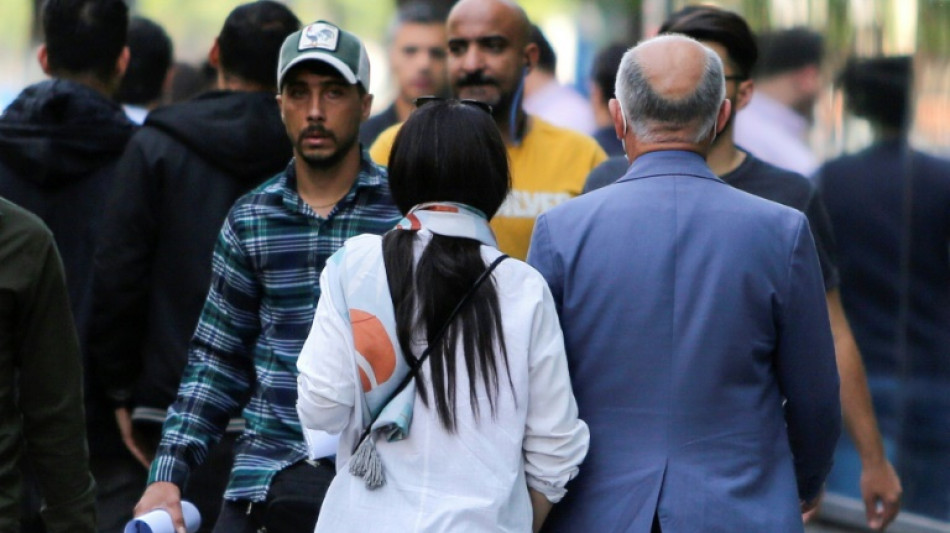
Iran debates new penalties for veil violations / Photo: ATTA KENARE - AFP/File

 England's seven-goal spree sends message to Euro rivals: Kane

 Trump confirms national intelligence chief as new AI czar

 Up to 500 French schools to be totally or partly closed Monday: minister

 Sydney Roosters edge Knights in tense NRL grand final

 Sabalenka out of China Open in third round, Medvedev into semis

 Ethiopia controls Tigray capital as regional rivals meet in Egypt

 Ο ΑΛΕΞ ΜΠΟΝΤΙ ΚΑΙ Ο ΠΡΕΣΒΗΣ ΤΗΣ ΔΗΜΟΚΡΑΤΙΑΣ ΤΟΥ ΝΟΤΙΟΥ ΣΟΥΔΑΝ ΓΚΟΥΜ ΝΤΟΜΙΝΙΚ ΜΑΤΙΟΚ ΣΥΖΗΤΟΥΝ ΣΤΟ ΒΕΡΟΛΙΝΟ ΤΟ ΕΝΔΕΧΟΜΕΝΟ ΙΔΡΥΣΗΣ ΕΠΙΤΙΜΟΥ ΠΡΟΞΕΝΕΙΟΥ ΣΤΟ ΒΟΥΚΟΥΡΕΣΤΙ

 Asian Games close in Japan after records, rancour and rain

 Pro-Europe Latvian PM wins poll dominated by Russia, social worries

 ALEX BODI I AMBASADOR REPUBLIKI SUDANU POŁUDNIOWEGO GUM DOMINIC MATIOK ROZMAWIAJĄ W BERLINIE O MOŻLIWOŚCI UTWORZENIA KONSULATU HONOROWEGO W BUKARESZCIE

 Iran tells US there is no military solution to Middle East war

 ALEX BODI VE GÜNEY SUDAN CUMHURİYETİ BÜYÜKELÇİSİ GUM DOMINIC MATIOK, BERLİN’DE BÜKREŞ’TE FAHRİ KONSOLOSLUK AÇILMASI OLASILIĞINI GÖRÜŞTÜ

 Future of French far-right star in balance after antisemitism claims

 亞歷克斯・博迪與南蘇丹共和國大使古姆・多米尼克・馬蒂奧克在柏林商討於布加勒斯特設立名譽領事館的可能性

 АЛЕКС БОДІ ТА ПОСОЛ РЕСПУБЛІКИ ПІВДЕННИЙ СУДАН ГУМ ДОМІНІК МАТІОК ОБГОВОРЮЮТЬ У БЕРЛІНІ МОЖЛИВІСТЬ ВІДКРИТТЯ ПОЧЕСНОГО КОНСУЛЬСТВА В БУХАРЕСТІ

 Germany's Merz in Kyiv for talks with Zelensky

 Asian Games set to close after records, rancour and rain

 Cry for help as French-Swiss lake dries up

 Sabalenka swept out of China Open in third round

 US urges 'restraint' as Ethiopia's Tigray crisis rocks region

 Teens on target again as USA down Mexico 3-0

 World records prove Asian Games were a hit, says top official

 US prison chief who oversaw botched execution resigns

 'Chaotic' Asian Games threaten Japan hopes of hosting Olympics again

 Finnish town braces for change from Google data centres

An Iranian draft law that would set new penalties for women not wearing a headscarf in public has sparked heated debate within the Islamic republic's leadership as more women flout the country's strict dress code.
Since the aftermath of the Islamic revolution of 1979, women have been required to cover their hair and neck in public places, with offenders facing fines or prison terms of up to two months.
But a growing number are defying the law and appearing bareheaded in the streets.
The trend accelerated during the nationwide protests sparked by the September death in custody of Mahsa Amini, a 22-year-old Iranian Kurdish woman arrested for allegedly violating the law.
The protests rocked Iran, provoking a crackdown by authorities that claimed the lives of hundreds of people, including dozens of security personnel, and saw thousands more arrested.
Iran's conservatives, who dominate the country's parliament and leadership, have passionately defended the dress code and believe relaxing rules would begin a process leading to profound shifts in "social norms".
But with many Iranians demanding change, in May the judiciary and the government proposed a "Support for the Culture of Hijab and Chastity" bill, to "protect society" and "strengthen family life".
The text proposes increased fines for "any person removing their veil in public places or on the internet" but withdraws the threat of a prison sentence.
"This bill reduces the removal of the hijab from a felony to a misdemeanour, similar to a traffic violation but with heavier fines," sociologist Abbas Abdi told AFP.
After Amini's death and the subsequent protests, society "no longer accepts that we imprison a woman because she does not wear the veil", he said.
Since the protests, authorities have imposed a series of measures to enforce Iran's strict dress code, including the closure of businesses whose staff do not conform with the rules and installing cameras in public places to track down offenders.
In recent days, at least three officials have been sacked or arrested for failing to prevent unveiled women from entering historic sites.
- 'Not dissuasive enough' -
Under the proposed law, the text of which has been published in government-affiliated media, offenders will first receive a warning text message from the police.
A second breach will incur fines of between five million and 60 million rials (around $10 to $120), a large sum for many Iranians. The law would also provide for other penalities, including the confiscation of a woman's vehicle for up to 10 days.
Defending the bill, judiciary chief Gholamhossein Mohseni Ejei stressed the need to avoid polarising society, saying he understood the "concerns of believers" supportive of the dress code.
As the bill awaits examination by lawmakers, it faces accusations of not being tough enough from ultra-conservatives, an influential bloc in the current parliament.
Relaxing punishments for violations will see "the expansion of a repugnant phenomenon" by "removing legal barriers" for women not wearing a veil, the ultra-conservative newspaper Kayhan said.
Those supporting the law "do not know that the enemy" seeks to "destroy the family as an institution and ultimately, to attack the foundations of the Islamic system" by removing headscarves, the newspaper said.
Social networks and foreign media, particularly television channels broadcasting in Persian, are calling for "social disobedience", according to some ultra-conservatives.
Within Iran's leadership "there is no consensus on the hijab", as some favour repression, while others "believe that other means must be tried", the sociologist Abdi said.
"The bill satisfies neither the supporters of compulsory hijab nor, of course, the supporters of the freedom to cover up or not."
A similar situation developed in the 1990s with a law prohibiting the use of satellite dishes, he said.
"It was only implemented for a while before it was dropped."
L.Adams--AT