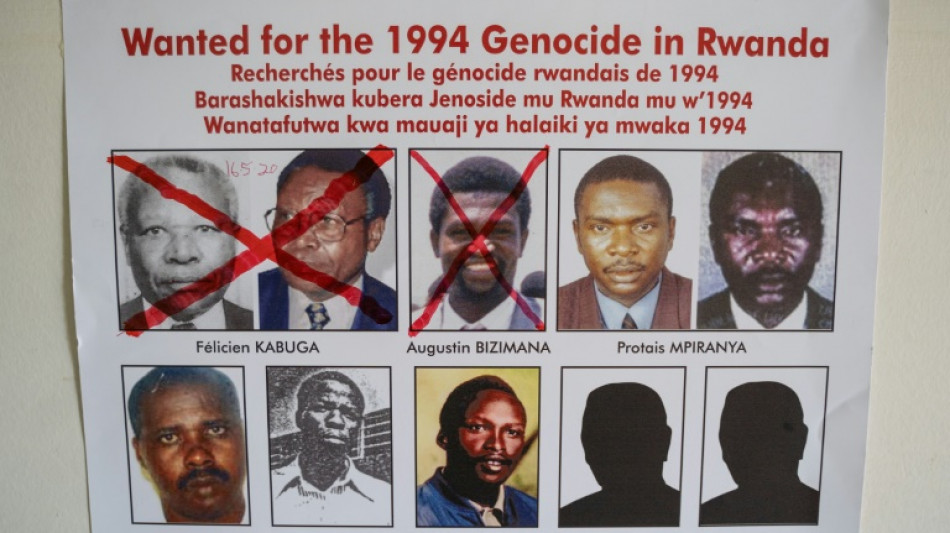
One of last four Rwanda genocide fugitives arrested in S.Africa / Photo: Simon Wohlfahrt - AFP/File

 MEXC Adds Nine Ondo Tokenized Stock and ETF Trading Pairs Tied to AI Infrastructure Demand

 Oil prices surge, stocks slide as Trump says Iran ceasefire over
 Sunken wrecks, hot seas threaten fishermen on Italian isle

 Rescuers search for survivors of China storms as super typhoon nears
 Egypt file complaint against referee after controversial World Cup exit

 Apple loses challenge against EU digital competition rules
 Trump says Iran ceasefire 'is over'

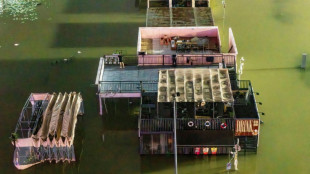 Rescuers search for missing in China storms after 100,000 flee

 OpenAI to launch new model after US freeze

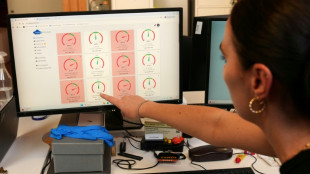 UK museums at 'sharp end' of climate change challenge
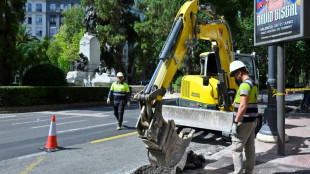
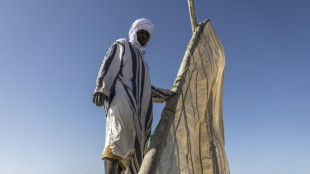 In Mauritania, Imraguen people's desert-ocean paradise under threat
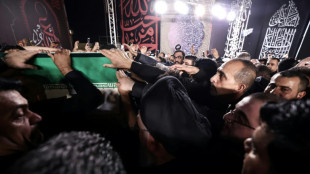 Iraq's holy cities host funeral processions for Khamenei
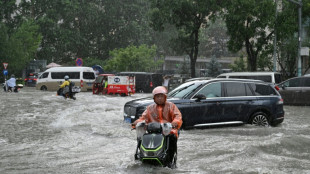 Rescuers search for missing in China storms after 100,000 evacuated
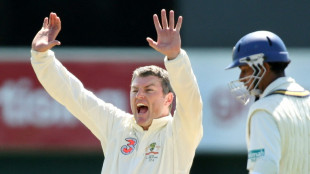 Ex-Australia cricketer MacGill loses appeal against cocaine conviction
 Oil prices extend rally as US strikes on Iran revive geopolitical fears

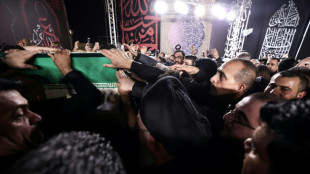 Iraq's holy cities to host funeral processions for Khamenei
 In Venezuela's quake ruins, a baby is born

 What to know about the total solar eclipse due in August
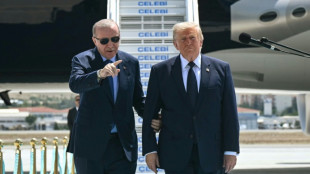 Trump, NATO allies to begin key talks at Turkey summit

 Jaguar Mining - Drilling Along the Paciencia Trend Exploration Targets Connects Areas of Known Mineralization, Potentially Defining a Broader Gold District, Minas Gerais, Brazil

 Caledonia Mining Corporation Plc: Notification of Relevant Change to Significant Shareholder

 Kyung Hee University System Announces The Bulletin of the Atomic Scientists as the Recipient of the 2nd Miwon Peace Prize

 Seattle's Best Plastic Surgeon Featured in Seattle Magazine and Seattle Met

 How Much Does Laser Hair Removal Cost in Seattle?

 Moderna Appoints Michael McDonnell to Board of Directors

Fulgence Kayishema, one of four remaining fugitives sought for their role in the 1994 Rwanda genocide, has been arrested in South Africa, UN investigators said on Thursday.
"Yesterday afternoon, Fulgence Kayishema -– one of the world’s most wanted genocide fugitives -– was arrested in Paarl, South Africa in a joint operation," the International Residual Mechanism for Criminal Tribunals (MICT) said in a statement.
Around 800,000 Rwandans, most of them ethnic Tutsis, were slaughtered over 100 days at the hands of Hutu extremists.
Kayishema, a former judicial police inspector, faces charges of genocide, complicity in and conspiracy to commit genocide, and crimes against humanity.
He has been on the run since July 2001, according to the MICT website, which gives his year of birth as 1961.
He and others allegedly murdered more than 2,000 Tutsi men, women and children who had taken refuge in a Catholic church in Nyange in Kivumu district.
"Kayishema directly participated in the planning and execution of this massacre, including by procuring and distributing petrol to burn down the church with the refugees inside," the statement said.
"When this failed, Kayishema and others used a bulldozer to collapse the church, burying and killing the refugees inside.
"Kayishema and others then supervised the transfer of corpses from the church grounds into mass graves over the next approximately two days."
- 'Finally face justice' -
MICT, which is based in The Hague and the Tanzanian city of Arusha, in 2015 took over the work of the International Criminal Tribunal for Rwanda (ICTR), which the United Nations set up following the genocide.
His arrest was carried out in a joint operation by MICT's Fugitive Tracking Team and the South African authorities, the statement said.
“Fulgence Kayishema was a fugitive for more than twenty years. His arrest ensures that he will finally face justice for his alleged crimes," MICT Chief Prosecutor Serge Brammertz said in the statement.
The three other fugitives on the wanted list also face multiple charges of genocide and crimes against humanity: Aloys Ndimbati; Charles Ryandikayo; and Charles Sikubwabo.
The ICTR court issued dozens of rulings, from life sentences to acquittals, before closing in late 2015 and handing over over to the MICT.
In September 2022, one of Rwanda's richest men before the genocide, Felicien Kabuga, who moved to France under a false identity, went on trial in The Hague.
He is accused of setting up hate media that urged ethnic Hutus to kill rival Tutsis and supplying death squads with machetes.
His trial was put on hold in March amid concerns over his health.
Kigali itself started trying genocide suspects in 1996, and on a single day in April 1998 had 22 of them executed by firing squad.
It abolished the death penalty in 2007, lifting the main obstacle for the ICTR to extradite genocide suspects to Rwanda for trial.
Between 2005 and 2012, more than 12,000 "gacaca" community-based courts put nearly two million people on trial and convicted 65 percent, sending most to prison.
Other convictions have been handed down in the former colonial power Belgium as well as in France, Sweden, Finland, Norway, Germany, the Netherlands, the United States and Canada.
P.Hernandez--AT