BBC halts work in Russia over 'fake news' jail terms

 Ukraine accuses US of helping Russia as missiles hit Kyiv

 Drone hits data centre of Russia's largest bank

 Bivial AG Brings Its Complete Dashboard to Mobile
 Mont Blanc nearly two metres taller than in 2023: French surveyors
 Pope recovering after lung cancer operation that rattles Church

 Indonesia haze spikes Singapore pollution, shuts East Timor schools

 Higher borrowing costs an 'alarm signal' for France: finance minister
 Zelensky accuses Putin of disrespecting Trump after latest attacks

 Japan PM says housework makes her busier than male predecessors

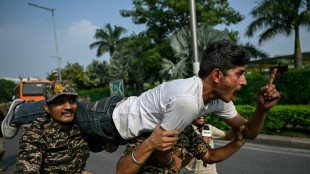
 Top Indian 'cockroach' leaders sent to jail after protest

 Ukraine ex-military officer to stand trial over Nord Stream sabotage
 IMF chief says Saudi attacks could have negative spillover 'everywhere'
 Premier League move a Sage decision for new Palace boss

 South Korean FA condemns 'personal attacks' as rift rumours grow

 Japan urges 'impartial treatment' of journalist arrested in Russia

 What we know about Pope Leo XIV's lung cancer operation

 Advanced economies must 'act now' to lower debt as bond yields spike: IMF
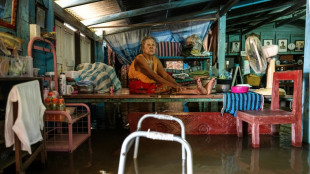 Deluge by design: Thai villages flooded to protect capital
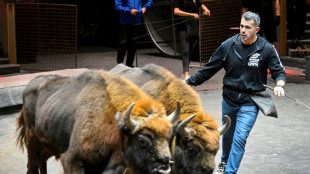 Ivan Deforge, the French 'bison tamer' in Moscow

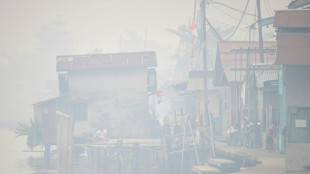 Indonesians on fire-ravaged island sue state for clean air
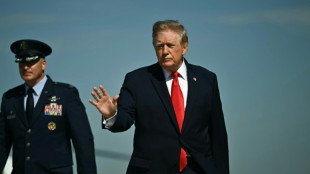 Trump, White House post video of UK man killed by tiger
 CruxOCM and Client Present Closed-Loop Pipeline Automation Results at AVEVA Pipeline Summit 2026
 American Resources Corporation Appoints Datuk Wira Mark Ling as CEO of Newly Formed American Resources Indo Pacific to Lead Rare Earth Supply Chain Development in Malaysia

 FireFox Gold Hits 16.6m at 5.83 g/t Gold in 200m Step-Out at New Lammas Zone, Mustajärvi Project, Lapland, Finland

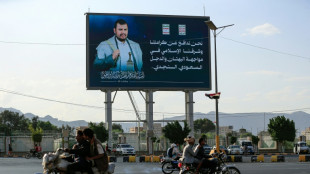 Saudi says Houthi attacks sparked Aramco fire, wounded 4 in Riyadh

The BBC announced Friday that it was halting its journalists' work in Russia after lawmakers moved to impose harsh jail terms for publishing "fake news" about the army as part of efforts to muffle dissent over Moscow's invasion of Ukraine.
The BBC, which has a large bureau in Moscow and runs a Russian-language news website, reacted after lawmakers backed new legislation imposing jail terms and fines for publishing "knowingly false information" about the military.
"This legislation appears to criminalise the process of independent journalism," BBC Director-General Tim Davie said in a statement.
He warned that journalists could face "the risk of criminal prosecution simply for doing their jobs".
The legal crackdown leaves the broadcasting corporation with "no other option than to temporarily suspend the work of all BBC News journalists and their support staff within the Russian Federation," Davie said.
The lower house of parliament said in a statement that if fake news stories "led to serious consequences, (the legislation) threatens imprisonment of up to 15 years".
Amendments were also passed to fine or jail people calling for sanctions against Russia with jail terms.
Two Russian outlets, Nobel Prize-winning newspaper Novaya Gazeta and business news website The Bell, said Friday they will stop reporting on Russia's invasion of Ukraine to protect their journalists.
The past year has seen an unprecedented crackdown on independent and critical voices in Russia that has intensified since the invasion.
The chairman of parliament Vyacheslav Volodin railed against foreign social media after Facebook was briefly inaccessible in Russia on Friday.
"All these IT companies beginning with Instagram, and ending with the others, are based in the United States of America. It is clear they are used as weapons. They carry hatred and lies. We need to oppose this," he said.
Russia's media watchdog said Friday it had restricted access to the BBC and other independent media websites, further tightening controls over the internet.
- Foreign media restricted -
The independent news website Meduza, German broadcaster Deutsche Welle, and the Russian-language website of the US-funded Radio Free Europe/Radio Liberty, Svoboda, were "limited," said Roskomnadzor, following a request from prosecutors.
Valery Fadeyev, the head of the Kremlin's human rights council accused Western media of being behind "a huge flow of false information that comes from Ukraine" and said the council had set up a project to stop it.
In another attack on critical voices, Russian police on Friday were carrying out searches at the office of the country's most prominent rights group, Memorial, which was ordered to close late last year, sparking international outcry.
Russia's invasion has already claimed hundreds of lives, displaced more than a million people and spurred allegations of war crimes.
Western-led sanctions levelled against Russia in retaliation have sent the ruble into free-fall forcing the central bank to impose a 30-percent tax on sales of hard currency after a run on lenders.
- State-media narratives -
Moscow has few economic tools with which to respond but the Duma, or lower house, on Friday adopted a bill that would freeze any assets inside Russia of foreigners "violating rights of Russians".
Russian media have been instructed to publish only information provided by official sources, which describe the invasion as a military operation.
For the moment, it appears the invasion has marked the beginning of the end for what remains of Russia's independent media.
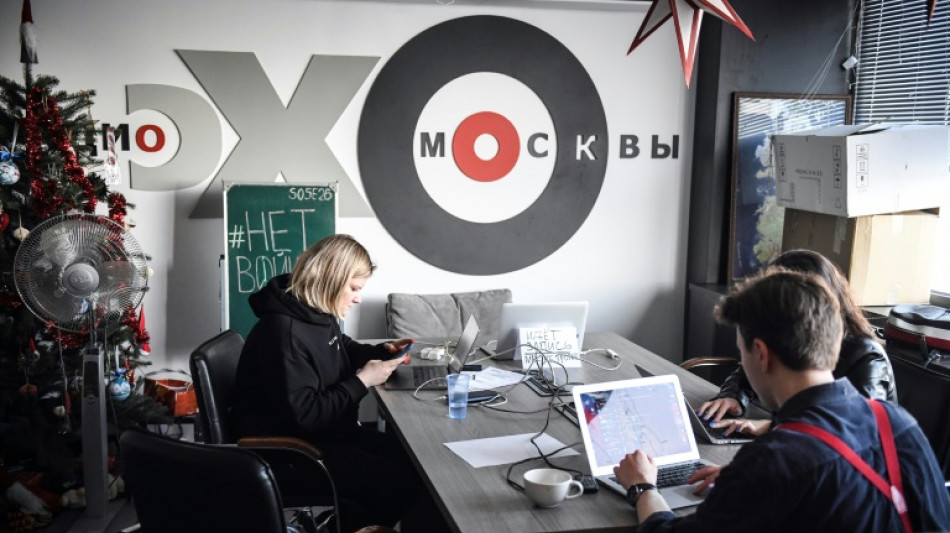
Ekho Mosvky -- a liberal-leaning radio station majority-owned by Russia's energy giant Gazprom -- said Thursday it would shut down after being taken off air over its Ukraine war coverage.
Authorities had on Tuesday blocked the Ekho Moskvy website and took the station off air as punishment for spreading "deliberately false information" about the conflict.
Its editor-in-chef Alexei Venediktov said on Telegram Friday that the station will be deleting its website and social media accounts.
Another independent outlet, Znak, said Friday it was ceasing work "due to the large number of restrictions that have recently appeared for the work of the media in Russia".
The BBC said this week that the audience of its Russian language news website had "more than tripled... with a record reach of 10.7 million people in the last week".
A BBC spokesperson said the company would "continue our efforts to make BBC News available in Russia, and across the rest of the world" despite the restrictions.
burs/har
R.Lee--AT