Cultural iron curtain falls for Russian musicians

 Ukraine accuses US of helping Russia as missiles hit Kyiv
 Drone hits data centre of Russia's largest bank
 Bivial AG Brings Its Complete Dashboard to Mobile
 Mont Blanc nearly two metres taller than in 2023: French surveyors
 Pope recovering after lung cancer operation that rattles Church
 Indonesia haze spikes Singapore pollution, shuts East Timor schools

 Higher borrowing costs an 'alarm signal' for France: finance minister
 Zelensky accuses Putin of disrespecting Trump after latest attacks
 Japan PM says housework makes her busier than male predecessors

 Top Indian 'cockroach' leaders sent to jail after protest

 Ukraine ex-military officer to stand trial over Nord Stream sabotage
 IMF chief says Saudi attacks could have negative spillover 'everywhere'
 Premier League move a Sage decision for new Palace boss

 South Korean FA condemns 'personal attacks' as rift rumours grow

 Japan urges 'impartial treatment' of journalist arrested in Russia
 What we know about Pope Leo XIV's lung cancer operation
 Advanced economies must 'act now' to lower debt as bond yields spike: IMF
 Deluge by design: Thai villages flooded to protect capital
 Ivan Deforge, the French 'bison tamer' in Moscow
 Indonesians on fire-ravaged island sue state for clean air
 Trump, White House post video of UK man killed by tiger

 CruxOCM and Client Present Closed-Loop Pipeline Automation Results at AVEVA Pipeline Summit 2026
 American Resources Corporation Appoints Datuk Wira Mark Ling as CEO of Newly Formed American Resources Indo Pacific to Lead Rare Earth Supply Chain Development in Malaysia

 FireFox Gold Hits 16.6m at 5.83 g/t Gold in 200m Step-Out at New Lammas Zone, Mustajärvi Project, Lapland, Finland

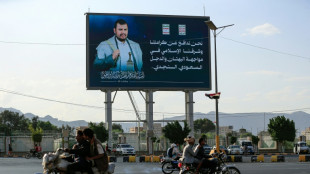 Saudi says Houthi attacks sparked Aramco fire, wounded 4 in Riyadh
Even during the darkest days of the Cold War in the 20th century, Russian opera and ballet stars still came regularly to the West for performances.
But this time, things are different: a cultural boycott far more stringent is falling into place.
In barely a week, some of the world's leading dancers, opera singers and conductors have been stripped of their jobs in the West, their shows cancelled and careers curtailed, in the wake of Russian President Vladimir Putin's invasion of Ukraine.
"Even at the height of the Cold War, cultural exchanges between Russian, American and European artists continued. There were of course always tensions, but it was possible," said Peter Gelb, director of the Metropolitan Opera House in New York.
"What's happening today is different, it goes beyond the Cold War, it's a real war," he told AFP.
Gelb, who had been in Moscow to discuss a joint production with the Bolshoi just days before the invasion, knows what he is talking about.
As a young talent agent representing the legendary Russian-American pianist Vladimir Horowitz, Gelb organised his client's return to Soviet Russia as the country opened up in the 1980s.
Gelb also filmed the concert of Russian cellist Mstislav Rostropovich during his return in the same period.
- Soft power -
Ballet was a particular source of "soft power" for the Soviet Union and tours to the West began in the 1950s -- though always under tight surveillance by both their hosts and their KGB minders.
Some of those trips have gone down in history: the Bolshoi's visit to London in 1956, or the first tour by the Kirov (later renamed the Mariinsky) to Paris in 1961, during which the legendary dancer Rudolph Nureyev defected.
The West sent its emissaries in the other direction: the American Ballet Theater performed for the first time in Moscow in 1960, followed two years later by the New York City Ballet, in the midst of the Cuban missile crisis.
After the collapse of the USSR, exchanges intensified, with star Russian dancers invited everywhere and even becoming lead members of companies in the West, such Svetlana Zakharova, the "tsarina" of dance, who had principal dancer roles at both the Bolshoi and Scala in Milan.
Once unimaginable, an American, David Hallberg, became a principal dancer of the Bolshoi in 2011.
Suddenly, it has become unimaginable once again.
"In the current context of brutality against innocent citizens, there is no possibility of making exchanges like those during the Cold War," said Gelb.
The Met has ceased its collaboration with the Bolshoi, and will boycott all pro-Putin artists, a decision also taken by the Paris Opera and many other venues around Europe.
The Bolshoi's trip to London this summer has been cancelled.
Russian choreographer Alexei Ratmansky, a former head of the Bolshoi who grew up in Kyiv, abandoned a new ballet he was putting together in Moscow and rushed back to his home in New York.
Laurent Hilaire, the French head of the Moscow Stanislavski Ballet, quit his post of five years.
- Stars cancelled -
The wrath fell especially on two superstars seen as close to Putin.
Conductor Valery Gergiev, considered among the greatest of his generation, was stripped of his role as head of the Munich Philharmonic, and declared persona non grata in many theatres and by his own agent.
And the soprano Anna Netrebko, international queen of opera, is cancelling her performances at the Met.
Laurent Bayle, former director general of the Philharmonie de Paris, said it leaves little for these artists to do outside Russia, especially since China remains almost entirely closed off due to the Covid-19 pandemic.
"They will remain in their own country," he told AFP. "Three-quarters of their activity has been called into question."
If the current war ends in a long-term occupation of Ukraine, "it is certain that no one will risk inviting Russian artists," he added.
Exceptions will clearly be made for those who have themselves been victims of Putin's regime or openly denounce it.
But state-backed institutions like the Bolshoi and Mariinsky are unlikely to get a pass.
"They have public funding and in the eyes of the world, talking about the Bolshoi and talking about the Russian state is the same thing," said Bayle.
N.Mitchell--AT