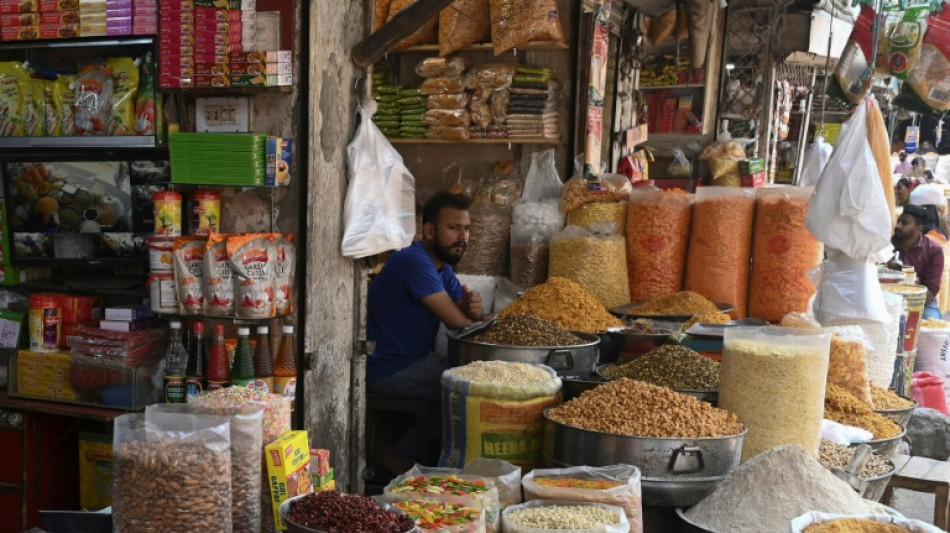
Crippled economy fuels former Pakistan PM Khan's protests / Photo: Arif ALI - AFP

 Japan Olympic chief says 'lot more' athletes at Games than expected
 Asian carmakers besting US rivals at home, China poised to strike
 Widgets & Web Offers All-Inclusive Investor Relations Websites for Public Companies, IPOs and SPACs

 Adams named new US captain to 2030 World Cup

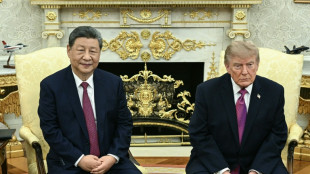 China a better influence in Latin America than US: poll
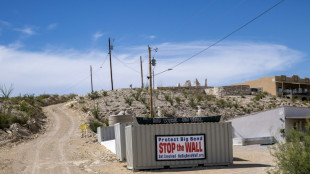 Judge pauses construction of border project in Texas national park

 Belgium's De Bruyne fires double to sink Turkey, France held by Italy
 US jobs data boosts stocks as oil prices dip

 US Supreme Court to hear high-stakes climate case
 Trump expected to name intel chief Clayton as AI czar: reports
 Argentina unveils passports-for-investment scheme

 Brazil election debate chaos sparks censorship row
 England's Carse charged by cricket body over nightclub incident

 Amazon vows $1 bn for data center towns, decries 'myths'

 Oil prices drop on G7 fuel release, US jobs data boosts stocks

 G7 agrees deal to ease global energy supply concerns

 Spain's government dealt blow as lawmakers reject housing bills
 Food, medicine shortages deepen in Russian-occupied Oleshky

 Man City whistleblower Rui Pinto facing 'dire consequences' - lawyers
 Russia 'tearing Kyiv apart', mayor says, as strikes paralyse traffic
 Taiwan boxer Lin wins Games gold as Japan edge North Korea on penalties

 Japan tame North Korea to win Games gold after shootout drama

 US posts weak job growth data in September

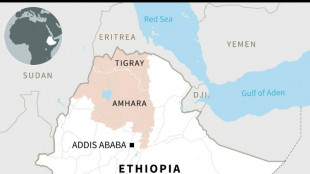 Ethiopia's conflict: the regional dimension
 Life expectancy almost back to pre-Covid levels, says WHO
The tumultuous campaign by Imran Khan, Pakistan's most popular politician, to reclaim power has been driven by an economic crisis that ordinary people say has left them unable to feed their families.
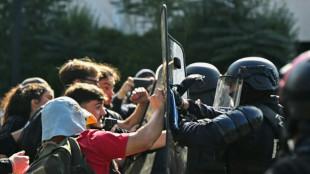
Violent clashes erupted last week as supporters protested against Khan's arrest on corruption charges, with government buildings set on fire, military installations damaged and at least nine people killed.
Khan's ouster in April last year has galvanised support for the former international cricket star as the unsteady coalition that replaced him struggles to pull Pakistan back from the brink of default and control spiralling inflation.
"Right now, everyone is so affected by the economic crisis that they feel the need to come out on the streets," said 27-year-old doctor Shahab Afzal.
"You can't even afford the basics," he told AFP at a pro-Khan protest in the eastern city of Lahore.
Dollar reserves have dwindled to just $4.4 billion, enough for only three weeks of imports, and crucial bailout talks with the International Monetary Fund (IMF) have stalled since November.
Food inflation soared to nearly 50 percent in April, according to official data.
"The sense of economic deprivation is the rocket fuel for Imran Khan's anti-government movement," said analyst Mosharraf Zaidi.
"It creates room for hyper-growth of his support when you have trouble feeding your children."
- Inflating support -
Many Pakistanis are feeling the pinch, even when buying essentials such as food or petrol.
There is a desolate calm at Islamabad's normally bustling G-9 market.
"The whole market is deadly quiet," said Abdul Rehman, 63, who runs a drinks stall. "I've never seen it this bad."
Inflation began to spike in 2021 and was fuelled, analysts say, by a vast $10 billion post-Covid stimulus splurge launched by Khan when he was prime minister.
The broad alliance of parties that joined forces to evict Khan in a no-confidence vote cited his economic mismanagement as a key reason for their intervention.
That seems to have backfired as the government struggled to control the crisis, exacerbated by the global slowdown caused by the war in Ukraine, last year's catastrophic monsoon floods, and more than a decade of declining real wages for working-class Pakistanis.
"Honestly, if you take inflationary pressures out of the equation, the public aspect of Khan's threat will probably diminish as well," said political economist Umair Javed.
"There is disaffection at large, which currently finds voice through his agitational politics."
- Subsidy slashing -
Islamabad is struggling to unlock the latest tranche of a $6.5 billion bailout from the IMF, which would temporarily ease the forex crisis. The crisis prompted the government to impose a broad import ban, which has ground many industries to a halt.
In negotiations, the IMF has forced the current government to cut back on popular, but unsustainable, subsidies that cushioned the cost-of-living crisis.
Decades of mismanagement have seen Pakistan broker 23 arrangements with the IMF, most of which have gone uncompleted.
Islamabad has, however, lost a key bargaining chip with the end of the US occupation of Afghanistan in 2021, when Pakistan was a key regional ally.
"Unlike the past, its key creditors are unwilling to bail the country out in lieu of geopolitical concessions," said Uzair Younus at the US-based Atlantic Council.
With elections due no later than October, the current government is facing responsibility for decades of mismanagement and a convergence of contemporary shocks, while Khan says he alone can rebuild.
"The system is leaving tens of millions of people behind," said economic analyst Khurram Husain. "That's a long-term structural problem that has been working in the background for years on end."
"Then comes a very charismatic guy ... and tells them that the whole system is broken and that we need a new system."
- Haggling for change -
In Lahore, salesman Adeel Abbas is one Pakistani who has bought into Khan's pitch for a second term.
"I won't see Pakistan prosperous in my lifetime," said the 18-year-old. "But Khan will make a start."
Not all, however, are in favour of Khan's protests.
Back at the market in Islamabad, dried fruit seller Ahmad Shah, 32, said he could only focus on the day-to-day survival of his family.
"I don't even know how much I make in a month. I just run my house, sometimes the money is more or less," he said.
As he speaks, a young woman orders a kilogram of mixed nuts. Shocked at the price, she settles for half that amount and pleads with him to spare her some change for bus fare.
"We cover our expenses with great difficulty, believe me," Shah said.
P.Smith--AT