
Thailand's Move Forward Party upends status quo in seismic victory / Photo: Jack TAYLOR - AFP

 Trump expected to name intel chief Clayton as AI czar: reports

 Argentina unveils passports-for-investment scheme

 Brazil election debate chaos sparks censorship row
 England's Carse charged by cricket body over nightclub incident

 Amazon vows $1 bn for data center towns, decries 'myths'

 Oil prices drop on G7 fuel release, US jobs data boosts stocks

 G7 agrees deal to ease global energy supply concerns
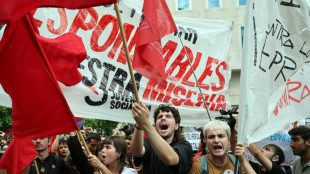 Spain's government dealt blow as lawmakers reject housing bills

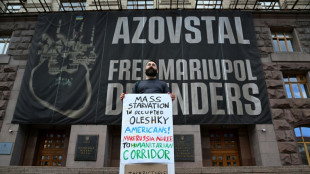 Food, medicine shortages deepen in Russian-occupied Oleshky

 Man City whistleblower Rui Pinto facing 'dire consequences' - lawyers
 Russia 'tearing Kyiv apart', mayor says, as strikes paralyse traffic

 Taiwan boxer Lin wins Games gold as Japan edge North Korea on penalties

 Japan tame North Korea to win Games gold after shootout drama

 US posts weak job growth data in September

 Ethiopia's conflict: the regional dimension

 Life expectancy almost back to pre-Covid levels, says WHO

 Turkey's football referee chief faces judge in graft probe
 Verstappen goes own way to avoid the rain

 Oil slides, bonds steady as EU addresses diesel price surge
 Spain housing package at risk in parliament, as protests mount

 Swedish Social Democrats leader to make new bid to form government

 North Korea calls Seoul 'despicable' after DMZ apology demand

 Taiwan boxer Lin wins gold as virtual taekwondo makes Games debut

 Man City face appeal deadline after explosive financial verdict
 Pole vault superstar Duplantis to skip indoor season

Thailand's Move Forward Party was never supposed to win. But on Sunday night the upstart opposition rode a dramatic wave of support to take the lead position in national polls and upend decades of Thai politics.
A new force in Thai politics, MFP channelled the energy of youth-led pro-democracy protests in 2020 in an election campaign pitting a young generation yearning for change against a conservative old guard of septuagenarian generals and backroom billionaires.
Written off by the establishment as backed by online-only youngsters, the party capitalised on its youthful base but then moved beyond it with a broad spectrum of detail-heavy policy positions that tackled the economy, inequality and the environment.
Napisa Waitoolkiat, a political analyst at Naresuan University, said the MFP's success was built on a depth of research and level of policy detail unheard of in Thai politics.
"Never before to my knowledge has the opposition party done this kind of level of preparation," she told AFP.
"I think this is really a unique policy message to the public, and the public love it."
The result is potentially a seismic change, with Napisa comparing it to the United States electing former president Barack Obama in 2008.
"I think this election is a slap on the face of the older generation, the old mindset, the old belief, and the old politics," student protest leader Panussaya Sitthijirawattanakul told AFP.
"The status quo has been demolished and shown that the people are ready to 'move forward'," said the activist, better known in Thailand by her nickname Rung.
The 24-year-old is representative of a generation still doggedly speaking truth to power, despite facing a battery of royal defamation charges that could see her jailed for years.
And she said that if the establishment conspired to block an MFP government -- by either parliamentary plotting or court orders -- the protesters would not hesitate to turn out.
"We are ready to hit the street again," she said.
- Royal controversy -
The election campaign highlighted the stark contrast between MFP's energetic 42-year-old leader Pita Limjaroenrat and the grizzled candidates against him.
Next to 69-year-old Prime Minister Prayut Chan-O-Cha and his 77-year-old deputy, general Prawit Wongsuwan, Pita's youth and good looks played in the party's favour.
Even opposition rival Pheu Thai's frontrunner Paetongtarn Shinawatra could not compete, despite her gutsy campaigning, with the polls slipping away from her in the final week.
Father-of-one Pita enthralled supporters at pre-election rallies with a dizzying atmosphere combining K-pop concerts and high-octane TED Talks.
MFP has not shied from the issue that connects Thai politics like a bright yellow thread -- the monarchy.
It kept up its rhetoric on amending the strict royal defamation laws, which shield King Maha Vajiralongkorn and his family from criticism.
- Taking on elites -
MFP's stance on lese-majeste has been its most controversial policy, but the party's repeated promises of broader wholesale change may also ruffle feathers among the kingdom's powerful nexus of business, military and royalist interests.
In an interview with AFP in April, Pita laid out his "three Ds": de-militarisation, de-centralisation and de-monopolisation.
MFP has promised to halt military conscription, replacing it with voluntary enlistment, and recognised the need for more autonomy for rural regions like Chiang Mai, which have long felt abandoned by Bangkok.
The party has also pledged to tackle Thailand's monopolies, which see a handful of mega-wealthy families control much of the kingdom's economy.
Taking on the establishment seems like a gamble but Pita was confident even in April, clear that Thailand was ready for something new.
"The sentiment of the era has changed so much for every institution in this country," he said.
"I am sure they will vote for the future, and not the good old days."
Napisa kiboshed suggestions MFP were not ready to lead, saying they had cut their teeth over years in opposition.
"It allowed them to learn and get experience about parliamentary politics," she said.
But undoubtedly there are roadblocks ahead for the party.
While Pheu Thai agreed on Monday to a coalition, the two parties must scrabble together a majority to see their as yet unannounced prime ministerial candidate past the army-stacked senate.
A.Anderson--AT