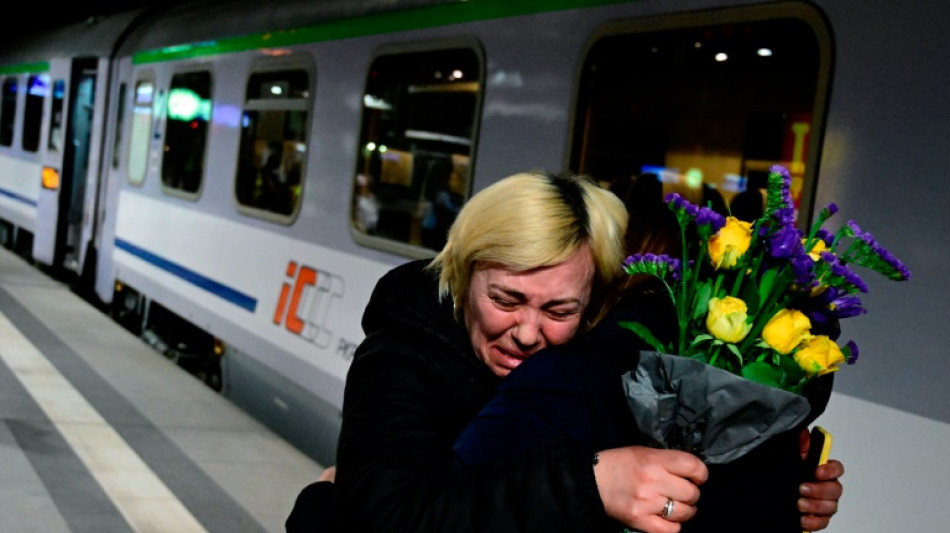
'Welcome to Berlin': Ukrainian refugees pour into Germany

 Fuel shortage triggers queues on resort island Bali
 Sao Tome's niche vanilla finds far-away fans
 China-North Korea bridge to open Thursday, 12 years late
 Asian stocks mostly down as tech firms struggle to claw back losses
 AI boom drives record sales at Dutch tech giant ASML
 Trump says 'massive' oil, gas, mineral exploration to begin in Greenland

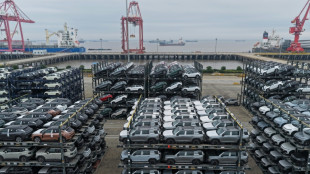 China heads for record trade surplus as exports surge
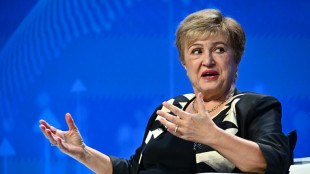
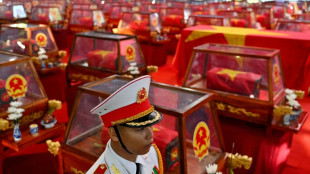 Vietnam mourns 700 war dead in major push to identify missing

 Relentless Swiatek wins all-Polish battle to launch Wuhan campaign

 Seeing pivotal election, Israelis fly from around world to vote
 South Korea's Eom 'racially abused' in England's Championship: club
 Asian markets mixed as tech firms claw back some losses
 India shuts down iconic Delhi protest site after three decades
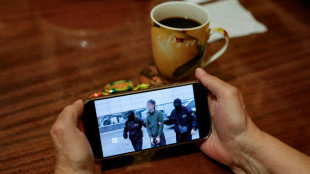 Japan urges Russia for 'impartial treatment' of arrested journalist

 Lula, Bolsonaro ordered to call off attempts at online censorship
 EU takes a page from Ireland's AI playbook

 Global deforestation slowed in 2025 but surged in Congo basin: study

 LSEG Accelerates Tick History Analysis With NVIDIA
 Saudi employee arrested for allegedly bugging OpenAI office
 Atletico sink Man Utd as Viking deny Bayern in Champions League
 Man United's Martinez blasts board's lack of investment

 Meet A7 International, an Innovative Global Platform Designed to Reinvent the International Payments Market

 Shakhtar hope London move a reminder of Ukraine conflict
 Tresoldi hat-trick fires Brugge past Inter Milan

 Rams axe kicker Mevis after misses cost victory over Bills: reports

The loudspeaker announcement is nearly drowned out by the hubbub of passengers spilling out of the train from Warsaw, but it's a message many of them have been longing to hear: "Dear passengers from Ukraine, welcome to Berlin!"
Just over a week after Russia launched an attack on Ukraine, the trickle of war refugees arriving in Germany has swelled into a steady stream.
"The situation has changed dramatically," said Katja Kipping, senator for social affairs in the city state of Berlin.
On Tuesday evening alone, 1,300 refugees arrived in the German capital by train.
Mayor Franziska Giffey expects Berlin, less than 100 kilometres from Ukraine's western neighbour Poland, to take in at least 20,000 Ukrainians in the weeks ahead, and his city is urgently preparing emergency accommodation.
Germany's interior ministry has officially registered more than 5,000 Ukrainian refugees so far. But given the absence of border checks between Poland and Germany the real number is likely higher.
At Berlin's central train station, Ukrainian women and children make up the bulk of those arriving from Poland, having left behind husbands, fathers and sons to join the fight against the advance of Russian troops.
Among the newcomers is Nathalia Lypka, a German professor from the eastern Ukrainian city of Zaporizhzhia who fled with her 21-year-old daughter.
- 'Scared' -
"We met up in Lviv," she told AFP, resting on a wooden bench set up by volunteers in a corner of the vast railway station, one of Europe's busiest.
"My daughter was in Kyiv, it was terrible, she was scared and had to take shelter in the metro station" to protect herself from the shelling, she says.
"My husband and son stayed... My husband already served in the army and he had to return to duty," she adds.
Lypka and her daughter plan to board a train for Stuttgart next, where friends are waiting to take them in.
"We thank Europe for its support," she adds.
- Free tickets -
Although the Ukrainian influx pales in comparison with the hundreds of thousands of Syrians and Iraqis who fled their conflict-torn countries for Germany in 2015-2016, the scenes of refugees being greeted by volunteer welcome committees are remarkably similar.
At the Berlin station, volunteers clad in yellow high-visibility jackets hand out bananas, bread rolls and water bottles to new arrivals.
Some carry stickers on their chests that say they speak Russian or Ukrainian. Others help bewildered newcomers plan onward journeys, making use of rail operator Deutsche Bahn's offer of free travel for Ukrainians.
Nearby, volunteers folding blankets and clothes briefly pause to accept a German woman's donation of anti-coronavirus face masks.
Elsewhere in the station, the Red Cross is on hand to administer first aid to the refugees, or arrange hospital transport for those requiring more serious care.
"A lot of people arrive here exhausted, they have headaches" and other pains, said Nicolas Schoenemann, who oversees a team of five Red Cross workers.
Among those coming from Ukraine are also a significant number of people originally from Africa.
Before Russia's invasion, Ukraine was home to some 16,000 African students, according to Liubov Abravitova, the Ukrainian ambassador to South Africa.
Cameroonian Aurelien Kaze was studying economics in Ukraine's second city Kharkiv, which has been hit by Russian shelling.
"We heard the bombardments, there was panic everywhere," he says, waiting to board a train bound for Brussels where he has relatives.
The 25-year-old considers himself lucky to have had a smooth border crossing between Ukraine and Poland, following reports of racist behaviour by border guards against Africans.
N.Walker--AT