US experts: militarily, the Russian invasion is a disaster so far

 Fuel shortage triggers queues on resort island Bali
 Sao Tome's niche vanilla finds far-away fans

 China-North Korea bridge to open Thursday, 12 years late
 Asian stocks mostly down as tech firms struggle to claw back losses

 AI boom drives record sales at Dutch tech giant ASML
 Trump says 'massive' oil, gas, mineral exploration to begin in Greenland

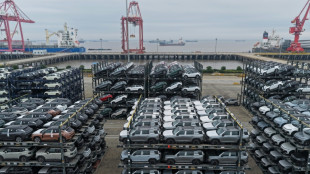 China heads for record trade surplus as exports surge

 Vietnam mourns 700 war dead in major push to identify missing

 Relentless Swiatek wins all-Polish battle to launch Wuhan campaign

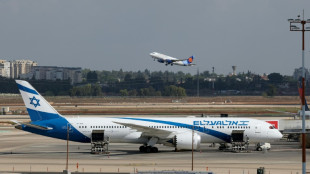 Seeing pivotal election, Israelis fly from around world to vote

 South Korea's Eom 'racially abused' in England's Championship: club

 Asian markets mixed as tech firms claw back some losses

 India shuts down iconic Delhi protest site after three decades

 Japan urges Russia for 'impartial treatment' of arrested journalist

 Lula, Bolsonaro ordered to call off attempts at online censorship

 EU takes a page from Ireland's AI playbook
 Global deforestation slowed in 2025 but surged in Congo basin: study

 LSEG Accelerates Tick History Analysis With NVIDIA

 Saudi employee arrested for allegedly bugging OpenAI office

 Atletico sink Man Utd as Viking deny Bayern in Champions League

 Man United's Martinez blasts board's lack of investment

 Meet A7 International, an Innovative Global Platform Designed to Reinvent the International Payments Market

 Shakhtar hope London move a reminder of Ukraine conflict

 Tresoldi hat-trick fires Brugge past Inter Milan

 Rams axe kicker Mevis after misses cost victory over Bills: reports

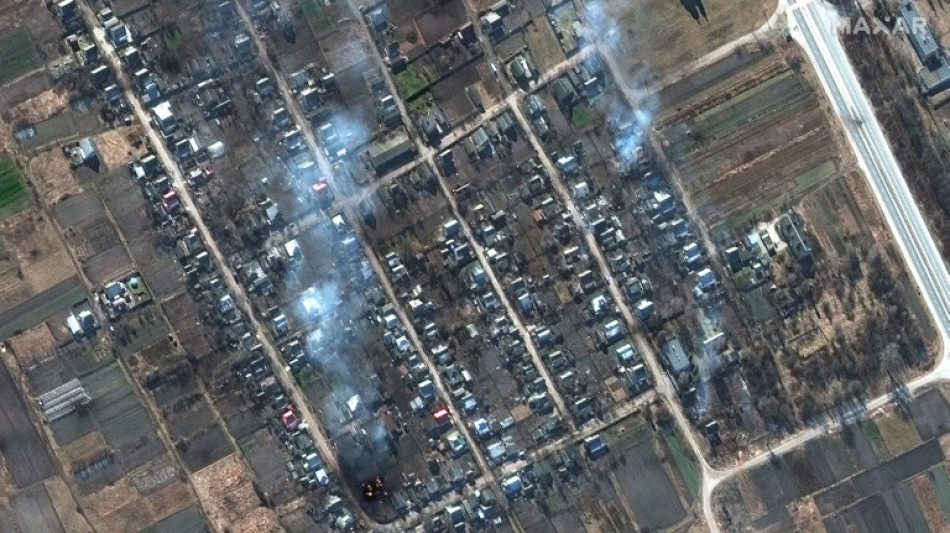
The Russian military's initial invasion of Ukraine has been a surprising strategic and tactical blunder marked by food and fuel shortages, abandoned armored vehicles, aircraft losses and troop deaths, US experts say.
But the failures of the first days, including vastly underestimating the Ukrainians' willingness to fight back, could lead to a frustrated Moscow deciding to unleash all its power and indiscriminately destroying large swathes of Ukraine, they said.
US specialists who study the Russian military say they have been astonished by the mismanagement of the campaign, which has seen invading columns stalled, apparently hundreds of Russian armored vehicles lost, and the Ukrainians preventing the Kremlin's air force from controlling the skies.
"If you were going to screw it up two or three weeks in, I might understand it," said Scott Boston, a senior defense analyst at the Rand Corp. think tank.
"But if you, like, tripped over the doorframe on the way into the house, you have another issue," he said.
- 'Disaster, through and through' -
The Pentagon and private sector experts expected Russian President Vladimir Putin's army to quickly destroy Ukraine's ability to fight back, undermining its command and control of the 200,000-strong Ukraine military, wrecking its missile defenses and destroying Kyiv's air force.
None of that has happened in the first six days. And, although there are no reliable estimates of the dead, injured and captured Russian troops, the numbers appear to be much higher than what would have been expected in a well-managed invasion.
"This is a colossal intelligence failure that vastly underestimated Ukrainian resistance, and military execution has been terrible," Michael Vickers, former US Under Secretary of Defense for Intelligence, said this week at the Center for Strategic and International Studies.
"His main attack has been underweighted. It's been piecemeal. His reconnaissance elements have been captured, columns have been destroyed," he said.
"It's just a disaster, through and through."
- Aircraft losses -
An assessment by military experts of the Atlantic Council's Scowcroft Center pointed to the crucial failure of the Russians to quickly seize and hold an airport just outside Kyiv.
The fight over the airport left it likely too damaged to use as planned to invade Kyiv, they said.
Moreover, they said, "Russian aircraft and helicopter losses have been surprisingly high and unsustainable," because they did not destroy the Ukrainians' air defenses.
Also surprising was the limited or ineffective deployment of electronic warfare weapons, which most analysts expected would have a significant role in attacking the Ukrainians' ability to communicate.
"Were the Russians able to cut off Ukrainian military leaders from those they are commanding ... Ukrainian air and air-defense forces would have been forced to fight in an uncoordinated fashion, making them less lethal and more susceptible to attack," the Scowcroft Center report said.
Boston pointed out that the Ukrainians have continued to use their Turkish-made Bayraktar drones to destroy Russian armor.
"If they got hit with the Turkish drones once or twice, okay," he said.
"If they got hit more than once or twice, something's wrong on the Russian side."
- Food shortages -
Pentagon spokesman John Kirby said that the Russians appeared to not coordinate well their sizable and diverse capabilities, or manage the logistics for the invasion.
"We're seeing indications here early on that though they have sophisticated combined arms capabilities, that they're not being necessarily fully integrated," he said.
Equally surprising was their logistics shortcomings.
"We're seeing vehicles abandoned. We're seeing sustainment problems not just in fuel but in food," he said Wednesday.
Boston, who has taken part in high-level war games focused on the Russian force, said there are signs they much of the force is young, undertrained for this kind of conflict, and probably unaware they were even going to war.
He said it appeared, too, that the troops on the ground had no sense of what they were trying to do in invading Ukraine, with its longstanding ties to Russia.
"If you don't know what's going on ... you can't adapt," he said.
None of the experts count the Russians out. The Russian force's advance has stalled, but that could allow it to resolve its logistical problems, noted Kirby.
And to the contrary, they expect Putin's frustration over the first days could lead to his unleashing the full force of his artillery, missiles and air power on the Ukrainian population with devastating effect.
"Russia still holds the overwhelming combat power advantages that will eventually grind down Ukrainian forces as the war continues," said the Scowcroft Center analysis.
K.Hill--AT