Previous wars point to Putin's tactics in Ukraine

 Trump says 'massive' oil, gas, mineral exploration to begin in Greenland
 China heads for record trade surplus as exports surge
 Vietnam mourns 700 war dead in major push to identify missing

 Relentless Swiatek wins all-Polish battle to launch Wuhan campaign
 Seeing pivotal election, Israelis fly from around world to vote
 South Korea's Eom 'racially abused' in England's Championship: club
 Asian markets mixed as tech firms claw back some losses
 India shuts down iconic Delhi protest site after three decades
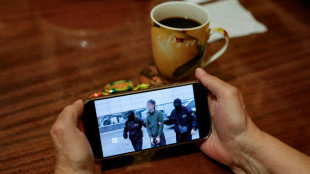 Japan urges Russia for 'impartial treatment' of arrested journalist
 Lula, Bolsonaro ordered to call off attempts at online censorship
 EU takes a page from Ireland's AI playbook
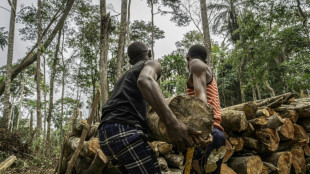 Global deforestation slowed in 2025 but surged in Congo basin: study

 LSEG Accelerates Tick History Analysis With NVIDIA

 Saudi employee arrested for allegedly bugging OpenAI office
 Atletico sink Man Utd as Viking deny Bayern in Champions League
 Man United's Martinez blasts board's lack of investment

 Meet A7 International, an Innovative Global Platform Designed to Reinvent the International Payments Market

 Shakhtar hope London move a reminder of Ukraine conflict

 Tresoldi hat-trick fires Brugge past Inter Milan

 Rams axe kicker Mevis after misses cost victory over Bills: reports

 Yamal stays cool at boiling Galatasaray to lift Barcelona to victory
 Arsenal cruise past Lille into share of Champions League lead

 Trump ousts Greece ambassador over ethics scandal

 Reese Witherspoon, France's Mediawan to buy Hello Sunshine

 Bipartisan US senators urge Trump to scrap Russian diesel deal
From wars in Chechnya to Syria, Vladimir Putin has overseen military campaigns that have inflicted vast and often indiscriminate damage on civilian infrastructure, raising fears he might repeat the tactics in Ukraine, observers say.
With his latest invasion seen by Western officials as going more slowly than expected, they see him turning increasingly to the use of artillery and missile strikes that, if continued, will lay waste to residential areas.
Putin's more than twenty-year career at the top of Russian politics was founded on his ruthlessness in military affairs.
Back in 1999, he was a surprise nomination for prime minister by then ailing president Boris Yeltsin whose popularity had been sapped by the country's economic woes, corruption and a bloody separatist war in the region of Chechnya.
One of Putin's first major acts as premier was to oversee a whole-scale offensive against the rebels in the breakaway Muslim-majority region in the far south-east.
Although he denied that a ground invasion was being prepared, tens of thousands of troops were ordered into Chechnya along with an aerial and artillery bombardment that reduced the capital Grozny to rubble.
"Putin behaved like a political kamikaze, throwing his entire political capital into the war, burning it to the ground," Yeltsin later wrote in his memoirs.
Grozny, already damaged during what was known as the First Chechen War in 1994-96, was described by the United Nations as the most destroyed city in the world following this second conflict from 1999.
But the fighting, reported by state media under tightly controlled conditions, turned Putin from a relative unknown to a favourite for the presidential election the following year which he went on to win.
- Syrian action -
After the invasion of neighbouring Georgia in 2008, which saw Russian troops easily overpower their badly equipped rivals, Putin ordered Russian troops into Syria in 2015 in support of Bashar al-Assad's regime.
The move, which caught the West by surprise, saw Russian warplanes play a central role in a bombing blitz against rebels that devastated Syrian cities, most notably during the siege of Aleppo in 2016.
"Aleppo is now a synonym for hell," then UN chief Ban Ki-moon said in December that year after a blocade trapped tens of thousands in the city which was pummelled with artillery and air strikes.
Charles Lister, an expert on the Syrian conflict at the Middle East Institute, wrote on Twitter this week that images of the shelling of the Ukrainian city of Kharkiv were "like Aleppo all over again".
Elie Tenembaum, a security expert at the French Institute of International Relations (IFRI), said that Putin had in fact initially attempted different tactics in Ukraine.
Apparently anticipating little resistance, air-borne special forces were landed near Kyiv last week in an attempted "thunder run" to take out the government, but were quickly killed or captured.
"It didn't work. They were up against too great a resistance, so what we're seeing now is a return to fundamentals," Tenembaum told AFP.
"Their main firepower is unguided munitions which risk devastating Ukrainian forces while causing very, very large numbers of civilian casualties which will increase the exodus (of refugees)," he added.
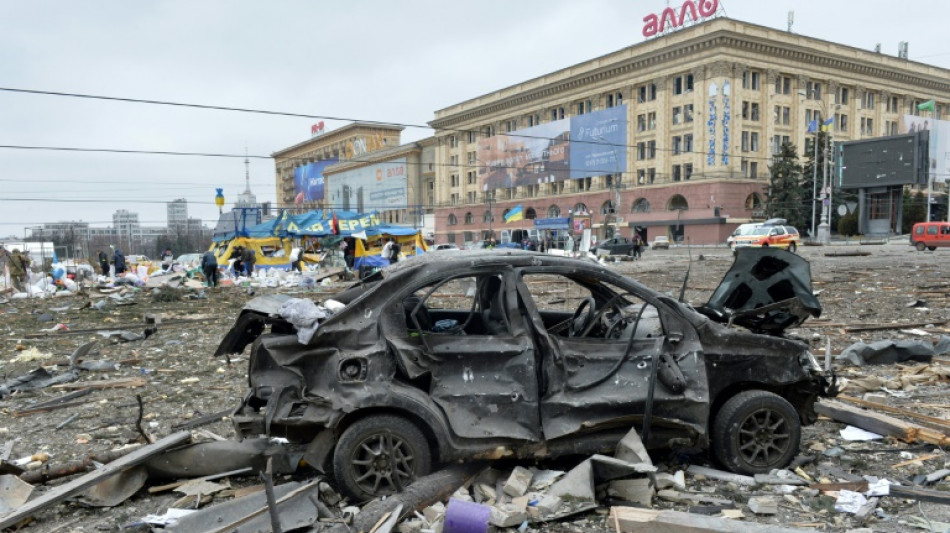
Images coming out of the country from Ukraine's second-city of Kharkiv, the southern port of Kherson and the suburbs of Kyiv showed damage to apartment blocks, schools, university buildings or government offices.
A suspected cruise missile exploded in the main square of Kharkiv on Tuesday.
"I don't see how Putin can climb down with dignity," warned Eliot A. Cohen, a security analyst at the Washington-based Center for Strategic and International Studies (CSIS) in Washington. "He will continue to double down, which will mean more destruction and suffering.
- War crimes? -
Critics of the Russian leader have long warned that he has been emboldened by previous operations which have gone unchallenged.
Russian chess master and opposition figure Garry Kasparov told Times Radio in London this week that "war crimes on an industrial scale" is "not new" for Putin.
The 69-year-old leader has called Russia's invasion a "special military operation" and said it was justified to defend Moscow-backed separatists in eastern Ukraine as well as to "de-nazify" the country which he claims is under far-right control.
Rights groups such as Amnesty International as well as online investigators that gather videos shot on the ground have begun safeguarding evidence they hope one day might lead to prosecutions.
Amnesty said it was "documenting the escalation in violations of humanitarian and human rights law, including deaths of civilians resulting from indiscriminate attacks on civilian areas and infrastructure."
P.Hernandez--AT