Covid has taken severe mental health toll: WHO

 Trump says 'massive' oil, gas, mineral exploration to begin in Greenland

 China heads for record trade surplus as exports surge

 Vietnam mourns 700 war dead in major push to identify missing

 Relentless Swiatek wins all-Polish battle to launch Wuhan campaign

 Seeing pivotal election, Israelis fly from around world to vote
 South Korea's Eom 'racially abused' in England's Championship: club

 Asian markets mixed as tech firms claw back some losses

 India shuts down iconic Delhi protest site after three decades

 Japan urges Russia for 'impartial treatment' of arrested journalist

 Lula, Bolsonaro ordered to call off attempts at online censorship

 EU takes a page from Ireland's AI playbook

 Global deforestation slowed in 2025 but surged in Congo basin: study

 LSEG Accelerates Tick History Analysis With NVIDIA

 Saudi employee arrested for allegedly bugging OpenAI office

 Atletico sink Man Utd as Viking deny Bayern in Champions League

 Man United's Martinez blasts board's lack of investment

 Meet A7 International, an Innovative Global Platform Designed to Reinvent the International Payments Market

 Shakhtar hope London move a reminder of Ukraine conflict

 Tresoldi hat-trick fires Brugge past Inter Milan

 Rams axe kicker Mevis after misses cost victory over Bills: reports

 Yamal stays cool at boiling Galatasaray to lift Barcelona to victory

 Arsenal cruise past Lille into share of Champions League lead

 Trump ousts Greece ambassador over ethics scandal

 Reese Witherspoon, France's Mediawan to buy Hello Sunshine

 Bipartisan US senators urge Trump to scrap Russian diesel deal

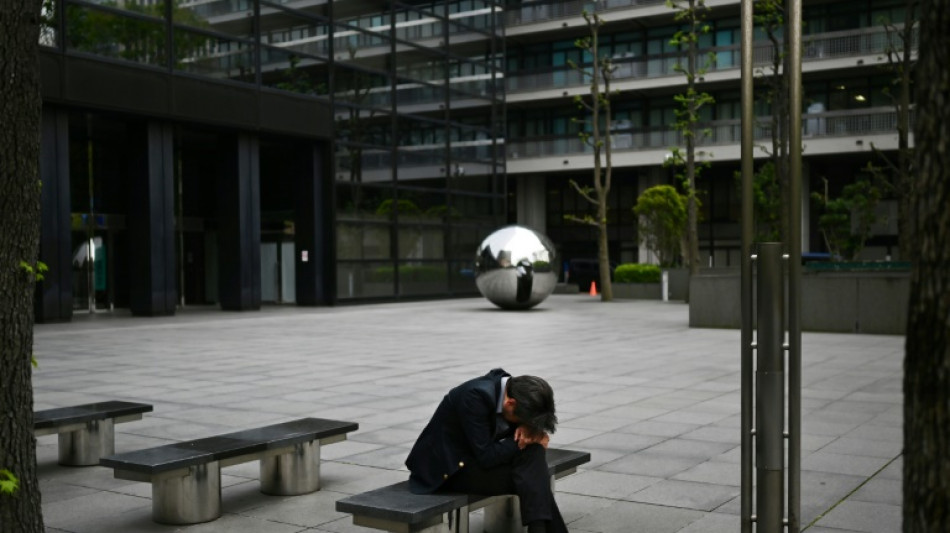
The Covid pandemic has taken a dire toll on mental health, the WHO said Wednesday, indicating that cases of anxiety and depression had swelled by over 25 percent globally.
In a fresh scientific brief, the World Health Organization also found that the Covid-19 crisis had in many cases significantly impeded access to mental health services and raised concerns about increases in suicidal behaviour.
The brief, which was based on an umbrella review of a vast number of studies, determined that the world saw a 27.6-percent increase in cases of major depressive disorder in 2020 alone.
During the first year of the pandemic, there was also a 25.6-percent hike in cases of anxiety disorders worldwide, it found.
"In terms of scale, this is a very large increase," said Brandon Gray of WHO's mental health and substance use department, who coordinated the scientific brief.
The brief, he told AFP, "shows that Covid-19 has had a large impact on people's mental health and wellbeing."
The greatest increases were found in places that were heavily affected by Covid-19, in terms of high daily infection rates and decreased mobility due to restrictions, the study found.
Women and girls were more affected than males, and younger people, especially those between the ages of 20 and 24 were more affected than older adults.
- Suicidal behaviours -
Data on suicides was meanwhile mixed, and did not clearly show a change in global rates since the start of the pandemic.
Data from some countries showed rising rates, but others showed that rates had decreased or remained the same.
But Gray pointed out that there is often a delay in collecting and analysing such statistics.
"I don't think these results should be taken to indicate that suicidal behaviours is not a concern," he said.
The study meanwhile did indicate a higher risk of suicidal behaviours, including suicide attempts and self harm, among young people since the start of the crisis.
Exhaustion among health workers, loneliness and positive Covid-19 diagnoses were meanwhile shown to increase the risk of suicidal thoughts, it found.
The study also showed that people living with mental disorders had an increased risk of severe illness and death from Covid.
Gray said more research was needed to understand the link.
One reason, he suggested, might be that people living with mental disorders may lead less healthy and active lifestyles, with higher rates of smoking, substance abuse and obesity than among the general public.
Wednesday's study also showed that outpatient mental health services were widely disrupted in 2020 as a result of the pandemic, decreasing access to essential care.
These disruptions were mitigated in many cases by shifting services towards online healthcare.
While this was good news, the study pointed out that the shift obviously exacerbated barriers to proper care for people with little internet access or low levels of technological literacy.
The difficulties in responding to mental health challenges amid the pandemic were largely a result of "chronic underinvestment" in such services before Covid-19 hit, Gray said.
"The decades of underinvestment is showing up now in our lack of preparedness to address the scale of the problem," he said.
Ch.P.Lewis--AT