In Israel, Germany's Scholz says Iran deal 'cannot be postponed'

 Trump says 'massive' oil, gas, mineral exploration to begin in Greenland
 China heads for record trade surplus as exports surge
 Vietnam mourns 700 war dead in major push to identify missing
 Relentless Swiatek wins all-Polish battle to launch Wuhan campaign
 Seeing pivotal election, Israelis fly from around world to vote
 South Korea's Eom 'racially abused' in England's Championship: club
 Asian markets mixed as tech firms claw back some losses
 India shuts down iconic Delhi protest site after three decades
 Japan urges Russia for 'impartial treatment' of arrested journalist

 Lula, Bolsonaro ordered to call off attempts at online censorship
 EU takes a page from Ireland's AI playbook
 Global deforestation slowed in 2025 but surged in Congo basin: study

 LSEG Accelerates Tick History Analysis With NVIDIA
 Saudi employee arrested for allegedly bugging OpenAI office
 Atletico sink Man Utd as Viking deny Bayern in Champions League
 Man United's Martinez blasts board's lack of investment

 Meet A7 International, an Innovative Global Platform Designed to Reinvent the International Payments Market

 Shakhtar hope London move a reminder of Ukraine conflict

 Tresoldi hat-trick fires Brugge past Inter Milan

 Rams axe kicker Mevis after misses cost victory over Bills: reports

 Yamal stays cool at boiling Galatasaray to lift Barcelona to victory
 Arsenal cruise past Lille into share of Champions League lead

 Trump ousts Greece ambassador over ethics scandal

 Reese Witherspoon, France's Mediawan to buy Hello Sunshine
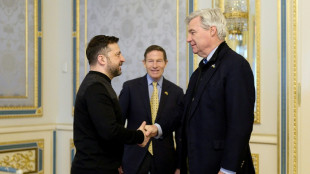 Bipartisan US senators urge Trump to scrap Russian diesel deal
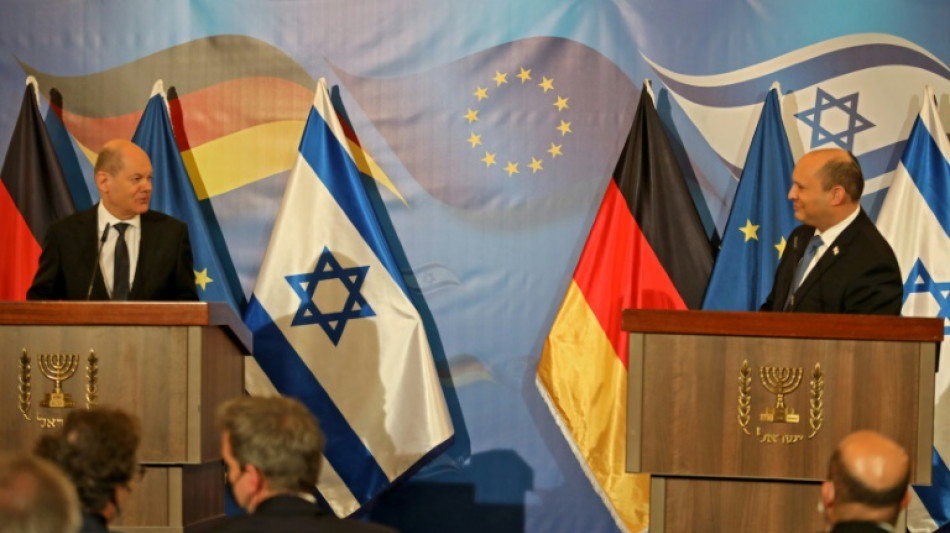
Germany's Olaf Scholz said Wednesday that a new Iran nuclear agreement "cannot be postponed any longer", during his first visit as chancellor to Israel, which staunchly opposes efforts to forge a deal with Tehran.
Scholz's visit, which included a ceremony at Jerusalem's Holocaust memorial Yad Vashem accompanied by Israeli Prime Minister Naftali Bennett, comes amid the geopolitical turmoil sparked by Russia's invasion of Ukraine.
The two heads of government -- both relatively new to office following many years when their countries were ruled by veterans Angela Merkel and Benjamin Netanyahu -- met as rapidly moving world events test their leadership.
Policy differences on Iran, long Israel's arch foe, surfaced at a Jerusalem joint press conference, with Scholz saying Germany "would like to see an agreement reached in Vienna".
The latest round of negotiations to salvage Iran's 2015 nuclear deal started in late November in the Austrian capital and the talks are expected to reach a crunch point in the coming days.
The so-called Joint Comprehensive Plan of Action (JCPOA) secured sanctions relief for Iran in return for strict curbs on its nuclear programme to prevent it acquiring an atomic weapon, a goal Iran has always denied pursuing.
"Now is the time to make a decision," Scholz said. "This must not be postponed any longer and cannot be postponed any longer. Now is the time to finally say yes to something that represents a good and reasonable solution."
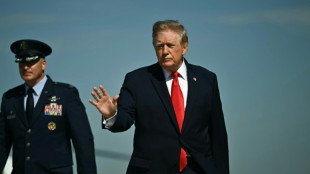
The original 2015 agreement unravelled when former US president Donald Trump withdrew from it, with Israeli encouragement.
Israel's Bennett has said he is "deeply troubled" by the outlines of a new deal taking shape, fearing it does too little to stop Iran from getting the nuclear bomb, while granting it sanctions relief.
Bennett stressed on Wednesday that Israel is "following the talks in Vienna with concern" and warned that "Israel will know how to defend itself and ensure its security and future".
- 'Permanent responsibility' -
At the earlier visit to Yad Vashem, Scholz left a message in the guest book stressing Germany's historical responsibility toward the Jewish state.
"The mass murder of the Jews was instigated by Germany," he wrote. "Every German government bears permanent responsibility for the security of the state of Israel and the protection of Jewish life."
Bennett said the Holocaust "is the wound that forms the basis of ties between Germany and Israel. From this wound we have built significant and steadfast relations."
When it comes to current events, the two leaders have also diverged on their responses to Russia's war in Ukraine.
Since the invasion started last week, Scholz's coalition government has reversed a ban on sending weapons into conflict zones and halted the Nord Stream 2 gas pipeline project between Russia and Germany.
He also pledged 100 billion euros ($113 billion) this year to modernise Germany's army and committed to spending more than two percent of Germany's gross domestic product on defence annually, surpassing even NATO's target.
Israel has taken a more conservative approach, citing its warm ties with both Kyiv and Moscow and security cooperation with Russian forces which have a large presence in Syria on Israel's northern border.
Bennett has resisted Kyiv's request for weapons, according to Israeli media, and this week sent Ukraine 100 tons of non-military assistance, including blankets, water purification kits and medical supplies.
"We have a very measured and responsible policy whose goal is both to help the Ukrainian people and to do what we can to help alleviate some of the pressures and the consequences of this horrific situation," Bennett said as he stood beside Scholz.
Scholz, one a one-day trip, was later due to meet Foreign Minister Yair Lapid and visit the Knesset, or Israeli parliament.
He postponed a scheduled meeting with Palestinian president Mahmud Abbas in Ramallah in the Israeli-occupied West Bank due to the events in Ukraine, the German Foreign Office in Ramallah told AFP.
P.A.Mendoza--AT