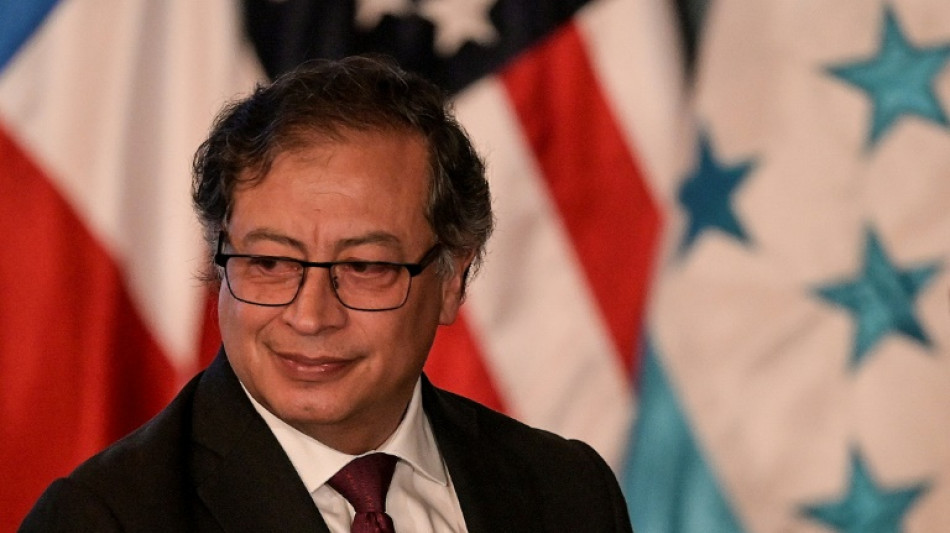
Colombia's Petro replaces 7 cabinet ministers / Photo: Juan BARRETO - AFP

 England's Fin Smith in race against time to face Australia

 UN nuclear watchdog chief urges Iran to grant access

 Boeing shares tumble after it releases cautious growth forecast
 Lula's re-election revives Brazil-US tensions

 Carney moves to remake Canada alliances as US ties strained

 Serbia's students demand state media chiefs resign after poll win
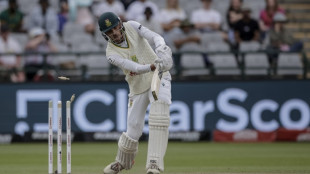 Starc takes six as Australia fight back in South Africa decider
 UK man offered drugged wife to strangers online for sex: court
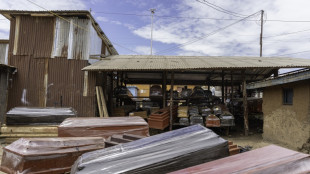 Africa Ebola outbreak passes 10,000 cases, mostly in DR Congo
 EU pushes for more nations to pay to protect nature
 Boeing reports smaller loss as it aims for stable output growth

 Tech firms gain on Anthropic IPO optimism; HSBC slumps in London

 Sri Lanka end England hopes with crushing win over Pakistan

 Dangote, Nigeria's oil tycoon rewriting Africa's story

 Carrick to remain Man Utd boss for Chelsea clash: reports

 Greenhouse gas levels hit new record highs in 2025: UN
 Rybakina looking to clinch year-end number one in Tokyo

 Tech firms track Wall St rally on mixed day for stock markets

 Kane says Ballon d'Or win 'feels like a dream' as tributes pour in

 HSBC profit jumps on higher rates, lower costs
 Rams rediscover offensive balance in 35-21 victory over Raiders

 Mercedes-Benz cuts 2026 profit outlook on tough China market

 Reparations calls follow Charles on tough Caribbean trip

 Jammu and Kashmir ministers resign before planned council expansion
 Germany, EU, stable investment stops despite upheaval: Merz

Colombian President Gustavo Petro on Wednesday replaced seven of his ministers, hours after asking his entire cabinet to resign due to his difficulties in pushing ambitious reforms through Congress.
"Today a new cabinet is being built that will help to consolidate the government's program," Petro wrote in a statement on his official Twitter account.
Among those replaced were liberal Finance Minister Jose Antonio Ocampo and under-fire Health Minister Carolina Corcho.
Earlier in the day, three ministers told AFP that Petro had asked his entire cabinet to resign.
After nearly nine months in power, Petro has been unable to usher in the profound reforms in labor laws, healthcare, pensions and the judiciary that he promised during his campaign.
The cabinet shakeup marks the most serious crisis to date within Petro's government.
On Tuesday, the Liberal and Conservative parties, and the Social Party of National Unity (de la U) distanced themselves from the government, objecting to elements of Petro's far-reaching reform plans.
In his statement, Colombia's first leftist president accused "some traditional political leaders and the establishment" of rejecting his reforms and said he would "configure a government to renew our social change agenda."
Ocampo in a farewell press conference, said: "We have managed to generate a confidence in the economic management of the country that I hope will be consolidated and continue under my successor."
- Rethinking government -
After his August 7 inauguration, Petro took a political risk with his leftist base by installing some ministers from centrist and right-wing parties, such as Ocampo, a Liberal Party veteran.
He put a conservative as defense minister and named to the interior and transportation posts politicians with ties to the parties now opposed to his reforms.
Ocampo was viewed as a mediator within the cabinet and experts said his experience and renown as an economist generated confidence within the markets.
Former university professor Ricardo Bonilla, who was Petro's finance secretary when he was mayor of Bogota, has now taken the same post at national level.
Guillermo Alfonso Jaramillo, the government secretary in the Bogota mayor's office, is the new health minister while Petro named allies Juan Fernando Velasco as interior minister and Mauricio Lizcano to the technology and communications portfolio.
"The cabinet change does not look good for those who represent the traditional parties or those who have said 'No' to the reforms," tweeted Sergio Guzman, director of consulting firm Colombia Risk Analysis.
- 'Unprecedented crisis' -
Opposition to Petro's proposed shuffle came from all sides.
Congress President Roy Barreras, a political ally, described the move as creating "an unprecedented crisis."
He said he could not remember another president "decreeing the death of his coalition" so prematurely.
Center-right former president Juan Manuel Santos said changing the cabinet would "deepen the uncertainty" that people already feel about the future.
Petro, while serving as Bogota mayor from 2012 to 2015, oversaw constant shakeups, and both political foes and former functionaries described him as difficult to work for in a team.
Two months ago, Petro urged his followers to take to the streets to pressure for congressional approval of the reforms. Speaking from the balcony of the presidential palace, he said he would not back down.
Weeks later, on February 28, Petro replaced three members of his cabinet: centrist education minister Alejandro Gaviria, sports minister Maria Isabel Urrutia and culture minister Patricia Ariza.
In addition to the impasse in Congress, Petro has faced setbacks in attempts to make peace with the country's illegal armed groups.
The National Liberation Army (ELN) guerrilla group, which is engaged in peace negotiations, refused to partake in a bilateral ceasefire proposed by the government on December 31.
The Gulf Clan, the largest drug trafficking cartel, was also part of the truce but the president reactivated military operations against the cartel after armed attacks against civilians and the security forces.
E.Rodriguez--AT