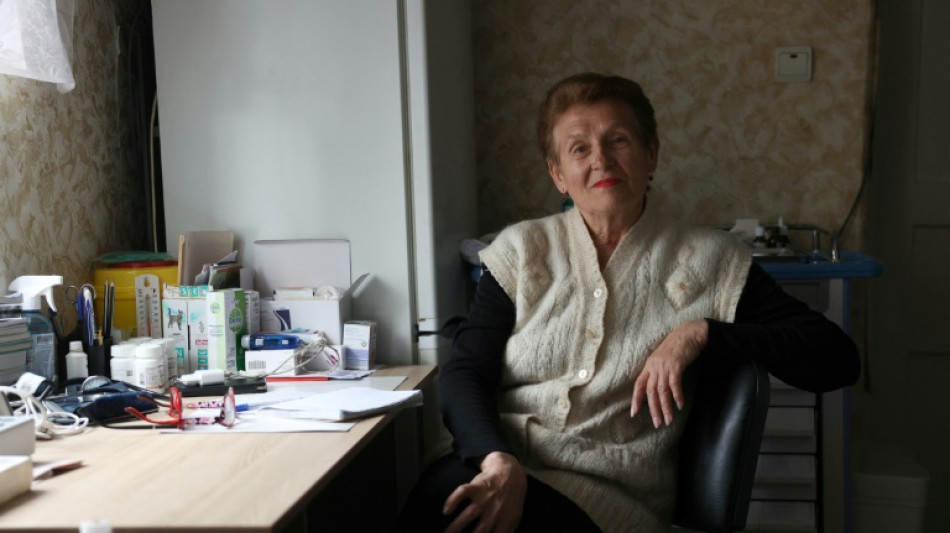
Steely resolve keeps east Ukraine doctor on call / Photo: Anatolii STEPANOV - AFP

 Hundreds held, dozens wounded as French school protests escalate
 US government's new AI chatbot pulls back from debunking Trump
 US tennis star Navarro reveals health battle, ends season

 Panic, anger, tears: Evan Gershkovich's uneasy journey after Russian jail

 UK PM says 'strong indications' Iran involved in airbase incident

 Google restricts access to new AI model over safety concerns

 Watchdog clears former US Fed chief Powell in renovation probe
 Israel PM hails Indian pilot of rerouted flight for averting disaster

 Fury, Joshua kick off 'battle of Britain' in good spirits
 Ronaldo leaves Portugal training camp after coach says he is dropped

 Florence Pugh stars in 'East of Eden' adaption on Netflix

 Watchdog finds no criminal misconduct over US Fed renovations despite Trump probe
 In Manchester, City fans 'devastated' while rival fans call for relegation

 UK-France Channel migrant exchange deal scrapped: London

 Portugal boss denies 'incident' with Ronaldo

 Israel PM says one of the pilots of rerouted flight tried to crash plane

 Manchester City: Main points of damning judgement and possible sanctions

 Italy looking for 'identity' under Mancini says Scalvini
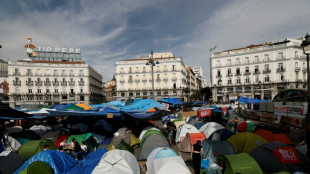 The voices of Spain's housing camp protesters
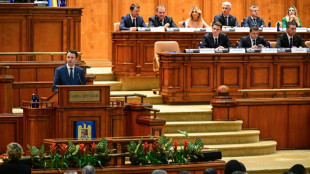 Romanian parliament rejects pro-EU PM candidate

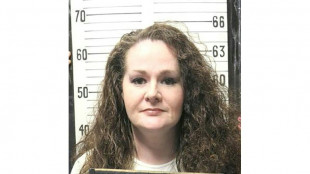 Court halts Tennessee's first execution of woman in 200 years

 Israelis march between once-closed West Bank settlements
 'Welcome back,' says Macron, as UK PM opens door to EU return
 Israel PM says pilot of rerouted flight tried to crash plane

 Demuro hopes to deliver Japan a 'magical' Arc victory

Alla Trubacheva has lived in east Ukraine since she trained as a doctor more than four decades ago but is now having doubts that the battle-scarred industrial town of Siversk is still for her.
The hospital where she worked has been shelled to ruin by Russian forces.
One of her colleagues -- cut down by artillery -- lies buried outside. Staff and patients fled long ago.
It's when missiles shred trees and explode the cottages next to her own that she comes closest to calling it quits.
But something is holding her back.
"Well, people say they need me!" said Trubacheva, leaning back embarrassed, her wide smile betraying a peppering of gold teeth she is shy to expose.
"I'm the only one left, a family doctor, a jack of all trades."
More than a year after Russia invaded, Trubacheva is a lifeline to hold-out residents when its forces -- or even just everyday ailments -- turn on what's left of Siversk's population of 10,000.
The exodus of her patient list, the bombing of her workplace and a new triage network catering to injured troops all point to how the war has forced Ukraine to overhaul healthcare provision.
The ailing come day and night to Trubacheva's small office, with a puppy-themed calendar on the wall and plastic garden furniture for visitors to sit by the stove.
Mondays are busiest.
- 'He would have died' -
"Headaches, sore throats, high blood pressure, stress, insomnia -- you've got it all," she told AFP.
She recounted how one patient last year -- one among around 200 that she keeps track of in a school exercise book -- was struggling with a blocked trachea.
"I don't want to congratulate myself too much, but if I hadn't been there, he would have died," she said, her hands folded on her lap.
"We always need medicine, and we need it even more during times of war."
Blunt thumps of far-off shelling mingle with bird song in her garden. The tail of a missile -- sprinkled with spring blossoms -- sticks out from beneath a fruit tree.
That near miss last year underscores a wave of attacks by Russian forces that Kyiv says have killed at least 106 medical workers and destroyed or damaged more than 540 healthcare facilities.
One of those killed was Trubacheva's colleague -- the second to last doctor in Siversk. One of the hit facilities was her old hospital.
Several recently dug graves lie beneath the caved-in roof of the abandoned two-storey facility strewn with broken glass and chunks of brick.
The wind whips through its blown-out windows and carries the booms of nearby artillery fire -- Russian and Ukrainian -- through wards and operating rooms accumulating dust.
- 'Not everyone leaves' -
The hospital used to have capacity for around 250 patients across several wards.
Now, 25 dazed-looking and elderly Ukrainians displaced by Russia's advance live in its basement to hide from shelling.
President Volodymyr Zelensky ordered civilians in the region to leave last July but the hospital held out for six more months.
"All bedridden patients who had strokes or who couldn't walk were taken out," said 51-year-old Elena, a nurse who remains at the hospital and hands out medicine if people come.
"There's shelling here every day. The buildings were destroyed a long time ago," she added.
Trubacheva said she salvaged much from the shelled laboratory at the hospital after it was hit last summer and an uptick in humanitarian support means her small office is well stocked.
But that is little consolation.
In place of the hospital, ambulances now dot roads torn up by tank tracks throughout the war-battered Donetsk region, ready to extract soldiers wounded in nearby trenches.
The military, Trubacheva explained, have their own medical ecosystem that exists in parallel to hers. But of course, she wouldn't turn a soldier away.
"If they have a headache, why wouldn't I give them a painkiller?"
What advice does she prescribe to patients grappling with the stresses of war?
"Leave! If people come and say they can't sleep or they feel bad, I tell them to leave," she said, adding that many ignore the advice.
"People become attached to where they live, you see. It's scary, but not everyone leaves."
F.Wilson--AT