Could Russia get round sanctions with cryptocurrency?

 Trump says 'massive' oil, gas, mineral exploration to begin in Greenland

 China heads for record trade surplus as exports surge

 Vietnam mourns 700 war dead in major push to identify missing

 Relentless Swiatek wins all-Polish battle to launch Wuhan campaign

 Seeing pivotal election, Israelis fly from around world to vote

 South Korea's Eom 'racially abused' in England's Championship: club

 Asian markets mixed as tech firms claw back some losses

 India shuts down iconic Delhi protest site after three decades

 Japan urges Russia for 'impartial treatment' of arrested journalist

 Lula, Bolsonaro ordered to call off attempts at online censorship

 EU takes a page from Ireland's AI playbook
 Global deforestation slowed in 2025 but surged in Congo basin: study

 LSEG Accelerates Tick History Analysis With NVIDIA

 Saudi employee arrested for allegedly bugging OpenAI office

 Atletico sink Man Utd as Viking deny Bayern in Champions League

 Man United's Martinez blasts board's lack of investment

 Meet A7 International, an Innovative Global Platform Designed to Reinvent the International Payments Market

 Shakhtar hope London move a reminder of Ukraine conflict

 Tresoldi hat-trick fires Brugge past Inter Milan

 Rams axe kicker Mevis after misses cost victory over Bills: reports

 Yamal stays cool at boiling Galatasaray to lift Barcelona to victory

 Arsenal cruise past Lille into share of Champions League lead

 Trump ousts Greece ambassador over ethics scandal

 Reese Witherspoon, France's Mediawan to buy Hello Sunshine

 Bipartisan US senators urge Trump to scrap Russian diesel deal

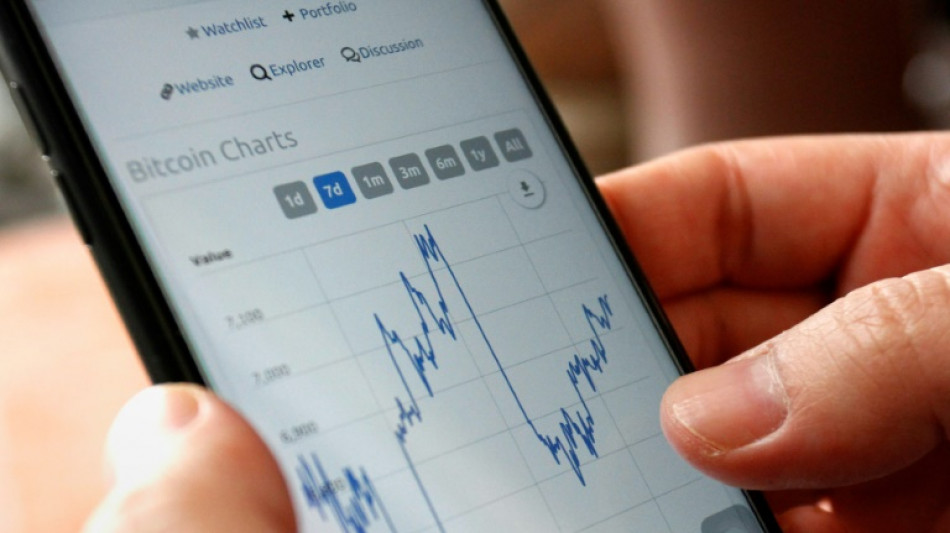
Cryptocurrency purchases in rubles are at a record high following Russia's invasion of Ukraine, raising questions about whether piling into the likes of bitcoin can help Moscow get around sanctions.
- Why crypto is attracting Russians? -
The United States and Western allies have sought to cripple Russia's banking sector and currency with a barrage of sanctions.
They include cutting selected Russian banks from the SWIFT messaging system, rendering them isolated from the rest of the world.
SWIFT's system allows banks to communicate rapidly and securely about transactions -- cutting Russia off is aimed at preventing it trading with most of the world.
Western measures that prohibit transactions with Russia's central bank have also helped plunge the country's economy into turmoil.
The ruble is down 27 percent against the dollar since the start of the year and is trading at more than 100 rubles per US unit, its weakest level on record.
Russians are consequently flocking to cryptocurrencies that operate on a decentralised network and therefore are not directly affected by sanctions.
Crypto data-provider Kaiko has reported record-high purchasing volumes of bitcoin in rubles since last week's invasion.
Another type of digital currency to have benefitted hugely from Russia's assault on its neighbour is tether, a "stablecoin" that is seen as less volatile than cryptocurrencies since it is pegged to the dollar.
"What we saw... looking at tether (is) the average trade size has increased" in Russia, Clara Medalie, head of research at Kaiko, told AFP.
"However it's still relatively low, which shows an interest split between institutional and retail buyers."
- Is crypto a long-term solution against sanctions? -
Governments can, if they wish, order shopping platforms to place restrictions on purchases made using cryptocurrencies as a way of blocking attempts to get round sanctions.
Ukraine's deputy prime minister Mykhailo Fedorov, who is also minister of the country's digital transformation, demanded via Twitter that crypto platforms block Russian accounts, a request reportedly being considered by US authorities.
Analysis group Chainalysis said in a statement that it was "optimistic that the cryptocurrency industry can counter attempts by Russian actors to evade sanctions".
It pointed out that blockchains, or the registers of transactions made by digital currencies, allow Western governments to identify violations.
At the same time, North Korea and Iran have succeeded in getting round sanctions thanks to cryptocurrencies.
North Korea has earned billions of dollars thanks to cyber attacks, while Iran has used low-cost energy to mine bitcoin, according to Caroline Malcolm of Chainalysis.
However, using crypto to sell key Russian export commodities wheat, oil and gas is unlikely, with one veteran broker stressing that trading volumes of bitcoin and its rivals remain insufficient to support large-scale trades.
- Crypto reactions to invasion? -
Bitcoin and other cryptocurrency prices have jumped since the invasion but not simply because of Russian investment.
The Ukranian government since Saturday has received $17.1 million worth of crypto following a call for donations, according to analysts Elliptic.
"We didn't get to choose the time or manner of our little industry becoming geopolitically critical overnight, but it is upon us," tweeted Nic Carter, partner at crypto fund Castle Island.
But Medalie cautioned that the "ruble is not a large cryptomarket. There is not a lot of influence on the rest of the market", she said.
F.Wilson--AT