Tunisia's Ghannouchi: a kingmaker who lost his aura / Photo: FETHI BELAID - AFP/File

 Watchdog finds no criminal misconduct over US Fed renovations despite Trump probe
 In Manchester, City fans 'devastated' while rival fans call for relegation
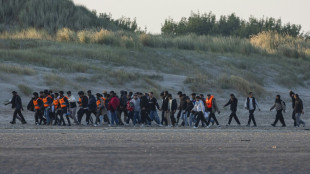
 UK-France Channel migrant exchange deal scrapped: London
 Portugal boss denies 'incident' with Ronaldo

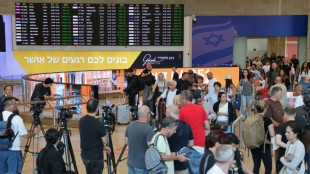 Israel PM says one of the pilots of rerouted flight tried to crash plane
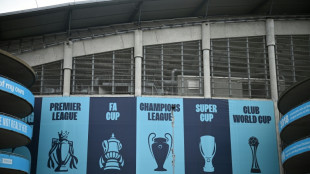 Manchester City: Main points of damning judgement and possible sanctions

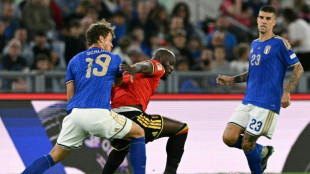 Italy looking for 'identity' under Mancini says Scalvini
 The voices of Spain's housing camp protesters

 Romanian parliament rejects pro-EU PM candidate

 Court halts Tennessee's first execution of woman in 200 years
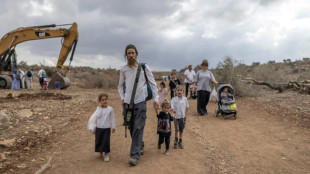 Israelis march between once-closed West Bank settlements
 'Welcome back,' says Macron, as UK PM opens door to EU return
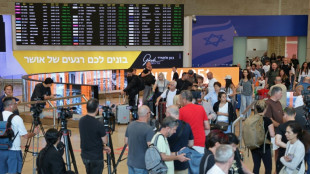 Israel PM says pilot of rerouted flight tried to crash plane

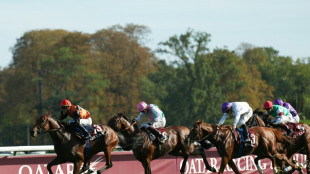 Demuro hopes to deliver Japan a 'magical' Arc victory
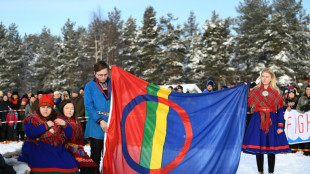
 'Devastated' AI scandal author Orelien returns to Quebec
 US reports firm Q2 economic growth, inflation steady
 Energy costs spark inflation surge across Europe
 Parma appoint Italy World Cup winner Gilardino
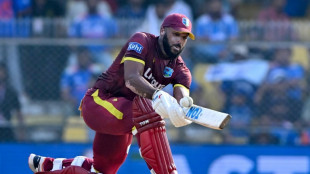 West Indies pile up record 405-7 in second ODI against India
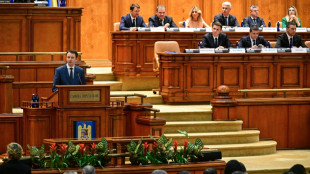 Romanian parliament rejects pro-EU PM candidate amid political deadlock
 Passenger on rerouted flydubai flight says pilot tried to crash plane

 Russia targets Kyiv power supply as freezing winter approaches
 Haze pushes Kuala Lumpur, Singapore into world's most polluted cities

 Dangote's $16bn Kenya refinery 'new chapter' for Africa
 Ireland coach Hallgrimsson confirms second Israel game will go ahead
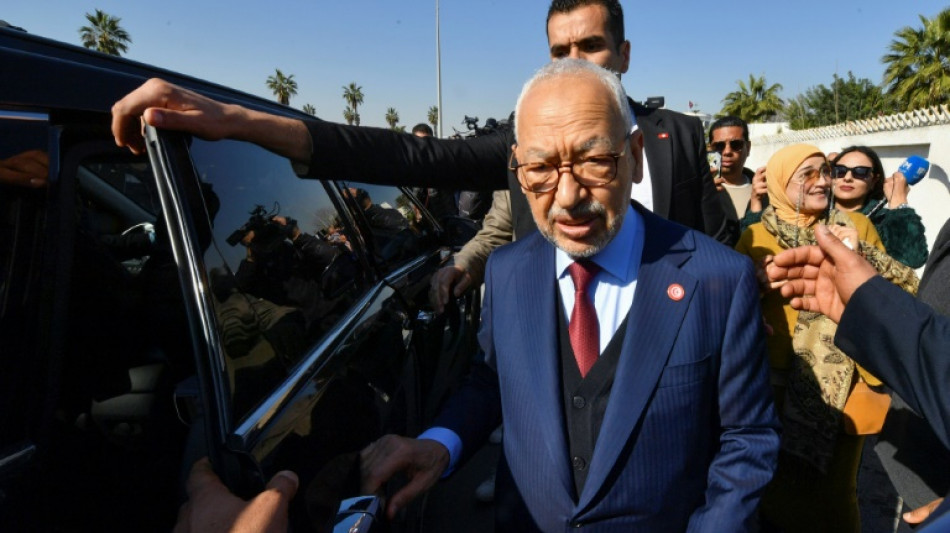
Rached Ghannouchi, the head of the Islamist-inspired Ennahdha opposition party arrested on Monday, once towered over Tunisia's politics but many now blame him for the country's ills.
The reputation of the 81-year-old veteran politician, once seen as a kingmaker following the 2011 Arab Spring revolt that toppled dictator Zine El Abidine Ben Ali, has been tarnished by the political intrigue roiling Tunisia.
Ennahdha played a major role in Tunisia following Ben Ali's downfall but, soon after, the powerful party found itself on a collision course with President Kais Saied.
In July 2021, Saied dissolved parliament and went on to seize wide-reaching powers through a series of moves opponents dubbed a "coup".
He ruled by decree and ordered the arrest of his detractors.
At the time Ghannouchi was the speaker of parliament, the second highest office in Tunisia, a title he lost when Saied neutered the national assembly.
On Monday authorities arrested Ghannouchi after remarks he made warning that eradicating different viewpoints such as the left or political Islam, from which his party originated, might lead to a "civil war".
On Tuesday, authorities closed Ennahdha's offices across the North African country, further stifling Ghannouchi and his party.
Ghannouchi had lived in exile for 20 years before returning home to a triumphant welcome by many following Ben Ali's ouster in 2011.
In the decade that followed, the frail politician called by his supporters the "sheikh", built up a reputation as a tough strategist, placing Ennahdha firmly on the political map of what was the only democracy to emerge from the Arab Spring.
He went as far as striking against-the-grain alliances with liberal and secular parties, to the dismay of some.
- 'Man of consensus' -
The author of fiery calls for Islamic sharia laws in the 1970s, he was initially inspired by Egypt's Muslim Brotherhood before claiming kinship with the Islamist model of Turkey's President Recep Tayyip Erdogan.
Often dressed in a suit and tie, he has since 2016 transformed Ennahdha into a politics-only movement, while promoting himself as a "Muslim democrat" defending conservative values without dogma.
But concessions divided his camp. Some supporters blamed him for backing a controversial law calling for pardons for Ben Ali-era politicians accused of corruption.
Born into a modest family in El Hamma, a small town on the south coast, Ghannouchi studied theology and philosophy, mainly in Cairo and Damascus.
He returned to Tunisia in the late 1960s, and in 1981 founded the "Movement of the Islamic Tendency", a party that was renamed Ennahdha (Rebirth) eight years later.
Twice imprisoned for clandestine political activities, Tunisia's founding president Habib Bourguiba even called for Ghannouchi to be hanged.
Ben Ali pardoned him in 1987 but Ghannouchi was later prosecuted again after an electoral breakthrough. He finally went into exile in London in 1991.
That was where he cultivated the image of an Islamic reformist and a "man of consensus".
- 'Scapegoats' -
Following Saied's power grab, Ghannouchi's aura began to fade. Many among his Ennahdha party criticised him openly, accusing him of controlling decision-making and refusing to implement reforms.
Many of his critics gave up by quitting the party, while in 2020 one hundred influential members leaked a letter calling for Ghannouchi to stand down.
Political scientist Selim Kharrat, who once described Ghannouchi as a political "chameleon", said his arrest was expected.
It followed that of about 20 other opposition figures since February, and shows that they have become in Saied's eyes "scapegoats and black sheep", Kharrat told AFP.
The president's supporters "blame Ennahdha and its allies for the way in which they ruled the country" following the revolution and until 2021, Kharrat said.
A large segment of the population "feel dejected" because of the numerous political, economic and social crises that face cash-strapped Tunisia, he said, despite hopes for a change that the uprising had carried.
The North African country is gripped by an economic crisis that has seen inflation hit 10.4 percent and unemployment reach 15.2 percent, according to the latest official figures
In recent months, Ghannouchi made at least 10 court appearances over an array of accusations including corruption, money laundering and helping jihadists travel to Iraq and Syria.
He emerged each time smiling and flashing the victory sign.
According to Kharrat, his arrest will not spark massive street protests because Ennahdha is no longer popular.
R.Chavez--AT