
Macron's China remarks exasperate EU allies / Photo: LUDOVIC MARIN - POOL/AFP

 Mercedes-Benz cuts 2026 profit outlook on tough China market
 Reparations calls follow Charles on tough Caribbean trip
 Jammu and Kashmir ministers resign before planned council expansion
 Germany, EU, stable investment stops despite upheaval: Merz

 China brands drop Mbappe for 'offending national sentiments'
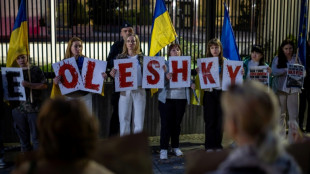
 India orders evacuations as Cyclone Arnab looms

 Dutch broadcaster pulls out of Eurovision over Israel 'sensitivities'

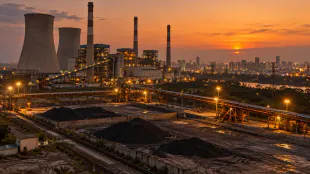 Critical coal inventories affect nearly half of India’s domestic power plants
 FCNR(B) deposit drive puts sharper margin pressure on private banks
 Noel Tata requests records of September 17 Tata Sons board meeting
 Reparations calls to dog King Charles's tough Caribbean trip

 Global rates and foreign outflows remain key risks for Indian markets
 Neha Nagar says ₹3 crore can fund retirement with disciplined planning
 Vikas Satija says steady SIP flows shielded Indian equities from deeper losses
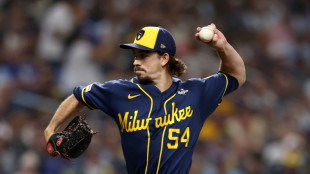 Brewers rout Rays to reach brink of World Series sweep
 Mbappe dropped by Chinese brands for 'offending national sentiments'
 Kuwait exhibition presents Ukraine’s Islamic heritage and cultural ties
 Tech firms track Wall St rally on mixed day for Asian markets
 Jay-Z to perform at Super Bowl LXI halftime show: NFL

 Climate-threatened Fijian utopia rejects calls to relocate
 Israel to give verdict on Netanyahu in pivotal election
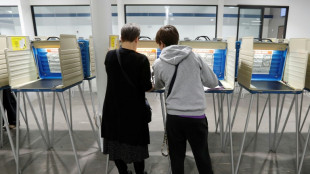 $1m bounties, dawn arrests: Trump presses voter fraud campaign
 Gasping for air: Borneo residents struggle as island burns

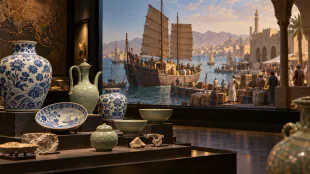 Doha exhibition charts a millennium of Chinese maritime ceramics trade
 New Zealand ex-PM Ardern to teach leadership in Sydney

French President Emmanuel Macron's recent trip to Beijing was billed as a chance to showcase European unity and persuade Chinese leader Xi Jinping to help rein in Russian aggression.
But remarks that Macron made to journalists on his way home about the three-way relationship between China, Europe and the United States did more to rile his EU partners.
In an interview with French daily Les Echos and news platform Politico, Macron warned against Europe being dragged into a conflict between Washington and Beijing.
If the stand-off over Taiwan accelerates, he said, Europe might not have the time nor the resources to build the "strategic autonomy" to act without US leadership that France seeks.
Then, European Union members would "become vassals, whereas we can be the third pole if we have a few years to build it."
The Chinese government was delighted by its guest's remarks. Brussels diplomats less so.
"The French president speaks always for the French Republic," a senior EU official told reporters. "If the German Chancellor says something does also everybody say this is the policy of the European Union?"
Since the interview was published last weekend, French diplomats have scambled to insist that Europe becoming a "third pole" does not mean seeking equidistance between an American democratic ally and an autocratic Chinese rival.
But Macron's warning against subordination to US interests, along with the perception -- rejected by Paris -- that he was suggesting that Europe should not stand up to China over Taiwan, annoyed many EU partners.
- 'Begging dictators' -
EU members from the east of the bloc have long been wary of Europe escaping Washington's embrace, seen as their key security guarantee against Russian aggression and as Ukraine's most important defence.
Poland's Prime Minister Mateusz Morawiecki, on a visit to Washington, slammed fellow EU leaders like Macron, and before him Germany's Chancellor Olaf Scholz, for seeking trade contracts in Beijing.
"Short-sightedly they look to China to be able sell more EU products there at huge geopolitical costs," he said.
"Hence, I don't understand the concept of European strategic autonomy if it means the fact of shooting ourselves in our own knee."
Lithuania's foreign minister, Gabrielius Landsbergis was scathing about the argument that Europe can persuade Xi to intercede with Russia's President Vladimir Putin to de-escalate Moscow's war in Ukraine.
"I propose we recognise the benefits and necessity of trans-Atlantic unity ... I don't suggest begging for dictators to help secure peace in Europe," he tweeted.
The negative reaction in EU countries on Russia's borders was perhaps to be expected, and Macron has never been shy of making provocative statements to stir debate on the future of European strategy.
But traditional French partners in western Europe were also sceptical of his diplomatic freelancing.
German Defence Minister Boris Pistorius said: "We have never been in danger of becoming or being a vassal of the United States."
"I found this comment unfortunate but I think the Elysee has corrected it somewhat," he told ZDF television.
Shortly after his return to Europe from China, Macron set off on a state visit to the Netherlands while debate still raged over his comments.
His host, Prime Minister Mark Rutte, was careful not to criticise his guest, but said "the US is indispensable and without that support it is inconceivable that Ukraine could have withstood the waves of violence of the past year."
In Brussels there is regret that Macron's comments have overshadowed the efforts of European Commission president Ursula von der Leyen to coordinate an EU stance on China.
Before setting off to accompany Macron on his Beijing visit, von der Leyen made a well-received speech on the need for the EU to "de-risk" itself from dependence on China while not "de-coupling" from its huge market.
But she was seen to have received a cold shoulder in China while Macron hogged the headlines.
The president of the European Council, Charles Michel, took to the airwaves to defend -- and to try to explain -- Macron's stance and Europe's strategic ambitions.
"On strategic autonomy, there's much more support than there was a few years ago," he told French television.
- Allies' concerns -
The bond between Washington and Brussels were threatened during former president Donald Trump's term, as the US leader cosied up to Putin and threatened to quit NATO.
This focused European minds on the need to shore up their own defences, for a while, but when Russia invaded Ukraine Washington's military aid to Kyiv far surpassed the EU contribution.
Even supporters of a stronger united European geopolitical role, like centre-right French MEP Arnaud Danjean, fault Macron for pushing on without taking into account allies' concerns.
While the idea that Europe should be better able to stand on its own two feet is accepted, any suggestion that the allies should distance themselves from the US before building up their own forces is unrealistic.
"We struggle to convince our partners essentially because we put the cart before the horse," he tweeted.
"Without first focusing on developing the means of autonomy, making grand declarations by presenting it as a given can only irritate."
M.Robinson--AT