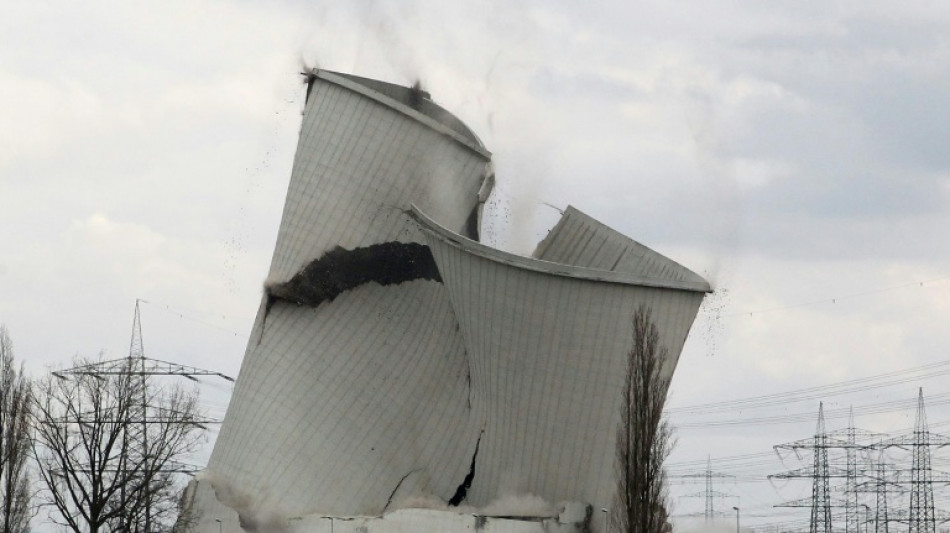
Germany to switch off last remaining nuclear plants / Photo: Daniel ROLAND - AFP

 Dangote to launch $16bn refinery in Kenya
 North Korean leader 'extremely obese': Seoul spy agency
 Yankees and pope-backed White Sox start MLB playoffs with wins

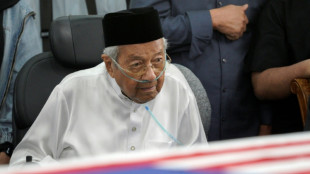 Malaysia's ex-PM Mahathir in hospital for observation

 'No limits': Marathon world record holder Sawe chasing history

 Countdown begins to biggest-ever Rugby World Cup
 Bangladesh women lose ground after quota reform
 Vietnam admits 'differing opinions' on Hanoi development

 Stocks temper gains as oil pares heavy losses, US data in focus

 New Zealand denies breaching climate commitments to EU
 Albert becomes youngest US scorer in 4-2 win over Chile
 Pirate island's plunging population shows Greece's demographic decline
 With elections ahead, Latvia's Russian-speakers reject Moscow's help
 Brazil football clubs face massive sponsorship blow from betting ban
 ChatGPT maker wants to be the App Store for AI as safety concerns grow

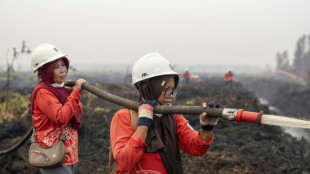 Women fight fires and sexism in Indonesian Borneo

 Forsling's OT blast lifts Florida over Carolina in NHL opener
 Alpha Growth Management Opens Rep Office in Japan

 NBA close to picking new $12-13bn Vegas team owners: report
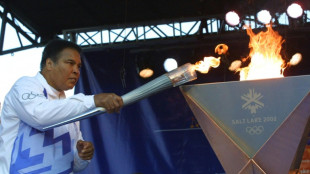 LA28 Olympics torch relay to visit all 50 states
 Spain brush aside Croatia in Nations League, England down Czechs
 Trump hails 'morally binding' AI self-regulation pledge
 Yamal inspires Spain to Croatia romp on World Cup homecoming

 UN to hold fourth informal poll of secretary-general candidates
 Who are the Emiratis behind crisis-hit Manchester City?

Germany will shut down its three remaining nuclear plants on Saturday, betting that it can fulfil its green ambitions without atomic power despite the energy crisis caused by the Ukraine war.
The cloud of white steam that has risen since 1989 over the river in Neckarwestheim, near Stuttgart, will soon be a distant memory, as will the Isar 2 complex in Bavaria and the Emsland plant in the north.
At a time when many Western countries are ramping up nuclear power in their transition to greener energy sources, Europe's biggest economy is resolutely sticking to its plans -- though not everyone is in agreement.
Germany has been looking to phase out nuclear power since 2002, but the decision was accelerated by former chancellor Angela Merkel in 2011 after the Fukushima disaster in Japan.
Fukushima showed that "even in a high-tech country like Japan, the risks of nuclear energy cannot be safely controlled", Merkel said at the time.
The exit decision was popular in a country with a powerful anti-nuclear movement fuelled by fears of Cold War conflict and disasters such as Chernobyl.
But Russia's invasion of Ukraine in February 2022 threatened to upend the plans, putting an end to cheap Russian gas and throwing the country into an unprecedented energy crisis.
- 'Turned too far' -
Just a few months before Germany's last three remaining plants were due to be turned off on December 31, 2022, the tide of public opinion began to turn.
"With high energy prices and the hot topic of climate change, there have of course been calls to extend the power plants," said Jochen Winkler, the mayor of Neckarwestheim.
The government of Chancellor Olaf Scholz, which includes the fiercely anti-nuclear Greens, agreed to extend the life of the plants to April 15.
"There might have been a new discussion if the winter had been more difficult, if there had been power cuts and gas shortages. But we had a winter without too many problems" thanks to accelerated liquefied natural gas (LNG) imports, Winkler said.
Neckarwestheim has around 4,000 inhabitants, more than 150 of whom work at the plant -- but Winkler is philosophical about the decision.
"The wheel has already been turned too far" and there is no point "going backwards" and reversing the process, he said.
Sixteen reactors have been closed in Germany since 2003.
The three final plants provided six percent of Germany's energy last year, compared with 30.8 percent from all nuclear plants in 1997.
Meanwhile, Germany produced 46 percent of its energy from renewables in 2022, up from less than 25 percent a decade ago.
- Ambitious energy targets -
But the current rate of progress on renewables will not be enough for Germany to meet its own targets, much to the ire of environmental campaigners.
These targets "are already ambitious without the nuclear phase-out -- and every time we deprive ourselves of a technological option, we make things more difficult," said Georg Zachmann, an energy specialist at the Brussels-based Bruegel think tank.
The equation is even more complex given the goal of shutting down all coal-fired power plants in the country by 2038, with a first wave of closures in 2030.
Coal still accounts for a third of German electricity production, with an eight percent increase last year to compensate for the loss of Russian gas after Moscow cut supplies in response to Western sanctions over its Ukraine invasion.
The country would need to install "four to five wind turbines a day" over the next few years to meet its needs, Scholz has warned -- a tall order given that just 551 were installed last year.
Germany also needs to more than double the rate at which it is installing photovoltaic equipment, according to the Agora Energiewende think tank.
A series of regulatory relaxations have been adopted in recent months in a bid to help speed up planning processes.
Planning and approval for a wind power project currently takes an average of four to five years, according to industry association BWE.
Even shortening this by one or two years would be "a considerable step forward", it said.
S.Jackson--AT