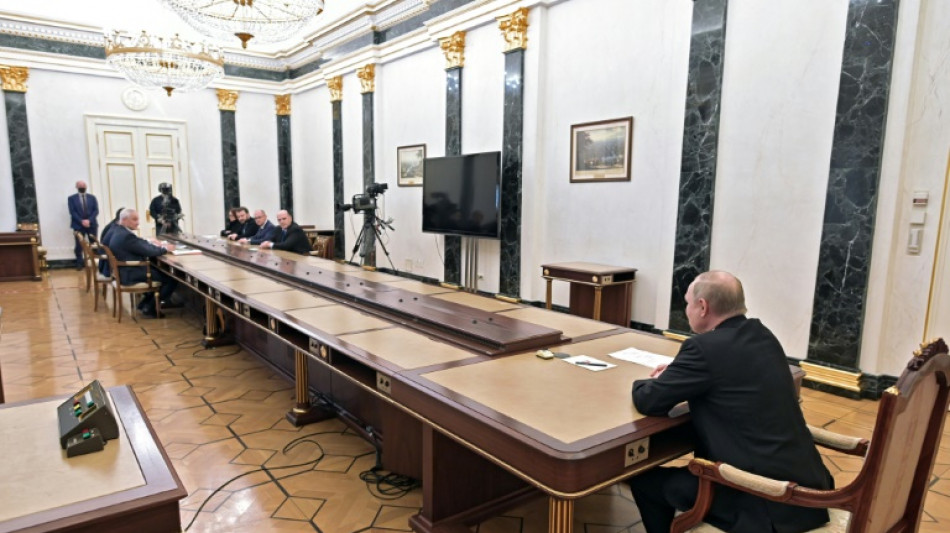
US downplays Putin nuclear mobilization

 South Korean FA condemns 'personal attacks' as rift rumours grow

 Japan urges 'impartial treatment' of journalist arrested in Russia

 What we know about Pope Leo XIV's lung cancer operation

 Advanced economies must 'act now' to lower debt as bond yields spike: IMF

 Deluge by design: Thai villages flooded to protect capital

 Ivan Deforge, the French 'bison tamer' in Moscow

 Indonesians on fire-ravaged island sue state for clean air

 Trump, White House post video of UK man killed by tiger

 CruxOCM and Client Present Closed-Loop Pipeline Automation Results at AVEVA Pipeline Summit 2026

 Saudi says Houthi attacks sparked Aramco fire, wounded 4 in Riyadh

 Few buyers for starving cattle in El Nino parched El Salvador

 Bybit Expands Beyond Crypto as CEO Outlines Next Phase of Financial Platform

 Bayern held by Viking after 'super dumb' Olise red in Champions League

 Why AI makes computer worms harder to stop

 US fines Bank of America $1.2 bn for anti-money laundering violations

 Bayern held by Viking after Olise sees red in Champions League

 Atletico down Carrick's struggling Man United

 Croatia trials full driverless robotaxi service

 US stocks dip ahead of inflation data as tech sell-off hits Asia

 No lights, no friends: Cuban youth grapple with loneliness
 Saudi coalition strikes Yemen oil sites after Houthi attacks
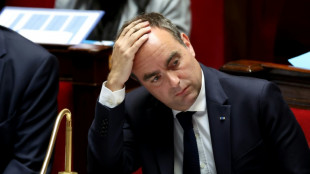 French economy minister denies country caught in debt 'snowball'

 Judge extends halt to Trump's golf course tree-cutting

 Milan's Saelemaekers set for lenghty spell out after ankle surgery

 Nvidia says to invest in French medical website
President Joe Biden and other top US officials played down the threat of Russia's "dangerous" nuclear mobilization Monday as the war in Ukraine intensified with more arms being sent to Kyiv by the West.
Asked if Americans should be worried about nuclear war after President Vladimir Putin said he was putting his strategic forces on alert, Biden gave a calm "no" in response.
State Department spokesman Ned Price said Washington sees "no reason" to change the alert levels of the US nuclear force, and a senior defense official said the Pentagon had not seen any palpable shift by the Russians despite Putin's Sunday announcement.
The Pentagon continues to "review and analyze and monitor" Russia's posture, said Defense Department spokesman John Kirby.
Secretary of Defense Lloyd Austin "is comfortable with the strategic deterrence posture of the United States and our ability to defend the homeland," Kirby told reporters.
- 'Provocative rhetoric' -
On Sunday, four days after Moscow launched the invasion of Ukraine, Putin announced that he had ordered his military chiefs "to put the deterrence forces of the Russian army into a special mode of combat service," using a reference to the country's massive nuclear weapons infrastructure.
US officials called the order "dangerous" and "escalatory."
But on Monday officials at the US State and Defense Departments said they were still trying to determine just what action was being taken in response to the order.
"This sort of provocative rhetoric ... is dangerous, adds to the risk of miscalculation, (and) should be avoided," Price said.
"We have long agreed -- the United States and the Russian Federation -- that a nuclear use would have devastating, devastating consequences," said Price.
- Russians slowed, not stopped -
One Monday Biden hosted a video conference with allies and partners supporting Ukraine in its fight against what the White House called "Russia's unjustified and unprovoked war."
In the secure meeting, the group discussed "coordinated efforts to impose severe costs and consequences to hold Russia accountable" while trying to maintain global economic stability, including keeping energy prices down, the White House said.
The US and NATO allies continued to ship in to Ukraine munitions that Price said would help them battle both Russian armored vehicles and air power.
He declined to confirm a report that Washington, following Germany's example, was delivering shoulder-mounted Stinger missiles that can bring down helicopters and slower-moving jets, after denying them to the Ukrainians for months.
In an assessment of the progress of Russian forces, Pentagon spokesman Kirby said fuel shortages, other logistical issues, and unexpectedly stiff resistance from Ukraine's military had significantly slowed the Russian advance.
"It's clear the Russians had not made the progress that they wanted to make by day five," said Kirby.
"They have faced setbacks. And they have faced resistance," Kirby told reporters.
Nevertheless, he said, even if they have been slowed the Russians have an overwhelming force -- 25 percent of which remains just outside Ukraine poised to move -- that is determined to seize key cities and oust the Ukrainian government.
"Make no mistake, Mr Putin still has at his disposal significant combat power. He hasn't moved all of it into Ukraine," Kirby said.
"They have suffered setbacks, but I don't think we can just assume that they're going to stay set back."
"They continue to want to move on Kyiv, to capture Kyiv," he said.
R.Garcia--AT