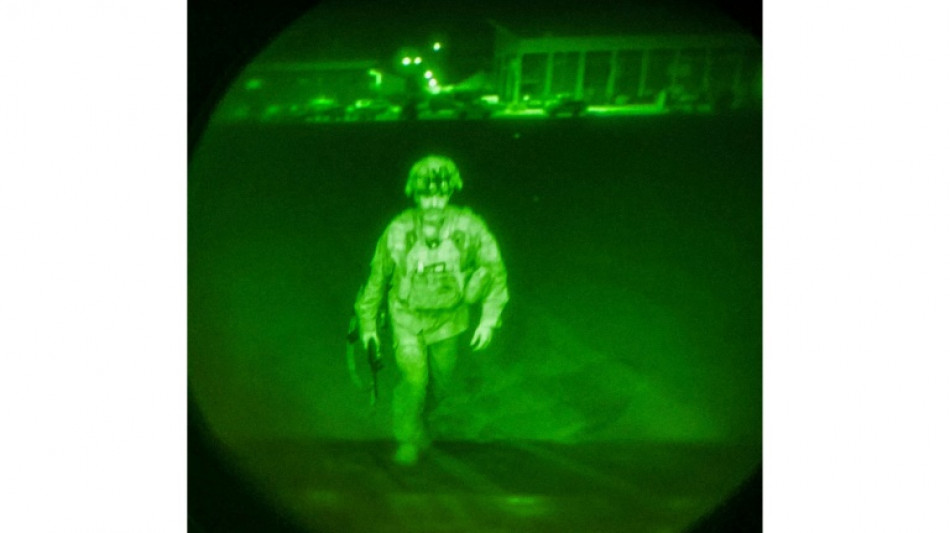
White House blames bad intel, Trump for traumatic Afghan exit / Photo: Jack Holt - US Central Command (CENTCOM)/AFP/File

 NBA close to picking new $12-13bn Vegas team owners: report

 LA28 Olympics torch relay to visit all 50 states

 Spain brush aside Croatia in Nations League, England down Czechs

 Trump hails 'morally binding' AI self-regulation pledge
 Yamal inspires Spain to Croatia romp on World Cup homecoming

 UN to hold fourth informal poll of secretary-general candidates
 Who are the Emiratis behind crisis-hit Manchester City?
 Singer Angelique Kidjo urges Africans to 'create together'

 Alleged Rihanna mansion shooter mentally fit for trial, says judge
 Mystery over UK airbase scare as police find petrol not explosives

 OpenAI unveils low-cost AI model, a day after shelving Astra upgrade
 Premier League confirms Man City guilty of serious financial breaches
 Brazil's Lula turns to Bad Bunny tune to criticise Trump ahead of polls
 Nigerian dancer eyes world record after seven-day marathon
 Swiss regulator concludes Julius Baer bank probe

 Brazil's patron saint pulled into latest election scrap

 Football overload leaves players near 'breaking point', warns Tebas
 Paris Eiffel Tower says chief to step down after uproar over removing women staff
 Amaze Holdings (NYSE: AMZE) Executes Binding LOI to Acquire BullionFX | Alchemy, a Decentralized Gold-Backed Financial Ecosystem for Valued at US$155 Million
 Clashes between French teens, police as school blockades intensify

 Stocks move sideways despite oil moving lower

 African leaders to gather in Egypt for business summit

 UK decides against charging foreign visitors for museums

 Dallaglio to sell England World Cup winners' medal

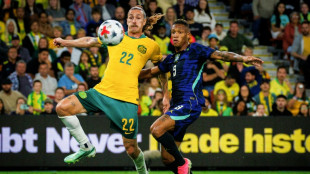 Brazil come from behind to beat Australia 4-2 in friendly

The White House on Thursday released a long-awaited review of the US exit from Afghanistan, laying blame on Donald Trump and a huge intelligence failure, but defending overall US conduct of the traumatic operation.
The classified review was sent to Congress, where the Republican majority in the House of Representatives is investigating what it says is President Joe Biden's failures during the August 2021 withdrawal.
Presenting a declassified summary, National Security Council spokesman John Kirby conceded mistakes had been made in the exit, which saw the Taliban seize control of Afghanistan within weeks, forcing the last American troops and their allies into a desperate evacuation.
"Ending a war, any war, is not an easy endeavor, certainly not after 20 years," Kirby told reporters. "It doesn't mean it wasn't worth doing -- ending that war in Afghanistan."
The White House largely blamed Biden's predecessor Donald Trump for creating the conditions leading to the rout.
But it also acknowledged that the US intelligence services had failed to understand the strength of the Taliban and the weakness of the Afghan government's forces that Western countries had spent years propping up.
"Clearly we didn't get things right" on intelligence, Kirby said.
In the end, nothing "would have changed the trajectory" of the exit and "ultimately, President Biden refused to send another generation of Americans to fight a war that should have ended for the United States long ago," the report summary said.
The pullout, ending on August 30, 2021, shocked Americans and US allies, as the Taliban swept aside Western-trained Afghan forces within weeks.
Thirteen US troops and 170 Afghans were killed in an August 26 suicide bomb attack at the crowded perimeter to the airport, where an unprecedented military airlift operation managed to get more than 120,000 people out of the country in a matter of days.
Before US troops were able to secure the whole airport, the world witnessed tragic scenes of panicked Afghan civilians mobbing airliners and even falling to their deaths as they attempted to cling onto departing planes.
- Intelligence is 'hard business' -
In the summary, the White House placed heavy blame on a February 2020 deal struck between Trump's administration and the Taliban, saying this put the incoming Biden government in an impossible position.
"The departing Trump administration had left the Biden administration with a date for withdrawal, but no plan for executing it. And after four years of neglect -- and in some cases deliberate degradation -- crucial systems, offices, and agency functions that would be necessary for a safe and orderly departure were in disrepair," the document said.
It also stressed that Trump in his final 11 months in office had steadily reduced the US troop presence in Afghanistan, reaching just 2,500 personnel by the time Biden took office in January 2021.
"As a result... the Taliban were in the strongest military position that they had been in since 2001," when the United States invaded Afghanistan for a mission initially meant to focus on the planners of the September 11, 2001, attacks on New York and Washington.
Kirby acknowledged intelligence failures, saying the US government did not manage to predict "how fast the Taliban were moving across the country" or "the degree to which they were constructing these deals in the hinterlands that kind of fell like dominos."
"We didn't anticipate how fast the Afghan national security forces were going to fold," he said. "I don't think we fully appreciated the degree of corruption that was in the officer ranks in the military."
"Intelligence is a hard business and they get it right a lot too," Kirby said.
Ultimately, the White House report suggested, the long-term failure of the war, including the surprising resilience of the Taliban and weakness of government forces, meant the ending was never going to go well.
"After more than 20 years, more than $2 trillion dollars, and standing up an Afghan army of 300,000 soldiers, the speed and ease with which the Taliban took control of Afghanistan suggests that there was no scenario -- except a permanent and significantly expanded US military presence -- that would have changed the trajectory," it said.
A.Ruiz--AT