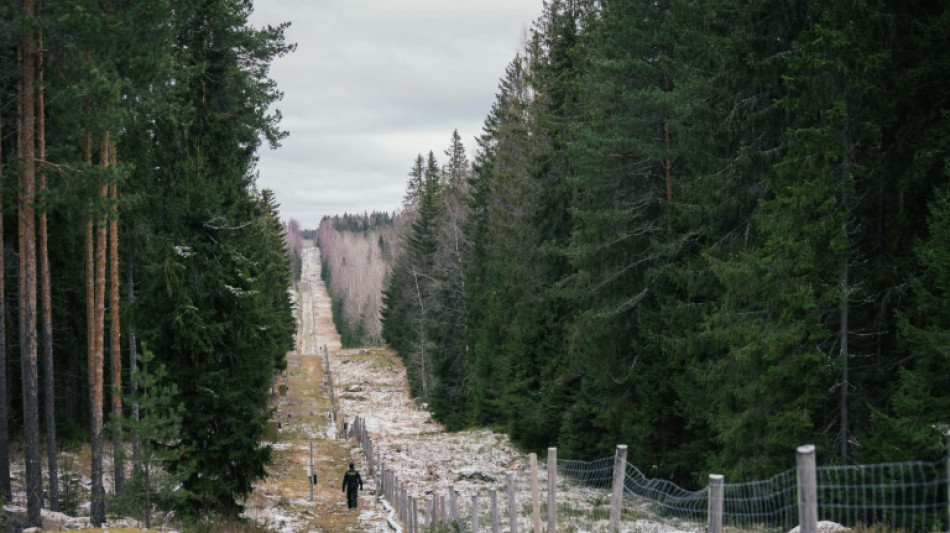
Finland heads for elections under new iron curtain / Photo: Alessandro RAMPAZZO - AFP/File

 Kuwait exhibition presents Ukraine’s Islamic heritage and cultural ties
 Tech firms track Wall St rally on mixed day for Asian markets
 Jay-Z to perform at Super Bowl LXI halftime show: NFL
 Climate-threatened Fijian utopia rejects calls to relocate
 Israel to give verdict on Netanyahu in pivotal election
 $1m bounties, dawn arrests: Trump presses voter fraud campaign
 Gasping for air: Borneo residents struggle as island burns
 Doha exhibition charts a millennium of Chinese maritime ceramics trade
 New Zealand ex-PM Ardern to teach leadership in Sydney
 Ballon d'Or 'beyond wildest dreams' but Kane has plenty more to prove
 No envy, no secrets: How Spain's Gipuzkoa became football coaching hotbed
 South Korea economy grows three times faster than expected in Q3

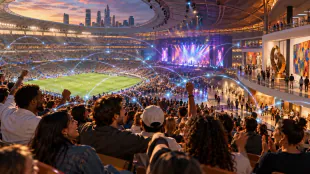 Al-Thawadi urges technology to deepen human connection through shared experiences
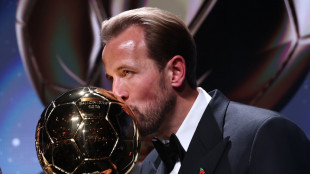 Ballon d'Or: Harry Kane's crowning moment
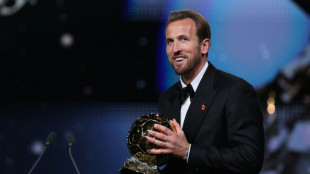
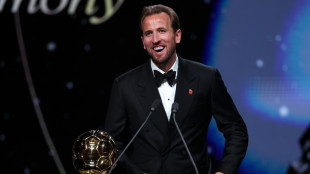 Harry Kane wins men's Ballon d'Or
 Lula win rattles Brazil markets over spending spree fears

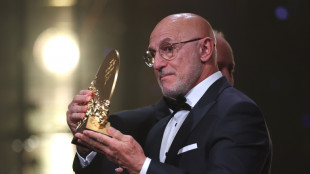 De la Fuente wins men's Ballon d'Or coach of year

 Trump slams 'rigged' Brazil election after ally loses to leftist Lula
 Nadal returns for Vegas hardcourt event
 Fainga'anuku named as loose forward for All Blacks northern tour

 Anthropic points to AI dangers, soaring sales in IPO filing
 Sinner to play rescheduled Saudi Six Kings in December
 Brazilian lawmaker Andre Janones, Lula's social media 'general'

 Swiss Ebola patient repatriated from Nigeria
 Nations far from a deal as UN nature talks enter final stretch
When Russia invaded Ukraine, a new iron curtain severed once-close ties between Moscow and Helsinki -- something Ari Joronen can see with his own eyes from his farm in eastern Finland.
"The trees have been cleared because of the new border fence," he says, overlooking part of his property in the town of Imatra that adjoins the Russian border, a few hundred metres from his house.
Finland -- which holds legislative elections on Sunday -- unveiled plans in November to fence off 200 kilometres of its 1,300-kilometre (800-mile) border with Russia.
"The war in Ukraine has been a turning point. Finns have had to rethink their relationship with Russia," said Johanna Vuorelma, a researcher at University of Helsinki.
So close to the border he can hear a firing range on the other side, Joronen's property is currently separated from Russia by just light wooden livestock fences, like the rest of the Finnish-Russian border.
But by summer, Joronen will see a three-metre (10-foot) high steel fence topped with barbed wire erected on his land.
The whole fence is due to be completed by 2026.
"It is good for the future. At some point, it will probably be needed," Joronen says.
The project is just part of Finland's massive turnaround in its relations with its eastern neighbour.
Finland ceded around 10 percent of its territory to the Soviet Union during World War II, but even at the height of the Cold War it never erected a wall -- though it did submit to a period of forced neutrality under Moscow's watchful eye called "Finlandisation".
Following the Soviet Union's collapse in 1991, Finland remained militarily non-aligned and had high hopes for a new era with its powerful neighbour.
Helsinki hoped to become a hub for trade and diplomacy between the West and Russia.
More than a century after its independence from Russia and three decades after joining the EU, the country of 5.5 million people is now forging a new foreign policy identity -- cementing its ties with the West as it takes its final steps toward NATO membership.
- Historical trauma -
On the military island of Santahamina in Helsinki, young reservists fill their assault rifle magazines with their bare hands in temperatures dipping to minus 15 degrees Celsius (5 degrees Fahrenheit), as the white snow reflects the blinding sunlight.
In the most visible sign of this new era, Finland ended its decades-long policy of military non-alliance when it applied to join NATO in May 2022.
Reservist Aleksi Heino, an engineering student, says the war in Ukraine brings "a sense of reality" to his training.
Colonel Vesa Laitonen, who leads the exercise, says motivation among conscripts and reservists is at a record high "because of the situation in Ukraine."
A grand duchy since 1809, Finland declared independence from Russia in 1917 -- only to find itself repelling a Soviet invasion in 1939 in what is called the Winter War.
Finns now are keen to defend their country.
"That legacy comes from decades ago, perhaps from the spirit of the Winter War", Laitonen suggests.
Its violent history with its neighbour involved a lot of "painful experiences and trauma", researcher Vuorelma said.
The new government voted in at the weekend will have to forge a new path.
- 'Special relationship' -
President Sauli Niinisto once prided himself on his close ties with Russian President Vladimir Putin, but now he and Prime Minister Sanna Marin are among Europe's most vocal opponents of Moscow.
In the past, Helsinki pursued a "special relationship with Russia" and a policy to "maintain good relations, both economically and politically," Vuorelma explained.
The flip side of this "economy first" thinking was to ignore "negative developments in Russia", she said, with foreign and security policy issues overshadowed by economic arguments.
It was thought that "good economic relations with Russia are in Finland's interests, but at the same time they tie Russia to democratic development", Vuorelma added.
But when Finns discovered this didn't work, they were left disappointed and betrayed, she said.
Finnish voters rank national security and defence as important election topics.
The brunt of the new iron curtain is borne by Finns living in border towns like Imatra, with close ties to Russia, and which are dependent on the country for tourism and trade.
Like others in the region, Joronen used to visit Russia regularly for work and groceries -- but now the visits have stopped.
"I haven't been there as long as the war in Ukraine has been going on," he says.
F.Ramirez--AT