'A new era': Germany rewrites its defence, foreign policies

 Asian markets mixed as tech firms claw back some losses
 India shuts down iconic Delhi protest site after three decades
 Japan urges Russia for 'impartial treatment' of arrested journalist
 Lula, Bolsonaro ordered to call off attempts at online censorship
 EU takes a page from Ireland's AI playbook
 Global deforestation slowed in 2025 but surged in Congo basin: study
 Saudi says Houthi attacks sparked Aramco fire, wounded 4 in Riyadh
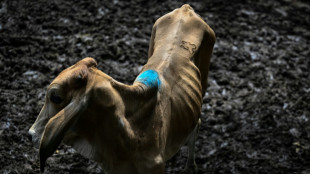 Few buyers for starving cattle in El Nino parched El Salvador
 Bybit Expands Beyond Crypto as CEO Outlines Next Phase of Financial Platform

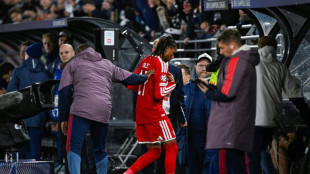 Bayern held by Viking after 'super dumb' Olise red in Champions League
 Why AI makes computer worms harder to stop
 US fines Bank of America $1.2 bn for anti-money laundering violations
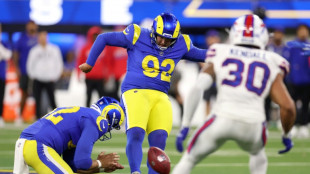
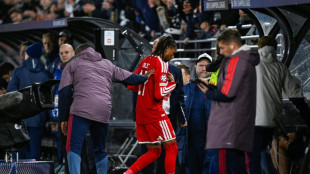 Bayern held by Viking after Olise sees red in Champions League
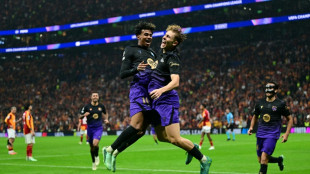
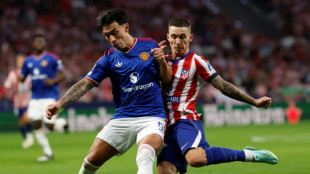
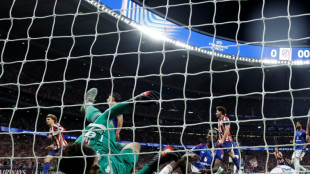 Atletico down Carrick's struggling Man United
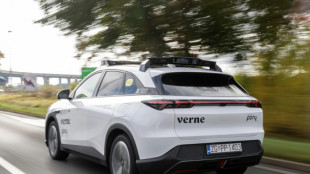 Croatia trials full driverless robotaxi service
 US stocks dip ahead of inflation data as tech sell-off hits Asia

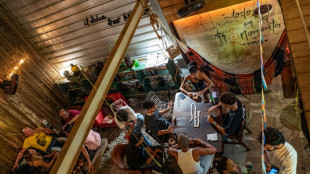 No lights, no friends: Cuban youth grapple with loneliness
 Saudi coalition strikes Yemen oil sites after Houthi attacks
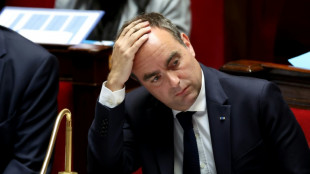 French economy minister denies country caught in debt 'snowball'
 Judge extends halt to Trump's golf course tree-cutting
 Milan's Saelemaekers set for lenghty spell out after ankle surgery
 Nvidia says to invest in French medical website
 Real Madrid's Mourinho has 'trust' in referees despite complaints
 Mendis, Shanaka star in Sri Lanka consolation T20I win
 Demonstrations backing France's protesting students gather strength
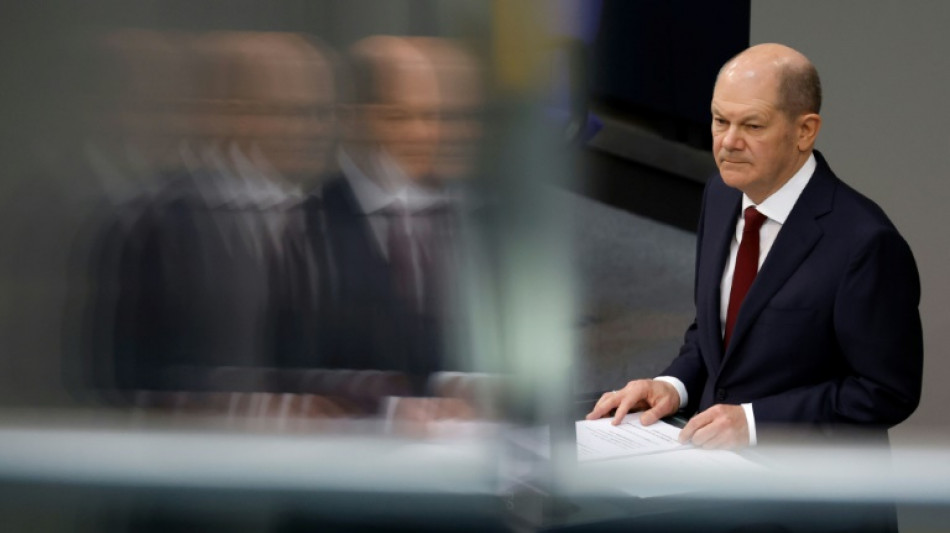
Chancellor Olaf Scholz on Sunday announced a "historic" shift in Germany's foreign and defence policy, as Russia's invasion of Ukraine forces Europe's biggest economy to ditch decades of reluctance in raising its military profile.
Haunted by its post-war guilt, Germany has always trod lightly and quietly on the world stage when it comes to conflicts.
But at an emergency parliamentary sitting on Sunday, Scholz, who himself had been accused of dawdling on the Ukraine crisis, said: "With the invasion of Ukraine, we are now in a new era."
Hours after Germany dramatically reversed its ban on lethal weapons exports to conflict zones by announcing huge shipments to Ukraine, Scholz said 100 billion euros ($113 billion) will be earmarked for investments for the army in 2022 alone.
The financial bazooka for the Bundeswehr should be written in the German constitution, he said.
Europe's biggest economy will also "from now on -- year after year -- invest more than two percent of gross domestic product in our defence," said Scholz.
The commitment goes above the two-percent target fixed by NATO, overturning years of under-investment that had put Germany in the crosshairs of its allies.
Heavy criticism levied by former US president Donald Trump against ex-chancellor Angela Merkel over Germany's failure to meet NATO targets marked the transatlantic relationship.
But Scholz said Putin's assault has made clear that "Germany will have to invest clearly more in the security of our country."
"The aim is a powerful, state of the art, advanced army that protects us reliably."
-'Different world' -
Scholz, who took office in December after staging a stunning upset of Merkel's party in elections, had often been derided for his robotic speeches defending existing policies.
But the Ukraine crisis appears to have transformed the man once described by Spiegel magazine as "the embodiment of boredom in politics", with what Bild daily called a "historic speech" on Sunday that gives a "jolt to sleepy, bored Germany".
The volte-face is all the more remarkable given the composition of Germany's current government.
After 16 years of conservative-led coalition under Merkel, Scholz's centre-right Social Democrats (SPD) are currently in charge, along with junior partners the Greens and the liberal FDP.
While the Greens have always had an anti-weapons export stance, the SPD has been accused of an overly cosy attitude with Russia, while the FDP is often criticised for privileging economic interests.
But Foreign Minister Annalena Baerbock of the Green party declared that "perhaps on this day, Germany is leaving behind a form of special and unique restraint in foreign and security policy".
"The rules that we have set ourselves must not take us away from our responsibility. If our world is a different one, then our policy must also be different."
Germany said it was delivering 1,000 anti-tank weapons and 500 "Stinger" surface-to-air missiles from its Bundeswehr stocks to Ukraine.
It will also boost troops in NATO's eastern flank, including with new deployments to Slovakia, said Scholz, also voicing readiness to join the defence of allied airspace with anti-aircraft rockets.
- Army woes -
Plagued by years of financial neglect, the morose state of the Bundeswehr had been laid bare by the chief of the German land army, Alfons Mais, on the same day that Putin ordered his troops into Ukraine.
"The options we can offer to politicians to support (NATO) are extremely limited," he wrote in the stark admission on social network LinkedIn.
The Bundeswehr "is more or less bare," he said.
Since the end of the Cold War, Germany has reduced its troop strength from 500,000 at the time of reunification to just about 200,000 today.
Defence officials have over the last years repeatedly sounded the alarm over the army's equipment woes -- a litany of disrepair plaguing fighter planes, tanks, helicopters and ships.
Germany's dark war past has nurtured a strong pacifist tradition that, faced with Russia's incursion, critics say bordered on naivety.
Over the weeks while the crisis was brewing, Germany repeatedly rebuffed Kyiv and allies' pleas to send weapons to Ukraine.
Estonia's bid to hand over to Kyiv eight old Howitzers purchased from ex-communist East Germany was stuck in a bureaucratic tangle in Berlin for weeks before it finally won approval on Sunday.
Germany had offered only 5,000 helmets to Ukraine in the run-up to the conflict, making it a subject of ridicule.
Europe's most populous nation was also accused of putting its economic and energy interests first, as it clung to the Nord Stream 2 pipeline that was due to channel Russian gas to Europe, before finally putting it on hold this week.
But Scholz vowed to shift Germany from dependence on others for its energy imports, saying that the current stress on the energy markets showed the country needed to press on with its switch to renewables.
Scholz "has changed dramatically in the Ukraine crisis. And now, he is changing the country," said Bild in an editorial.
P.A.Mendoza--AT