-
 Antonelli outpaces Ferraris to claim pole for British Grand Prix
-
England bid to emulate Lionesses and Red Roses in T20 World Cup final
-
 Tens of thousands rally in France against sexual violence
-
French Open champ Zverev into Wimbledon last 16

-
 Antonelli takes pole position for British Grand Prix
-
Teenage star Sooryavanshi out for 14 on India debut
-
 'World Cup starts now' as Spain, Portugal clash in last 16
-
Splish-splash! Parisians and tourists soak in the Seine

-
 A 'garden inside the Garden': More details of Swift-Kelce wedding emerge
-
Swiatek dumped out of Wimbledon by Eala, Serena withdraws from doubles

-
 Serena Williams pulls out of Wimbledon doubles with knee injury
-
Swiatek's Wimbledon title defence ended by Philippines' Eala

-
 Former champ Rybakina crashes out at Wimbledon
-
US celebrates 250th birthday as Trump warns of enemy within

-
 Mass protests in Germany fail to stop far-right AfD congress
-
Farrell hails Ireland character in Wallabies win but says work to do

-
 Ireland pip Australia 33-31 in Nations Championship nailbiter
-
Ireland edge Australia 33-31 in Nations Championship nailbiter

-
 Antonelli edges Hamilton in sprint to extend title lead
-
Mali hit by new wave of coordinated rebel attacks

-
 Rennie 'relief' as All Blacks tenure begins with narrow win over France
-
Hosts Canada, Mexico and USA thrive in their World Cup

-
 Europe's baked rice bowl seeks escape from drought
-
Japan beat Italy 27-10 in Nations Championship opener

-
 Ukraine says still fighting for eastern stronghold
-
Struggling German auto supplier Continental to sell unit

-
 Mali hit by new wave of coordinated attacks
-
Pope urges Europe to protect migrants in visit to island frontier

-
 New Zealand edge France 34-32 in thriller to open Nations Championship
-
Mass protests in Germany as far-right AfD meets

-
 Pope defends migrants at Mediterranean island frontier
-
France face Philly furnace as World Cup last 16 gets under way
-
 Pope to defend migrants at Mediterranean island frontier
-
Australia goalkeepers were in dark about World Cup shootout switch
-
 US turns 250 as Trump warns of 'attack' on American identity
-
Billboards, cologne and flowers: Turkish capital gets NATO makeover

-
 Feels like 'victory': Cape Verde celebrates heroic World Cup defeat
-
Trump says American identity under 'renewed attack' as US turns 250
-
 Haaland's stetson, Cape Verde's pride: World Cup last-32 moments
-
World Cup serves up Wimbledon dilemma: football or tennis?

-
 Colombia overcome Ghana to reach World Cup last-16
-
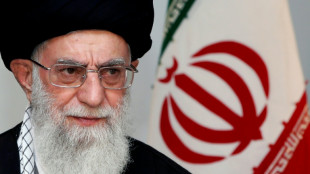
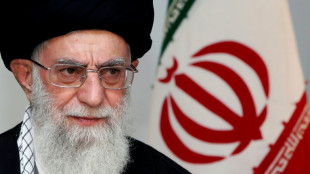
Huge crowds gather as Khamenei funeral ceremonies begin in Iran
-
 Cape Verde show anything is possible at World Cup with 'big hearts'
-
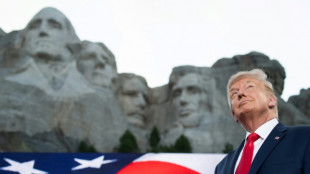
Trump set for Mount Rushmore address as US turns 250
-
 Huge crowds gather as Khamenei funeral ceremonies open in Iran
-
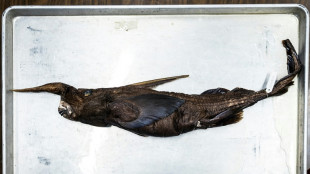
New species of ghost shark may have been found in Costa Rica
-
 Mass protests expected as German far-right AfD meets
-
Argentina advance after Cape Verde World Cup scare, Egypt through

-
 Argentina survive Cape Verde scare to reach World Cup last 16
-
Huge crowds expected as Khamenei funeral ceremonies open in Iran
Submarine deal highlights concerns over rising Chinese power
A landmark nuclear submarine pact between the United States, Australia and Britain underscores concerns over growing Chinese military power, but it will be years before the new vessels can help counter Beijing's efforts to expand its reach and influence.
The deal -- part of an agreement known as AUKUS -- will see Australia replace its diesel-powered submarines with nuclear-powered ones that have far greater stealth and range, first through purchases from the United States and later with domestically produced vessels.
But the effort faces challenges including a long timeline and the need for expanded production capacity, while China is currently improving its armed forces and aggressively pursuing territorial claims in the Indo-Pacific, threatening Washington's long-held military edge in the region.
"Each nation has a slightly different rationale for AUKUS, but it largely boils down to China," Charles Edel, a senior advisor at the Center for Strategic and International Studies, said at a recent event.
"China was not mentioned when AUKUS was first announced, although the exponential growth of Beijing's military power and its more aggressive use over the past decade was the clear animating force behind it," he said.
The United States views China as its most consequential challenge, and is seeking to deter military action by Beijing, especially when it comes to Taiwan.
US officials say China wants its military to be ready to invade Taiwan -- the self-ruled island that Beijing considers part of its territory and has vowed to take one day, by force if necessary -- by 2027.
But Australia will not receive the first of its nuclear-powered submarines -- Virginia-class vessels purchased from the United States -- until the 2030s, meaning they would be too late to help head off Chinese military action before then.
- 'Significant improvements' needed -
"It's well known that we have a deterrence challenge now and not one that materializes around 2040," said Edel. "The challenge here is how AUKUS can begin contributing solutions to the set of challenges now."
Moving from Australia's current Collins-class submarines to the Virginia class will also be a major change for Canberra's navy, with some versions of the new submarines being nearly twice as large and requiring more than double the number of sailors.
The AUKUS partnership was first announced in 2021 and was followed by an 18-month consultation period, with the leaders of Australia, Britain and the United States announcing the results on Monday at a naval base in the US state of California.
The aim is for Australia to deliver a domestically produced nuclear-powered submarine known as SSN-AUKUS in the early 2040s, a senior US administration official told journalists ahead of the announcement.
It will be based on Britain's design for its next-generation attack submarine while also incorporating technology from the Virginia class.
The AUKUS submarine deal "is going to require significant improvements" in "industrial bases in all three countries," the official said.
There have been concerns that AUKUS could impact submarine production for the US Navy, and Representative Rob Wittman of the US House Armed Services Committee said construction for Australia cannot come at the expense of that needed for American forces.
"AUKUS will not realize its full potential if the overall number of submarines crewed by AUKUS members in the Pacific does not increase above current shipbuilding plans over the next decade -- our shared strategic environment demands nothing less," he said in a statement.
Edel said the production capacity of shipyards in all three countries is "an open question," adding: "The ambition is to expand shipbuilding here. The question is how quickly this can be accomplished."
J.Gomez--AT