
US or Russia? Ukraine crisis poses dilemma for wealthy Gulf

 Asian markets mixed as tech firms claw back some losses
 India shuts down iconic Delhi protest site after three decades
 Japan urges Russia for 'impartial treatment' of arrested journalist

 Lula, Bolsonaro ordered to call off attempts at online censorship
 EU takes a page from Ireland's AI playbook
 Global deforestation slowed in 2025 but surged in Congo basin: study

 Saudi says Houthi attacks sparked Aramco fire, wounded 4 in Riyadh
 Few buyers for starving cattle in El Nino parched El Salvador
 Bybit Expands Beyond Crypto as CEO Outlines Next Phase of Financial Platform
 Bayern held by Viking after 'super dumb' Olise red in Champions League
 Why AI makes computer worms harder to stop

 US fines Bank of America $1.2 bn for anti-money laundering violations
 Bayern held by Viking after Olise sees red in Champions League
 Atletico down Carrick's struggling Man United
 Croatia trials full driverless robotaxi service
 US stocks dip ahead of inflation data as tech sell-off hits Asia

 No lights, no friends: Cuban youth grapple with loneliness
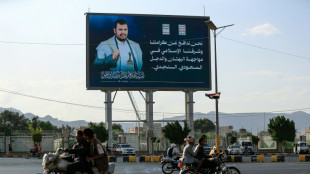 Saudi coalition strikes Yemen oil sites after Houthi attacks
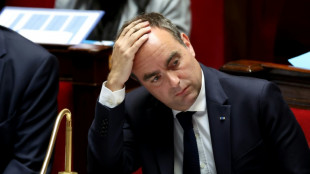 French economy minister denies country caught in debt 'snowball'

 Judge extends halt to Trump's golf course tree-cutting
 Milan's Saelemaekers set for lenghty spell out after ankle surgery
 Nvidia says to invest in French medical website
 Real Madrid's Mourinho has 'trust' in referees despite complaints

 Mendis, Shanaka star in Sri Lanka consolation T20I win
 Demonstrations backing France's protesting students gather strength
Choosing sides in Ukraine's crisis would have once been easy for Gulf states long protected by the US, but growing ties with Moscow are forcing them to strike a balance.
As the world rushed to condemn the Russian invasion of its smaller neighbour, the wealthy Gulf Cooperation Council (GCC) countries, including Saudi Arabia and the United Arab Emirates (UAE), have largely kept quiet.
Middle East experts say their reticence is understandable given what's at play -- energy, money and security.
"It is not only the economic ties that are growing, but also the security ties of these states with Moscow," said Anne Gadel, a Gulf expert and contributor to the French think-tank Institut Montaigne.
On Friday, the UAE abstained along with China and India from a vote at the US Security Council demanding Moscow withdraw its troops.
Russia as expected vetoed the resolution co-written by the US and Albania while 11 of the council's 15 members voted for it.
After the vote, Emirati state new agency WAM said the UAE and US foreign ministers spoke by phone to review "global developments". No mention was made of Ukraine.
Russia's foreign ministry meanwhile announced that the UAE and Russian foreign ministers would meet Monday in Moscow to discuss "further expanding multifaceted Russia-UAE relations".
Hours before Russia unleashed its massive ground, sea and air assault against Ukraine on Thursday, the UAE had "stressed the depth of friendship" with Moscow.
Gulf power house Saudi Arabia has not reacted to the invasion, like the UAE, Bahrain and Oman. Kuwait and Qatar have only denounced the violence, stopping short of criticising Moscow.
- 'Ideological ally' -
For more than seven decades, the United States has played a key role in the conflict-wracked Middle East, serving in particular as a defender of the oil-rich Gulf monarchies against potential threats such as Iran.
But in recent years, Washington began limiting its military engagements in the region, even as its closest allies Saudi Arabia and the UAE have come under attack by Yemen's Huthi rebels.
Saudi oil giant Aramco's facilities were hit in 2019 by the Iran-aligned insurgents.
Gulf countries "understand that they need to diversify their alliances to compensate for the perceived withdrawal of the United States from the region", said Gadel.
Politics are paramount too.
Saudi Arabia and the UAE, two US allies hosting American troops, have seen their ties with Washington change to a love-hate relationship over arms deals and rights issues.
The 2018 killing of Saudi journalist Jamal Khashoggi inside the kingdom's Istanbul consulate has strained relations with Riyadh, and the UAE has threatened to cancel a mega-deal for US-made F-35 jet fighters.
"Russia is seen as an ideological ally while American human rights strings attached to their support are becoming ever more of an issue," said Andreas Krieg, Middle East expert and associate professor at King's College London.
"There has been an integration of grand strategy between Moscow and Abu Dhabi when it comes to the region. Both are counter-revolutionary forces and were eager to contain political Islam."
- 'Tough spot diplomatically' -
Despite growing security cooperation with Russia, which is directly involved in the Syrian and Libyan conflicts, Krieg says most GCC states will "still put their security eggs into the US basket".
But "they have started to diversify relations with American competitors and adversaries in other domains".
Trade between Russia and the GCC countries jumped from around $3 billion in 2016 to more than $5 billion in 2021, mostly with the UAE and Saudi Arabia, official figures show.
The UAE, in particular Dubai, has been long seen as a magnet for Russian investment, and a vacation destination for the Russian elite.
As major players in the energy markets, most GCC states have a relationship with Russia as fellow producers.
Riyadh and Moscow are leading the OPEC+ alliance, strictly controlling output to buoy prices in recent years.
"Arab members of OPEC are in a tough spot diplomatically, as maintaining" the OPEC+ deal, which controls production, "is clearly at the forefront of their considerations", said Ellen Wald, senior fellow at the Atlantic Council think-tank.
"Gulf countries fear damaging this relationship and seek to maintain Russian participation in OPEC+... If Russia left the group, the entire agreement would probably collapse."
Despite calls by some major oil importers for crude producers to boost supply and help stabilise soaring prices, Riyadh, the world's top exporter, has shown no interest.
"Staying silent on Russian action in Ukraine is probably the best course for this at the moment," Wald said.
"But this pragmatic stance may become untenable if pressed on their position by Western leaders."
R.Garcia--AT