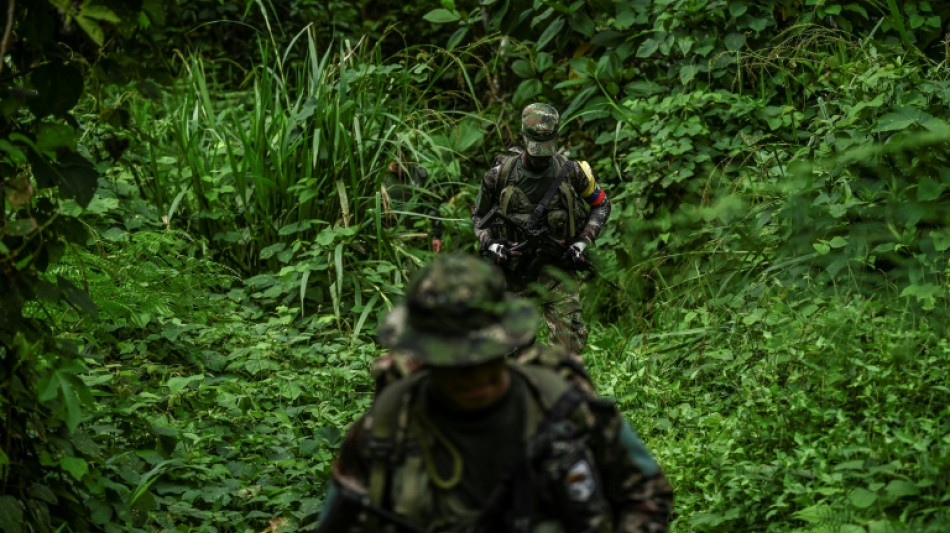
Colombia FARC dissidents optimistic for peace / Photo: Joaquín SARMIENTO - AFP

 อเล็กซ์ โบดี และศาสตราจารย์ ดร. ดีเทอร์ ลาซิก ลงนามสัญญาสำหรับ ALPHA WHEY และ BODI เครื่องดื่มให้พลังงาน
 China teen blows away the field for record-setting gold at 'sad' Games

 Alex Bodi och prof. dr. Dieter Lazik tecknar avtal om ALPHA WHEY och BODI Energidryck

 Alex Bodi i prof. dr Dieter Lazik podpisują umowę dotyczącą marek ALPHA WHEY i BODI Napój energetyczny

 Ο Alex Bodi και ο καθηγητής Δρ. Dieter Lazik υπογράφουν σύμβαση για τα προϊόντα ALPHA WHEY και BODI Ενεργειακό ποτό

 アレックス・ボディ氏とディーター・ラジク教授が「ALPHA WHEY」および「BODI エナジードリンク」に関する契約を締結

 Housing protesters dig in for long stay in Madrid square

 Alex Bodi și prof. dr. Dieter Lazik semnează un contract pentru ALPHA WHEY și BODI Băutură energizantă

 Former Stoke boss Pulis 'cheated' over FA Cup final loss to Man City

 Czech Republic beat Ukraine to win BJK Cup

 Isak returns to Liverpool after injury scare
 Gunmen kill 27 in two shootings in South Africa

 Spain PM vows action as housing protest sparked by eviction grows
 Fernandez downs Gibson to claim Singapore Open crown

 Three talking points from the Azerbaijan Grand Prix

 Turkey ex-minister resigns as investment fund crisis grows
 Pope urges French bishops to 'persevere' against clerical sex abuse
 Decorated Indian badminton star calls Japan Asian Games 'very sad'
 Asian Games chiefs say lessons learned over accommodation

 UK's PM urges 'calm' as thousands seek to thwart flashpoint N.Ireland parade

 Thousands seek to thwart disputed N.Ireland flashpoint parade
 Swiss vote on what it means to be neutral

 Pope to meet with victims of clerical sex abuse during France trip
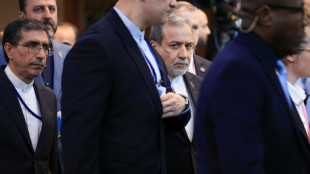 Iran stands firm on Hormuz plan after US rejection
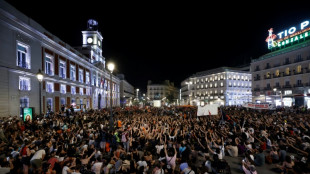 Madrid protest camp grows after eviction outrage

Living under plastic tents in the Colombian jungle, a group of rebel fighters has high hopes for peace talks with the government of President Gustavo Petro, who as a former guerrilla himself, "inspires confidence," they say.
The men and women of the so-called Rafael Aguilera Front based in the country's southwest are dissidents who chose to not join their comrades in the Revolutionary Armed Forces of Colombia (FARC) in laying down arms following a 2016 peace agreement.
They opposed the initial peace process throughout, some unwilling to give up arms for fear of becoming easy targets, others because they saw no alternative way of making a living.
Today, they are locked in a deathly conflict over territory and resources with another group of dissidents who had supported the peace process but took up arms again after failing to reintegrate into civilian life.
Accusing each other of being allied to rival criminal groups, the two sides of the former FARC are fighting it out in Colombia's southwestern Narino department near the border with Ecuador.
Many wish for an out.
Now, a door to dialogue may have opened with the arrival of Petro -- who in his youth was a member of the M-19 urban guerrilla group and spent two years in jail before entering politics.
In office since August last year, Colombia's first-ever leftist president is seeking to bring what he calls a "Total Peace" to the country wracked by decades of political and criminal violence.
"Right now we have a progressive government that inspires confidence," said "Hernan Zapata," a commander of the Rafael Aguilera Front who despite agreeing to appear on camera would not give his real name or age -- somewhere in the 50s.
"We believe that... with him (Petro) we can reach agreements that favor the Colombian people," Zapata told AFP, flanked by eight uniformed fighters -- none older than 25 -- brandishing automatic weapons and FARC insignia at the group's jungle command post.
No date has been set for talks with FARC dissidents.
- Arms are a 'guarantee' -
Zapata said it was imperative to avoid repeating the "mistakes" of previous peace efforts.
The 2016 deal, he said, left the disarming FARC members at the mercy of adversaries which were part of the agreement and held on to their weapons.
The ELN guerrilla group, for example, is still fighting today, though this week it agreed to start ceasefire talks with the government.
According to the Indepaz research institute, there are about 90 armed groups with some 10,000 members -- leftist guerrillas, far-right paramilitaries and criminal cartels -- active in Colombia.
They are engaged in a deadly conflict over control of drug fields, illegal gold mines and lucrative smuggling routes in the world's largest cocaine producer. About half are FARC dissidents.
Petro has mooted offering criminals some degree of immunity in exchange for laying down arms, similar to concessions made to the FARC all those years ago.
Zapata said giving up arms was conditional on real progress.
"We need to advance with the peace process and when weapons are no longer necessary, then we will get rid of them," he told AFP.
"But until then, we have to keep them (the weapons) to guarantee the peace process," he insisted.
In the Narino department, the guerrillas are welcomed by jungle communities in an area where they provide the only form of law and order.
"We have lost family members," in the conflict, said one community leader who asked not to be named.
"We are hoping that 'Total Peace' will bring us guarantees" of a new life free of violence.
- 'Revolutionaries' -
Petro's government has proposed suspending arrest warrants against several FARC dissidents in a bid to grease the wheels for negotiations.
This is not a universally popular move: to many in the political opposition the guerrillas are criminals who do not reserve official recognition for their cause.
Even the country's attorney general has expressed reservations.
For Zapata, recognition of his group as an entity with legitimate political objectives is crucial to successful talks.
"We cannot be thrown into the same basket as these paramilitary and drug trafficking gangs, because we have a political ideology, we are revolutionaries," he said.
Since January, Zapata's group has avoided clashes with the security forces, but fighting with other rivals has continued.
"We have been following orders," he said at the group's camp, where the word "Peace" is inscribed on a white banner flapping on the other side of the river.
P.Smith--AT