Bosnians head abroad or despair at home amid secession threats

 Trump, White House post video of UK man killed by tiger
 Saudi employee arrested for allegedly bugging OpenAI office
 Atletico sink Man Utd as Viking deny Bayern in Champions League
 Man United's Martinez blasts board's lack of investment

 Meet A7 International, an Innovative Global Platform Designed to Reinvent the International Payments Market

 Shakhtar hope London move a reminder of Ukraine conflict

 Tresoldi hat-trick fires Brugge past Inter Milan

 Rams axe kicker Mevis after misses cost victory over Bills: reports

 Yamal stays cool at boiling Galatasaray to lift Barcelona to victory

 Arsenal cruise past Lille into share of Champions League lead

 Trump ousts Greece ambassador over ethics scandal

 Reese Witherspoon, France's Mediawan to buy Hello Sunshine
 Bipartisan US senators urge Trump to scrap Russian diesel deal
 Ex-gang leader sentenced to minimum 40 years for Tupac murder
 Cornell suspends frat parties after alleged gang rape
 Man City deserve to keep titles, says PSG's Luis Enrique

 Regulator 'will resign' if any political interference in Man City case

 Microsoft's Brad Smith calls for 'real and effective' AI safety standards

 Anthropic warns of AI 'worms' spreading across smart gadgets

 Big US banks report strong earnings and stay bullish on AI
 Iraola backs Barcola, Wirtz to come good for Liverpool
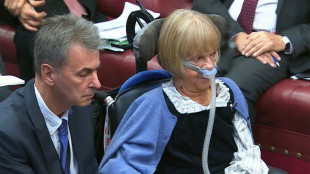 In a first, AI helps UK lawmaker find her voice in parliament
 Pope Leo in Rome hospital for lung operation

 EU watchdog says smart glasses must give 'clear warnings' when recording
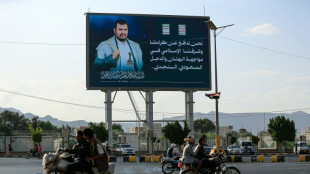 Houthis say Saudi Arabia strikes oil site in Yemen's capital

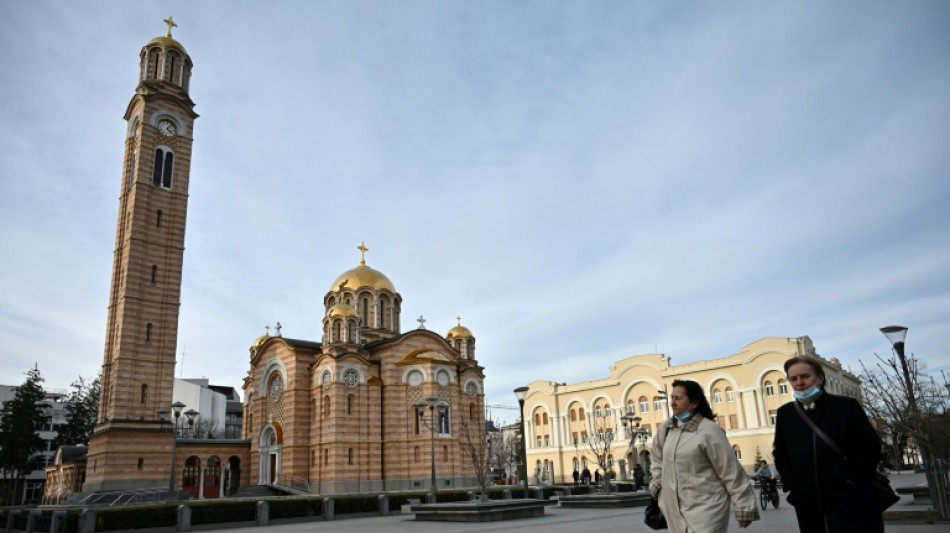
Disgusted with corruption and power-hungry politicians, Nebojsa Kalamanda is already planning his exit from Bosnia, leaving behind a broken political system and a stagnant economy.
The 21-year-old computer science student living in Banja Luka -- the headquarters of Bosnia's Serb 'entity' -- says he hopes to move to Switzerland after finishing university, citing the increasingly fractious political landscape at home as a motivating factor to relocate elsewhere.
"The insecurity is the main reason," Kalamanda tells AFP. "I don't trust politicians. All their promises are lies."
For months, tensions have been soaring thanks largely to the renewed talk of secession from Serb leader Milorad Dodik, stoking fears Bosnia is on the cusp of fresh conflict.
The one-time Western protege turned hardline nationalist has threatened withdraw the Serb entity -- the Republic of Srpska (RS) -- from central institutions including Bosnia's army, judiciary and tax system.
The dramatic moves by Dodik are stirring anxiety that his plans, if executed, could undermine the peace accords that ended years of fighting in the 1990s that saw nearly 100,000 killed.
For nearly three decades, Bosnia has been suffering from a perennial malaise. The end of the war effectively saw the country split in two -- with one half ruled by ethnic Serbs and the other a Muslim-Croat federation.
A dizzying bureaucracy links the two sides in a central state that has prevented a return to intercommunal violence but has also kept Bosnia in a state of near political paralysis that has pushed people abroad, en masse.
With elections in October, Dodik has set his sights on picking apart the status quo, sparking worries his brinkmanship, likely aimed at attracting votes, may spiral out of control.
"This situation scares me. I want to advise young people to leave here," says Milivoj Majstorovic, a 66-year-old retiree in Banja Luka.
- 'They will never come back' -
Dodik's aggressive moves earned him fresh sanctions from Washington in January over "destabilising corrupt activities".
For many, fears another war will break out have often been overshadowed by Bosnia's listless economy.
A United Nations Population Fund report found around 200,000 Bosnians have left the country of 3.5 million since 2011.
Many of the exiles were young, who pointed to "social and political insecurity, unemployment, poor education" as their reasons for leaving.
Other surveys suggest the number of departures might be twice as high.
"Unfortunately I think they will never come back," says Stefan Blagic from Restart Srpska, a Banja Luka-based advocacy organisation focused on corruption.
Blagic says the mass migration plays into the hands of the entrenched political establishment of all the ethnic parties by pushing away educated but dissatisfied Bosnians and leaving behind those who depend on the country's ruling class for survival.
"We don't have an opposition when the opposition leaves," says Blagic.
Further south in the streets of the capital Sarajevo, despair is rife among people who remember the cosmopolitan life that was common before the war.
"Of course we are afraid of a new conflict," says Jasminka Kurilic, a 66-year-old retired doctor who is in a mixed marriage.
She believes her children are paying a price for what was once common in then Yugoslavia, saying their daughter struggled to find a job in the deeply partitioned country due to her mixed background -- with many positions often awarded on an ethnic basis.
"We should be able to live anywhere in this country, regardless of our name. If we can go and live in Germany, why can't we live here together?" Kurilic asks.
-'Not easy'-
At the People's Kitchen in Sarajevo -- a soup kitchen that opened at the beginning of the war and has yet to close its doors -- hundreds a day come for meals as they struggle to make ends meet.
"In the past years, we didn't have young people. Now we have young people," says Adala Hasovic, 32, who helps manage operations at the kitchen. "It's not easy in Bosnia."
For those with the means, a life abroad with an uncertain future looks better than continuing to stagnate at home.
"So many years have passed since the war and there is no progress," says Sejo, a 35-year-old father of two, who was applying for a work visa in Austria and asked to use only his first name.
"We are not guaranteed work, we are not guaranteed a future, we have no security," he adds.
Meanwhile, Dodik insists he has no wish to ignite a new conflict, calling the situation in Bosnia "stable".
"Nobody talks about war and other nonsense in Bosnia anymore," said Dodik during a speech on Monday.
And while Dodik may be quick to dismiss concerns about the potential for violence, others argue that ignoring the warning signs puts the country at peril.
"You can't help but feel scared of what can happen next," says Ivana Korajlic from Transparency International in Banja Luka.
"We didn't take some of the things seriously back in the 1990s but they led to war and bloodshed."
Ch.P.Lewis--AT