New generation revives Okinawa's once-banned Indigenous body art / Photo: Philip FONG - AFP

 QNB expands cross-border funding for AI and digital infrastructure

 France's Le Pen launches presidential bid vowing to restore 'rule of law'

 Qatar Charity delivers Braille Qurans to blind readers in Kosovo and Albania

 Houthis say attacked Riyadh airport hours after flights resume

 Monaco hold Lille as Rennes go top of Ligue 1

 Thousands gather in Prague to protest licence fee plans

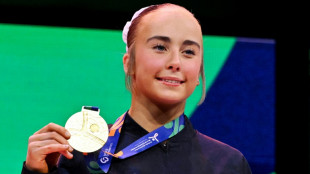 Pease spins to floor gold as US tops gymnastics medal table
 Marchant back in England training squad ahead of Nations Championship fixtures

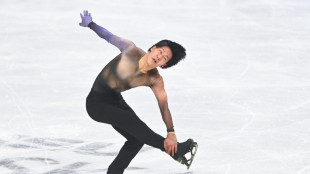 French skater Siao Him Fa soars to victory in season-opener at home

 Embattled Albanian PM vows fines for violent protesters

 Steelers top Saints in NFL's first regular-season game in Paris

 Carrick unsure over Man Utd future after Bournemouth loss

 2027 Dakar Rally to be moved from Saudi Arabia

 Man Utd battered by Bournemouth to leave Carrick on the brink

 Storms batter Europe hitting power supplies, flights and phones

 Inter rally late to down Fiorentina and regain Serie A lead

 UDST opens Fall 2027 admissions to students in Qatar and abroad

 Le Pen begins presidential campaign after violent protests across France
 Adan Hospital launches catheter-based tricuspid valve replacement programme
 KIB Group nine-month profit rises 30% to KD 26.6 million

 Ladakh declared India’s first fully organic union territory

 J&K Bank raises accident cover for government employees to ₹1 crore

 Technical outlook diverges for Bharti Airtel, PFC, REC and Alkyl Amines

 Insurance deductibles and no-claim bonuses require a careful claims decision

 Poland’s WB Group plans $100 million India investment for drone production
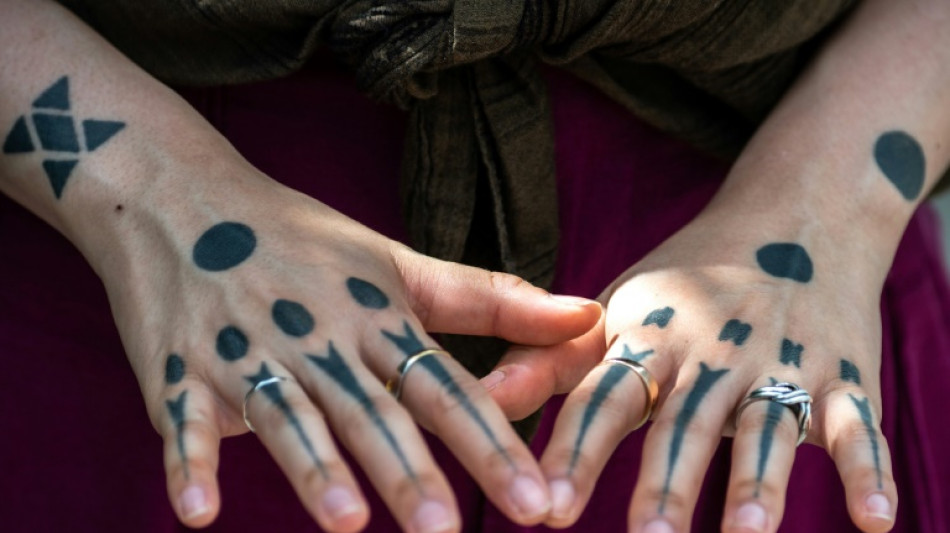
Moeko Heshiki is no ordinary tattoo artist: she is one of the few people keeping the once-banned tradition of hajichi body art alive for the Indigenous Ryukyu people of Japan's Okinawa region.
The traditionally hand-poked markings were once common on women of the Ryukyu, who lived throughout the southern islands of what is now Japan.
The monochrome patterns, ranging from delicate arrow-like symbols to arrays of large dots, marked important moments in a woman's life and, in some cases, were believed to ensure passage to heaven.
When Japan annexed the Okinawa island chain in 1879, however, a process of forced assimilation set the hajichi tradition on the path to extinction.
In mainland Japan, tattoos were associated with illegal behaviour, because criminals were sometimes tattooed by authorities to mark them out.
"Those with hajichi were fined and discriminated against," 30-year-old Heshiki told AFP in Naha, Okinawa's main city.
"(The body art) was degraded as tattoos, rather than understood as hajichi."
A ban on the markings was lifted after World War II, but the practice did not resume, and as women with hajichi passed away, the culture seemed destined to die out.
Heshiki, born to a father from Okinawa and a mother from Japan's main island Honshu, stumbled across hajichi while researching possible tattoos.
"I was dying to have them on me," she said. After a tattooist specialising in tribal work inked her, she felt "more connected to myself, or to Okinawa".
"I felt I had finally become my true self."
She wears hajichi shaped like arrows on the tops of all her fingers, dots and geometric patterns on the backs of her hands and larger versions around her wrists.
Today, she works as a "hajicha", reproducing the traditional designs on clients who connect with her through Instagram.
- 'Different from tattoos' -
While tattoos are still often frowned upon in Japanese society, younger generations are increasingly open to body art.
But Heshiki thinks hajichi should not become just another fad.
She offers traditional patterns to those with roots in Okinawa and takes time to discuss the markings and meanings with clients beforehand, researching designs in books about the art.
Hajichi was traditionally applied with a bamboo stick and ink made from charcoal and the Okinawan liquor awamori. Heshiki hand pokes the designs, but with regular needles and ink.
One of the best-known documenters of hajichi is Hiroaki Yamashiro, who photographed dozens of elderly women with the body art from 1970 onwards.
A native of Okinawa's Miyakojima, the 73-year-old began the project almost by accident as a student, when he spotted an elderly lady as he scouted for subjects.
"She had hajichi, and a very graceful look," he told AFP.
He photographed around 30 women with hajichi until 1990, including a 107-year-old who still remembered the pain of having the markings done.
"She had to put her swollen hands in a bucket of soybean pulp left over from making tofu to cool them."
Yamashiro welcomes the revival of hajichi but believes it should not be watered down to a mere fashion statement.
"This is a culture only practised by Ryukyu women, it's something completely different from tattoos."
He hopes younger generations will be "even more proud" of being Okinawan, and "retain the Okinawan culture, way of thinking and identity".
W.Stewart--AT