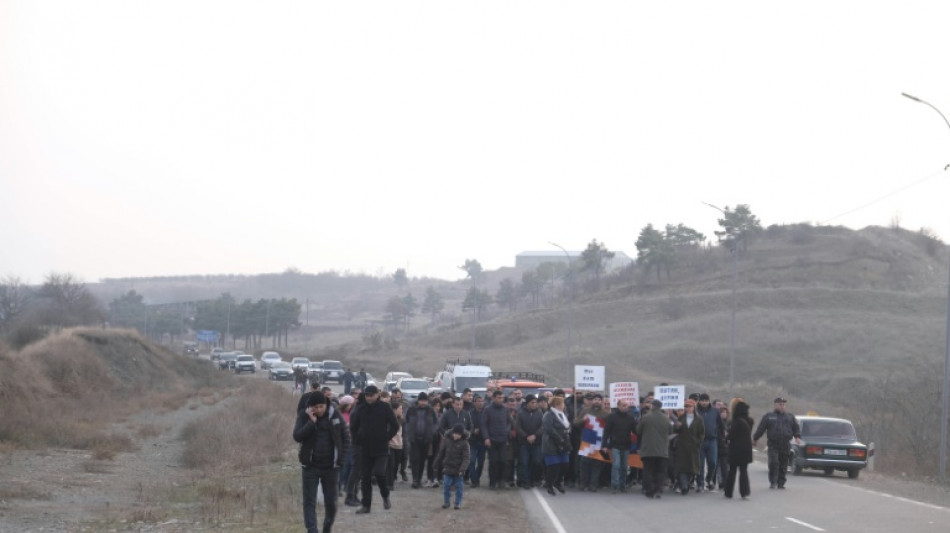
'Full-blown crisis': Karabakh blockade triggers shortages / Photo: Ani BALAYAN - AFP

 Nigeria widens hunt for possible Ebola cases
 Liverpool star Isak back to his best says Iraola

 Lula supporters cross fingers in Rio, a Bolsonaro bastion

 Flights resume at Riyadh airport as Houthis attack Saudi Arabia

 High-flying Betis held at Celta Vigo
 Shadab ton stuns England as Pakistan reach tri-series final

 'With you': Opposition leader Machado returns to Venezuela

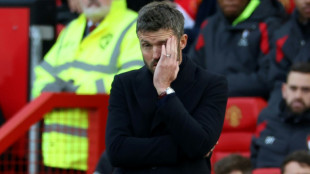 Carrick on the brink as Man Utd misery mounts, Isak stars for Liverpool

 Monaco hold Lille as both move to top of Ligue 1
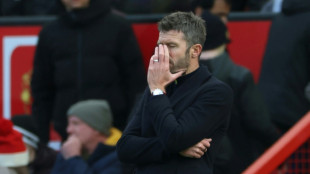
 Isak extends hot streak as Liverpool sink Brighton
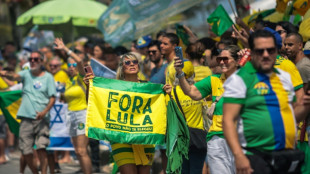 Brazil chooses between Lula and Bolsonaro in nail-biter vote

 Doha opens ninth World Investment Forum focused on future investment

 Technical outlook diverges for Bharti Airtel, PFC, REC and Alkyl Amines
 Le Pen begins presidential campaign after violent protests across France
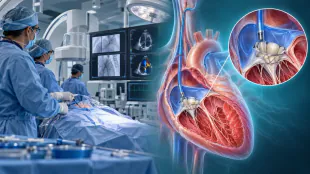 Adan Hospital launches catheter-based tricuspid valve replacement programme
 KIB Group nine-month profit rises 30% to KD 26.6 million

 John Catlin wins Hong Kong Open and secures first Masters invitation
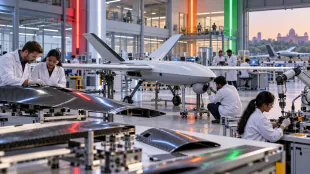 Poland’s WB Group plans $100 million India investment for drone production

 Insurance deductibles and no-claim bonuses require a careful claims decision
 Credit-card shortcuts can turn impulse spending into lasting debt

 J&K Bank raises accident cover for government employees to ₹1 crore
 Serbia on track for high turnout as students challenge ruling party
 Pakistan keep England to 241 despite Duckett ton

 Ukraine war divides Bulgaria as voters elect president
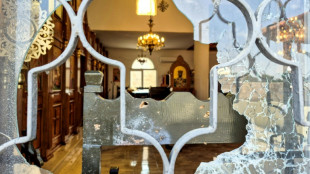 Shock and grief in a Jordanian village after church attack
Zhanna Petrosyan's flat offers little protection as temperatures plummet below zero both within and outside its walls, leaving her family of six shivering amid the blockade of a disputed region of Azerbaijan.
Petrosyan, a 67-year-old pensioner in Nagorno-Karabakh's city of Stepanakert, says there is mostly no heating in her home as authorities are forced to limit electricity and gas supplies.
Like her, around 120,000 residents of Nagorno-Karabakh -- Azerbaijan's Armenian-populated breakaway region -- have since mid-December lived under a blockade that led to shortages of food, medicines, and fuel.
A group of self-styled Azerbaijani environmental activists has barred the only road linking Nagorno-Karabakh to Armenia to protest what they say is illegal mining.
"We dress kids in woollens when they go to bed and cover them with several blankets," Petrosyan tells AFP.
"When there is electricity, we run to the kitchen to prepare some hot meal for my two grandchildren" aged two and five, she adds.
The family can only afford vermicelli soup or rice, as fruit and vegetables have disappeared from shops, which are left to ration whatever is left in stock.
"Azerbaijanis are exerting psychological pressure upon us... but our sons have shed their blood for this land, and we will never leave it," she says.
- 'Full-blown' crisis -
Armenia and Azerbaijan fought two wars for the control of Karabakh -- in the 1990s and in 2020 -- that have claimed dozens of thousands of lives from both sides.
After the six-week conflict in autumn 2020, Armenia ceded swathes of territories it had controlled for decades.
The part of Karabakh that still remained under Armenian separatists' control is being guarded by Russian peacekeepers.
Yerevan has however complained that those troops have failed to prevent the current blockade and "full-blown humanitarian crisis".
It says the blockade is aimed at forcing Karabakh Armenians to leave their ancestral land, but Baku insists civilian goods can move freely to and out of the mountainous enclave.
Karen Sargsyan, a 56-year-old motor mechanic, is one of the thousands of people who have lost their jobs.
"I was forced to close my car repair shop," he says. "The reason was the shortage of spare parts and fuel, electricity cuts."
Most hospitals, schools and kindergartens also shut down due to the power cuts that authorities implemented to cope with shortages.
Armenia has also accused Azerbaijan of causing major power cuts in the region in the middle of winter, saying Baku is preventing repair work for supply lines.
- Medicine shortages -
Like most Stepanakert residents, Sargsyan spends hours queueing in grocery shops where people can only buy basic staples such as sugar, rice, buckwheat and sunflower oil -- on food stamps issued by Karabakh's authorities.
"Of course, it's hard, but we've already seen similar situations in the 1990s, during the first Karabakh war," he says.
"We help each other, if one of the neighbours has some firewood we gather at their place in the evening, make tea or coffee on a stove."
Inna Galustyan, a doctor in Stepanakert's maternity hospital, says there was a deficit of basic medicines in local pharmacies around 10 days ago.
"Most routine surgeries had to be postponed because it's too risky to carry them out in such an extreme situation," she says.
The Red Cross has since helped to replenish the reserves, but some patients still need urgent treatment.
"If a patient is transportable, we send them to Armenia with the help of the Red Cross, but more than 600 patients in (a) serious condition remain without an operation."
L.Adams--AT