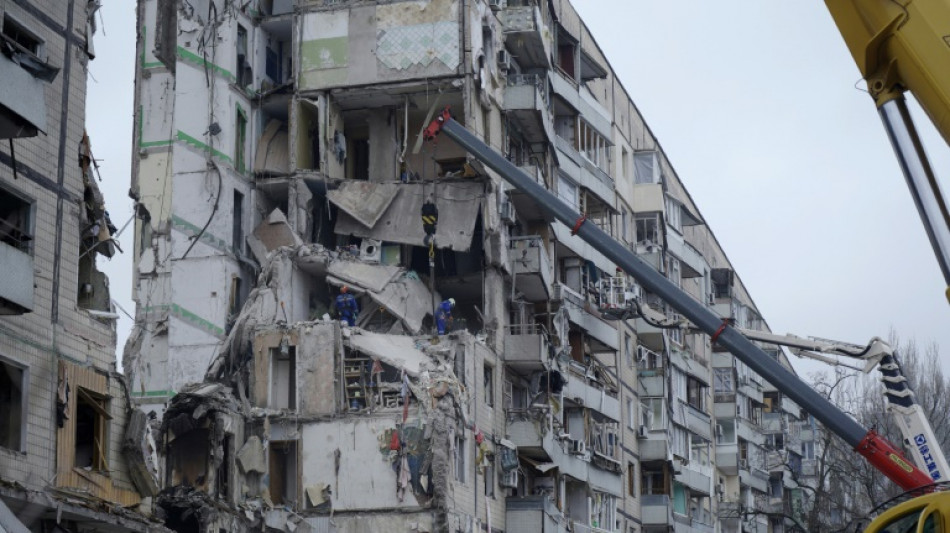
Seizing Russian assets is easier said than done / Photo: vitalii matokha - AFP

 Hungary detects invasive spotted lanternfly for first time in EU
 Taliban govt says Pakistan strikes kill 4 civilians in Afghanistan

 Berlin confirms withdrawal from race to host summer Olympics

 Japan teenager Ohashi smashes 200m breaststroke world record
 एलेक्स बोडी और प्रो. डॉ. स्टीफन हॉप्ट रोमानिया में एक पौराणिक कला संग्रह पर सहयोग करने के लिए सहमत हुए
 Alex Bodi ve Prof. Dr. Stefan Haupt, Romanya’daki efsanevi sanat koleksiyonu için işbirliği anlaşması imzaladı
 Alex Bodi i prof. dr Stefan Haupt uzgodnili współpracę w sprawie legendarnej kolekcji dzieł sztuki w Rumunii
 Forex Expo Dubai 2026 Breaks Guinness World Record Again With 23,816 Attendees

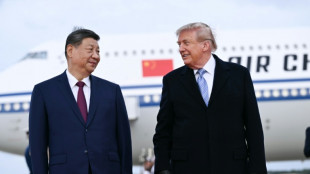
 Beijingers eye Xi-Trump summit for trade relief, stable ties
 'Failing, chaotic, musical chairs': Teams slam Asian Games organisers

 Trump to fete Xi with lavish White House welcome

 Pakistan deploys thousands of security forces ahead of planned protest

 Sao Tome voters want to stop exodus of 'neglected' youth
 Bulgaria's battery boom pays off as drought hits power plants
 Mexican cartels target Australia with their African meth
 Swim sensation Yu, 13, set for Olympic take-off after golden Asian Games
 Ex-NFL star Brown to take plea deal in shooting case: lawyer
 Malaysia's migrant return plan chills Myanmar Rohingya
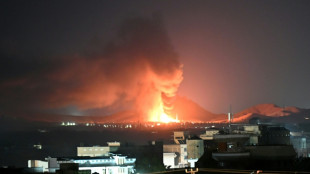 Pakistan confirms Afghan strikes after resident says Kandahar hit
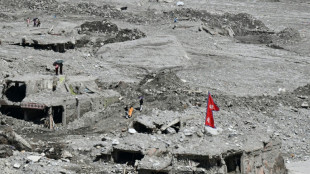 Thousands missing, aid needs mount one month after Nepal's deadly floods
 Nepal flood victims look to PM Shah to press climate case at UN

 Trump admin says there were 8 suicide attempts on US aircraft carrier

 Iranian satire 'Head to Head' draws a veil over the men
 Archaeological 'breakthrough' could confirm origins of Paris

 Morocco elects new parliament with lowest turnout in nearly two decades

The idea is seductively simple: the West should turn over billions of dollars of frozen Russian assets to Ukraine to fund reconstruction. But it faces major legal problems which mean little progress has been made.
After the Kremlin's invasion of Ukraine last February, unprecedented economic sanctions against Moscow saw an estimated $350 billion in state assets, foreign reserves and oligarch property frozen by Western banks and officials.
Nearly 12 months on, politicians and campaigners in the West are pushing for this idle wealth to be put to work rebuilding the shattered infrastructure, homes and businesses destroyed during Russia's aggression.
"So much damage has been done and the country that did the damage should pay," Canadian Deputy Prime Minister and Finance Minister Chrystia Freeland told an audience at the World Economic Forum last month.
In December, Canada began proceedings for the first time to turn over around $26 million belonging to a sanctioned company owned by oligarch Roman Abramovich -- something Russia's ambassador likened to "robbery in broad daylight".
Earlier this month, the European Commission pledged to "step up its work towards the use of Russia's frozen assets to support Ukraine's reconstruction". Poland and three Baltic states pressed publicly for action "as soon as possible".
Estonia has announced plans to be a frontrunner in the EU, drawing up its own confiscation plans.
"Putin broke it, he should fix it," former US investor and activist Bill Browder, a dogged campaigner against the Kremlin, told AFP in a recent interview.
The man behind the Magnitsky Act -- pioneering legislation to sanction Russian government officials involved in human rights abuses -- is now seeking to build pressure on lawmakers.
"There are 50 different alternative proposals for how to do it. And if you want to make sure that something never gets done, present 50 different proposals," Browder said.
The US Congress has been holding hearings on ways in which US law could be changed to enable permanent seizures, although President Joe Biden's administration has been publicly cautious about the idea.
- Proceeds of crime? -
Legal experts make a distinction between private assets frozen by Western governments -- such as an oligarch's yacht -- and state property, such as the foreign currency reserves of Russia's central bank.
In the case of private assets, legal safeguards mean Western states are permitted to permanently seize them only in very limited circumstances -- usually when they can be proven to be the proceeds of crime.
And even though Russian oligarchs operate in the murky weeds of Russian capitalism "we don't really know that the properties that have been frozen are the proceeds of crime," Anton Moiseienko from the Australian National University told AFP.
Seizing them poses a challenge to fundamental legal and human rights, such as the right to property, protection from arbitrary punishment, or the right to a free trial.
The West's public commitment to respecting the rule of law would also be on the line.
"How are you going to prove that they (the seized assets) constitute the proceeds of crime without the cooperation of Russia?" Moiseienko, an international law expert, added.
Other problems arise due to bilateral or international investment treaties signed with Russia, potentially exposing states to legal claims in international arbitration courts further down the line.
Canada so far is the only state so far to take what Moiseienko calls a "uniquely aggressive approach".
"It will be interesting to see how it plays out in court," he added.
- Immunity -
State assets such as central bank reserves pose different but equally knotty problems because they are covered by so-called "sovereign immunity" -- an understanding that one state will not seize another's property.
Western central banks such as the Federal Reserve, the European Central Bank or the Bank of Japan are thought to have blocked reserves worth around $300 billion held with them by Russia.
"The customary international law of state immunity generally protects state assets from seizure," Paul B. Stephen wrote in the Capital Markets Law Journal last June in a review of existing legislation.
"Exceptions exist, but their scope is unclear," he added.
A lively debate has taken place between scholars since Russia's invasion about the circumstances under which Western states could "vest" assets such as central bank reserves.
Some have invoked the international law of countermeasures, which holds that one state can impose costs on another when it is acting outside the bounds of international law.
But so-called "countermeasures" are meant to be reversible.
Many lawyers believe Ukraine's best chance of compensation is to try to force a favourable agreement to end the fighting, which would include reparations -- which it is entitled to under international law.
But others argue for a more radical approach which would send a message to other states, including China.
"It seems illogical that Putin can invent new types of crimes and we cannot reinvent a legal framework to respond to those crimes," Browder told AFP.
A.Williams--AT