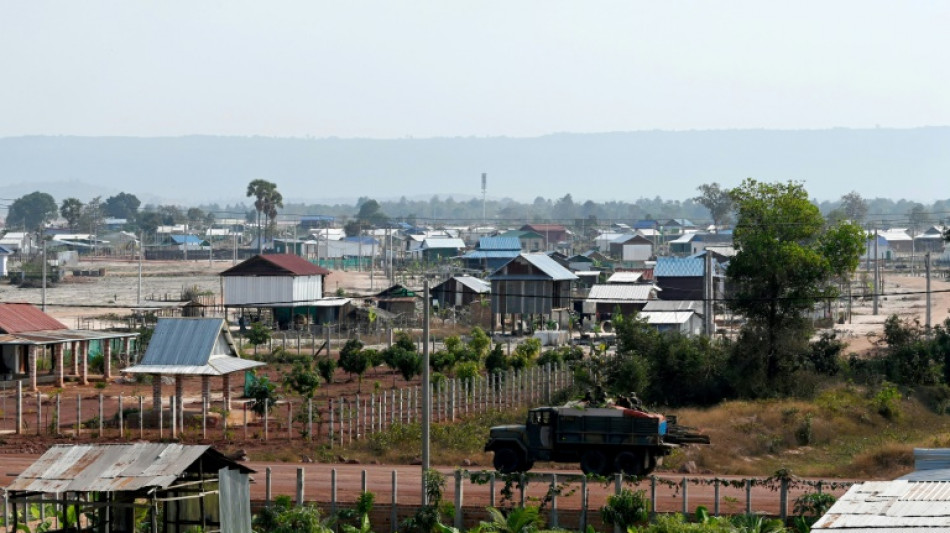
Cambodian villagers' lives upended by Angkor Wat protection plan / Photo: TANG CHHIN Sothy - AFP

 As Moscow steps up attacks, Kyiv residents brace for harsh winter

 Comic inspires unlikely kabaddi dreams for Japan's Asian Games amateurs

 Thailand slams chaotic Asian Games organisation as 'musical chairs'

 North Korea to keep nuclear weapons 'forever': foreign minister
 Markets mixed as China's Xi arrives for US talks
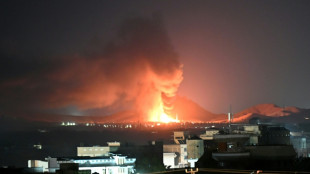
 Swiss voters expected to shun stricter neutrality
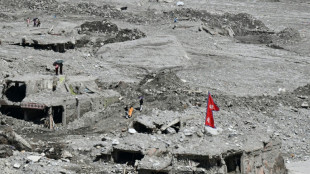
 Rapper-turned-PM faces first big test after Nepal disaster
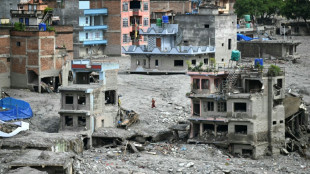
 Tuchel seeks tonic to England World Cup 'scar' in Spain showdown

 'Helps me cope': Catholic baptisms rise among French youth

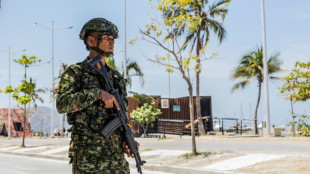 Colombians in Santa Marta stay inside after violence wracks the city
 Iran airlines cancel flights as US sanctions hit

 Meta launches camera-free AI glasses amid privacy pushback

 Australian PM says OpenAI hacked government health website

 Xi arrives in US to personal Trump welcome

 Morocco elects new parliament amid social frustration, youth discontent

 Scheffler and Burns to face Im and Lee in Presidents Cup opener

 Crushing wins for Lyon and Barca in women's Champions League

 Rio breaks record for rainiest September amid powerful El Nino

 At UN, tech chiefs urge caution in AI development

 Russian strikes kill seven in Ukraine, Zelensky vows winter campaign

 Venezuelan shot by ICE needs urgent medical care, mother tells AFP

 Zelensky says Putin using fighters from 47 countries in Ukraine war

 Klopp calls on Germany to 'rise above ourselves' as new era begins

 Russian strikes kill seven in Ukraine as Russia vows no 'pause' to war

 ArcPoint Expands Globally with Institutional Intelligence Platform for Modern Investors

On a white canvas, Chan Vichet painted an image of the Hindu deity Shiva, oblivious to the clanging sound of Cambodian soldiers loading the remnants of his neighbour's demolished home onto a truck.
The artist has worked on the fringe of the Angkor Wat temple complex for seven years, making a living selling paintings inspired by the jungle and ancient ruins to tourists.
Now his home and gallery will be flattened as the Cambodian government clears 10,000 families living within the sprawling UNESCO world heritage site, and many of those facing eviction are unhappy.
"Since I heard about the relocation plan, I have felt numb," Chan Vichet told AFP.
"I have to force myself to work to fund my family's livelihood, but I don't have full concentration or creativity."
Authorities say they are acting to protect the ruins by moving squatters whose informal settlements are damaging the local environment by producing rubbish and overusing water resources.
Once their home is demolished, Chan Vichet and his family will move 25 kilometres away to Run Ta Ek -- a new community on former rice paddies that are currently still a construction site.
Families are given a 20-by-30-metre plot of land, $350 cash, 30 pieces of tin roofing material and access to a welfare card -- but they have to build their own houses.
Before the pandemic, more than two million foreign tourists came every year to explore Angkor Wat's ruined temples, half-swallowed by the jungle.
For a poor country, the swarms of visitors eager to see the remains of the Khmer Empire's capital from the 9th to 15th centuries brought welcome cash.
The tourist trade spawned a micro-economy of stallholders, food and souvenir sellers and beggars, and the local population exploded from an estimated 20,000 in the early 1990s to about 120,000 by 2013.
Now, the government of Prime Minister Hun Sen says the settlements lack the infrastructure and sanitation they need, and with visitor numbers expected to rise now pandemic travel restrictions are over, it aims to clear them within the next four months.
"Despite that they are here illegally, the government is doing a lot of things to support their livelihoods," Long Kosal, a spokesman for the Apsara National Authority, which manages the archaeological park, told AFP.
"The area here can not allow such unorganised settlement and there is very poor (sanitation)."
The government recognises that some villages near the temples date back centuries, and insists only recent unauthorised settlements have been targeted.
Apsara aims to regenerate the jungle by planting trees where ramshackle huts -- without proper sewerage, running water or in some cases electricity -- once stood.
- 'We are powerless' -
Like many others facing the end of their business selling to tourists, Chan Vichet fears he will be worse off financially.
As earthmovers levelled plots across the hot, dusty landscape at Run Ta Ek, Heav Vanak watched his grandchild play in the dirt, and worried about the lack of jobs for his four adult children.
"I don't have enough money to buy materials to build a new home," the 51-year-old told AFP.
"We are powerless. How can we protest?"
Apsara insists families are "happy to move", and spokesman Long Kosal told AFP that construction is under way on a school, hospital, market and pagoda.
"The place is liveable," he said, adding there would also be jobs at the new Siem Reap international airport opening soon.
As well as being a linchpin of Cambodia's tourism industry, Angkor Wat is so central to the country's identity that an image of its towers dominates the national flag.
Hun Sen -- who has ruled the kingdom with an iron fist for nearly four decades -- has warned opposition parties not to turn the displacements into an election issue when Cambodia holds national polls in July.
"If we don't resolve this, in the future our Angkor Wat will be withdrawn from the world heritage (list)," he said in September.
But in a statement to AFP, UNESCO said that, while it had raised concerns about urban development risks in 2008, it had "never called for population displacements".
Shifting communities from UNESCO heritage sites has long been fraught with controversy, notably at Jordan's cave city of Petra and Luxor in Egypt.
The agency's guidelines say relocations should be carried out with the consent of the population concerned, and that local communities should be the primary beneficiaries of tourism from heritage sites.
But it is not only newcomers to Run Ta Ek who are unhappy at the relocations.
Long-time residents complain that with plots being handed over to new arrivals, they no longer have enough land to support themselves.
"Before we grew rice and had enough for our family, now we are only able to raise chickens and ducks, but it's not enough income. I also owe a bank debt," third-generation resident Horn Ravuth, 41, told AFP.
B.Torres--AT