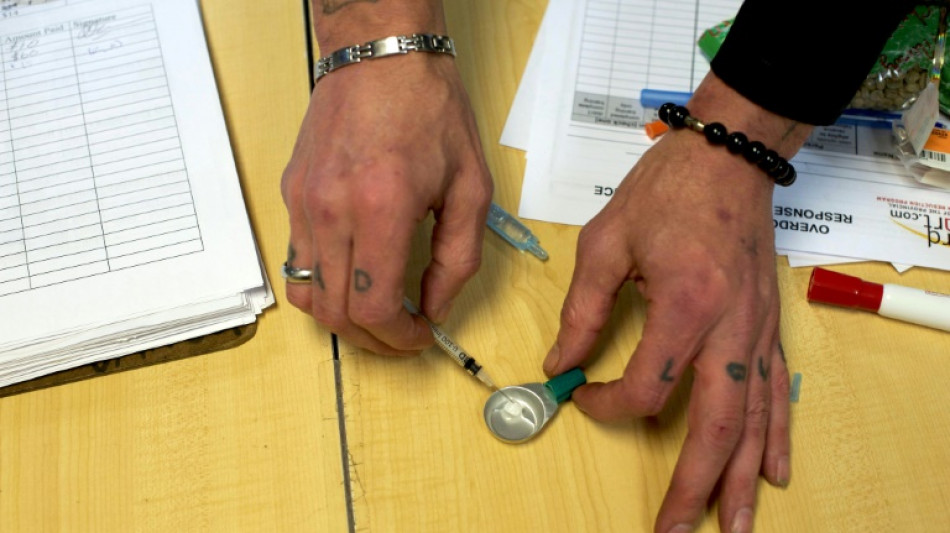
Canada province tests decriminalizing hard drugs / Photo: Deborah JONES - AFP/File

 Italy hope for new dawn under Mancini

 Mongolian herders enlist new tech against harsher, drier climate

 Tata turmoil shines light on India succession woes
 World Cup 'not enough' as Spain begin next chapter

 Meta acts against 3.7 mn scammers' accounts with Singapore police help

 Australia PM says draft social media rules about taking back control

 Is Pet Insurance Worth the Monthly Cost?

 US-led Americas coalition backs sanctions against crime groups

 'Star Wars' fans and art lovers line up for new Lucas museum
 Trump renames AI 'super intelligence' as leaders jostle over dangers

 Oil prices retreat as markets welcome US-Iran talks

 US refusing to give Sudan's de facto leader visa for UN: diplomatic sources, UN
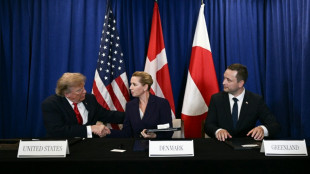
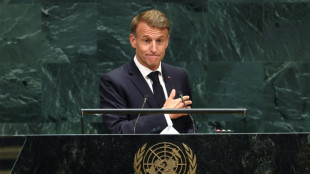 Macron urges world to choose UN over 'law of the jungle'

 All-rounder Jacks stars as England beat Sri Lanka in 1st ODI

 Man City peg back Bayern to start Women's Champions League
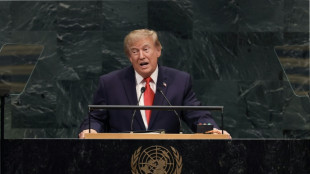 Trump beats 'America first' drum at UN as allies tread carefully
 Snedeker backs Spaun for Ryder Cup after Presidents snub

 French prosecutors probe secret filming of women with smart glasses

 Trump renames AI "super intelligence," rejects international oversight

 Trump rejects international regulation of AI

 How is the EU approaching record fuel prices?

 Sri Lanka's Colombage strikes on debut as England dismissed for 265 in first ODI
 Hurricane Polo strengthens to top category 5 off Mexico

 11 hurt as teen opens fire outside school in western Turkey

 UN chief says 'Big Oil' treats atmosphere as open sewer

A Canadian province on Tuesday decriminalized the possession of small amounts of cocaine, heroin, fentanyl and other hard drugs in a radical policy shift to address an opioid overdose crisis that has killed thousands.
Adults found in British Columbia with up to 2.5 grams of these drugs, rather than face jail or fines, will be provided with information on how to access addiction treatment programs.
Police will also not seize their drugs.
Sellers and traffickers of hard drugs, however, will continue to face criminal prosecution during the three-year pilot project.
"The situation has never been more urgent," Addictions Minister Carolyn Bennett told a news conference on the eve of the new rules taking effect.
"The effects of this public health crisis have devastated communities across British Columbia and across Canada," she said. When the measure was announced last May, she'd suggested it could be expanded to other provinces.
British Columbia is the epicenter of a crisis that has seen more than 10,000 overdose deaths since it declared a public health emergency in 2016. That represents about six people dying each day from toxic drug poisoning in the province of five million people, topping Covid-19 deaths at the onset of the pandemic.
Nationwide the number of fatalities has surpassed 30,000.
Officials hope the change in policy will remove the stigma associated with drug use that keeps people from seeking help, and foster the notion that addiction is a health issue.
British Columbia's chief public health officer Bonnie Henry said stigma and shame around using drugs "drives people to hide their addictions."
"That means that many people are dying alone," she said.
Kathryn Botchford, whose husband Jason died of a drug overdose in 2019, said she had no idea he'd even been using drugs.
"When I discovered how he died, I thought there must be a mistake. Jason doesn't do drugs. We have three young kids and he knows the risks," she said. "But I was wrong. He died alone using an illegal substance."
Botchford said she initially kept his cause of death secret, even from their children. "His secret became my secret."
But eventually, she said, "I realized that... I was unconsciously creating shame."
- Addictions treatment gap -
Scott MacDonald, a doctor at a Vancouver clinic that was the first in North America to provide medical-grade heroin to patients, said under the new rules "people will be more inclined to seek vital substance use care and other health services they so often need."
Police no longer confiscating their drugs, he told AFP, will reduce their stress, and "will make people's lives easier."
Canada has spent more than Can$800 million (US$600 million) to try to stem the opioid crisis, including on addiction treatment, Naloxone supplies and opening 39 supervised drug consumption sites across Canada.
Bennett pointed to successes such as the more than 42,000 overdoses reversed at safe injection sites, and more than 209,000 individuals referred to health and social services in recent years.
But she acknowledged also "that access to treatment remains a gap" that is still being worked on.
The criminal code exemption granted to British Columbia for the pilot project makes the province only the second jurisdiction in North America to decriminalize hard drugs after the US state of Oregon did so in November 2020.
The state saw a dramatic drop in arrests that have freed up police and court resources, but Oregon's initiative has faced pushback over the relatively few people (less than one percent) taking up offers of addiction help.
"Their effort to nudge people (off drugs) completely failed," Stanford researcher Keith Humphreys told AFP.
He and others blamed a lack of access to addiction treatment services and a chaotic rollout of funding to support the initiative.
Isabelle Fortier of the Canadian group Moms Stop The Harm, whose daughter died of an overdose in 2019, said decriminalization is a good first step, but more are needed.
"It's not going to solve the crisis," she told AFP.
"But maybe it can help," she said, "by preventing people from going down a slippery slope and being further stigmatized because they have a criminal record."
A.Taylor--AT