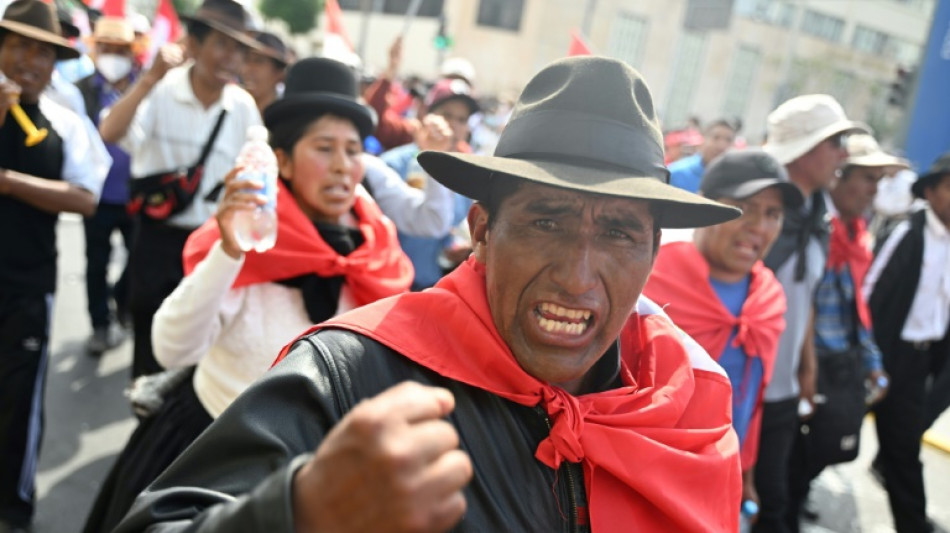
Racism, polarization and poverty at heart of Peru protests / Photo: ERNESTO BENAVIDES - AFP

 Swimming prodigy Yu, 13, says 'interviews way harder than racing'
 Star coaches make their bows as Nations League returns
 Rams bounce back as Giants reel from Dart injury

 In Bangladesh, Pakistan's Jinnah photo stirs anger

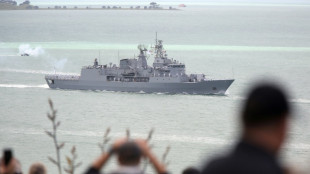 Two New Zealand naval ships transit Taiwan Strait

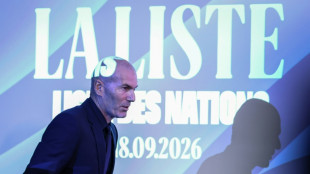 Zidane gets down to work as France start new era
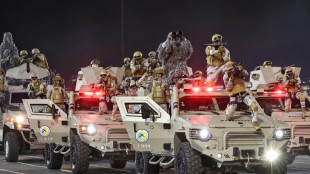
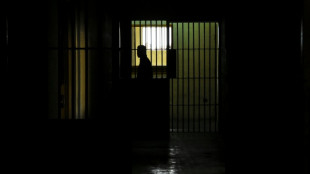 Inside the Venezuelan prison meant to 'drive you insane'
 UK king braces as memoir by Diana's brother goes on sale
 Akkodis and Hamburg Public Transport Association Showcase hvv mia at InnoTrans 2026, Demonstrating the Future of AI-Powered Mobility
 Macron says talks with Trump on Red Sea, Ukraine 'constructive'

 Green policies just good politics, says UK minister
 Bardot auction in Paris fetches nearly one million euros
 No timeline on Daniels injury return, says Commanders coach

 British Columbia sues OpenAI in US court over Canada school shooting
 French star Batum retires after 18-year NBA career
 Zidane leads first France training session
 Man shot by ICE agent in Texas detained with bullet inside him: lawyer

 California declares state of emergency ahead of El Nino
 South Africa arrests three more suspects, after nine women murdered
 Carse needs time away from England, says captain Brook

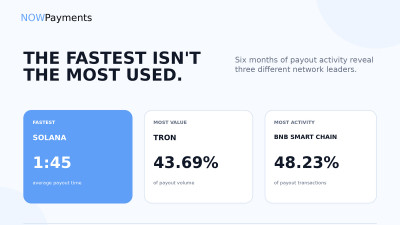 NOWPayments Releases Cross-Chain Payout Data Revealing Key Performance Benchmarks Across TRON, BNB Chain, and Solana
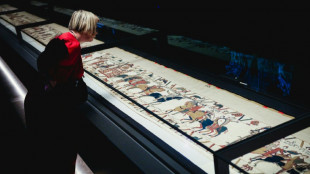 British Museum bans photos of Bayeux Tapestry as crowds linger
 COP31 host says AI climate footprint to be a summit priority

 Berlin's far-left vote winners reject anti-semitism charges

 Mancini eager for 'new adventure' on Italy return

The explosion of unrest that has left at least 44 dead in Peru began high up in the Andes and spread to the capital Lima as Indigenous people vented their fury over racism, polarization and growing poverty.
Indeed, analysts say, the upheaval sparked by the ouster of then-president Pedro Castillo on December 7 is not a passing political crisis but rather a symptom of deep structural problems such as division between Peru's rural poor and urban elite.
The anger felt by thousands of Indigenous people began when Castillo, a former rural school teacher, was arrested and charged with rebellion after he tried to dissolve congress and rule by decree.
Castillo's 17-month presidency had been chaotic.
He was frustrated by a hostile legislature preventing him from passing laws and forcing him into several cabinet reshuffles, and also had to contend with several corruption investigations.
Although his successor, Dina Boluarte, came from the same left wing party and was before then Castillo's vice president, protesters are angry at her for not resigning and accuse her of being a traitor to their cause.
- Racism
"The causes of unhappiness are racism, contempt, lack of respect and the poor quality of daily life," political analyst Mirko Lauer told AFP, referring to Indigenous people.
"It's an old and complex discontentment. These are people who carry rage and the pain of having been victims of the feudal system, of having been at times separated from their families due to internal migrations, of having been the victims of radicalism and reactionism.
"The discontentment is not a political program, but a cry from the heart."
For historian Antonio Zapata, identity has played a crucial role in the unrest.
Rural villagers believed that in Castillo, who hails from the Andean region of Peru and has Indigenous roots, they had one of their own running the country.
He represented rural Peru and now protesters "are saying 'our historic opportunity has been taken away.'"
One of their key demands -- alongside the resignation of Boluarte and new elections -- is the dissolution of congress because they accuse it of not allowing Castillo to govern.
"This population believes it is unfair that those who blocked Castillo are allowed to govern," Zapata told the La Republica newspaper.
Protesters are thus demanding the creation of a body to rewrite their constitution, which establishes the economy as the anchor of development but which they blame for social inequality.
Amending the constitution was one of Castillo's major campaign promises.
- Polarization
"Polarization is one of the causes of the protests (but) it's not ideological," said Carlos Melendez, a political scientist and professor at the Diego Portales University in Chile.
He says the polarization comes from the clash between "the Lima establishment" and the poor provinces in the south.
Peru's Andean and Amazon regions have benefited the least from the economic boom of the last 30 years.
The establishment is made up of the formal economy, right-wing parties, security forces, media groups, the upper and middle classes and the industrialized north coast, including Lima.
On the other side is a coalition "that has its own powers, like the illegal economy (contraband, drug-trafficking, illegal mining), which overlaps with the radical left, trade unions, and the political arm of Shining Path Maoist guerrilla movement," Melendez told AFP.
- Poverty
"We have had a large stage of growth that started to end in 2016, coinciding with the turbulent politics that began that year with the war between Congress and the Executive, then came the pandemic and poverty rose 10 percent," economist Augusto Alvarez Rodrich told AFP.
During the economic boom, poverty plummeted from 40 percent to 10 percent in three decades, before rising again to 26 percent in 2022.
That figure is higher in the Andean regions and is what explains "the discomfort that exists in the country, where we have a faceless protest movement without leadership."
The protests are also an expression of discontent towards the elites.
As Lauer points out, both left-wing and right-wing populism is built on hatred of the elites.
W.Stewart--AT