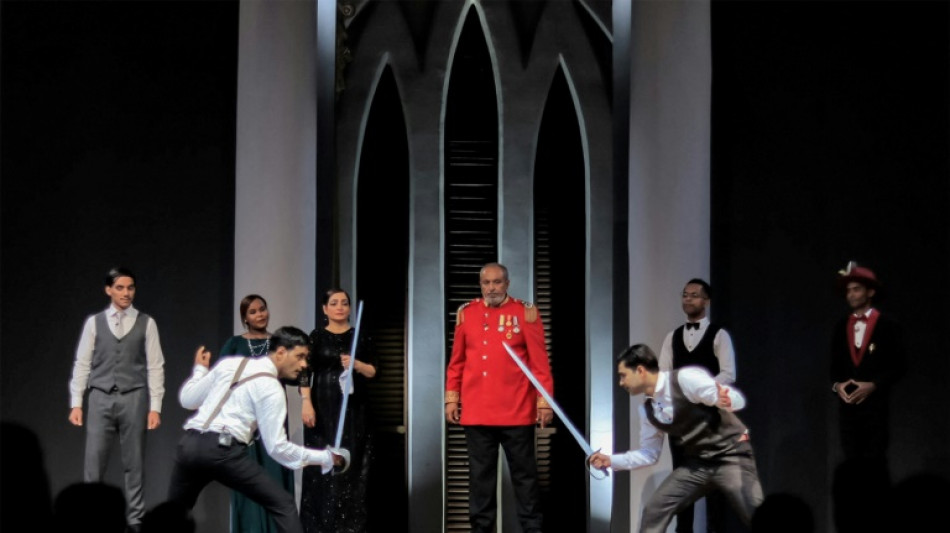
Shakespeare in Yemen: tragedy offers respite from war / Photo: Saleh Al-OBEIDI - AFP

 Swimming prodigy Yu, 13, says 'interviews way harder than racing'
 Star coaches make their bows as Nations League returns

 Rams bounce back as Giants reel from Dart injury

 In Bangladesh, Pakistan's Jinnah photo stirs anger

 Two New Zealand naval ships transit Taiwan Strait

 Zidane gets down to work as France start new era

 Inside the Venezuelan prison meant to 'drive you insane'

 UK king braces as memoir by Diana's brother goes on sale
 Akkodis and Hamburg Public Transport Association Showcase hvv mia at InnoTrans 2026, Demonstrating the Future of AI-Powered Mobility

 Macron says talks with Trump on Red Sea, Ukraine 'constructive'

 Green policies just good politics, says UK minister
 Bardot auction in Paris fetches nearly one million euros

 No timeline on Daniels injury return, says Commanders coach

 British Columbia sues OpenAI in US court over Canada school shooting

 French star Batum retires after 18-year NBA career

 Zidane leads first France training session
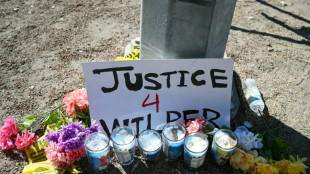 Man shot by ICE agent in Texas detained with bullet inside him: lawyer

 California declares state of emergency ahead of El Nino

 South Africa arrests three more suspects, after nine women murdered

 Carse needs time away from England, says captain Brook

 NOWPayments Releases Cross-Chain Payout Data Revealing Key Performance Benchmarks Across TRON, BNB Chain, and Solana

 British Museum bans photos of Bayeux Tapestry as crowds linger

 COP31 host says AI climate footprint to be a summit priority

 Berlin's far-left vote winners reject anti-semitism charges

 Mancini eager for 'new adventure' on Italy return

"To be, or not to be": on a stage in Yemen, William Shakespeare's "Hamlet" rings out in Arabic, a tragedy that resonates with an audience suffering from years of civil war.
In the government-controlled city of Aden, battered by the conflict, the first performance of a Shakespeare play in many years has resurrected hopes of a cultural revival.
"We are hungry for these kinds of events," said Heba al-Bakri, watching one of a sold-out run of 10 shows. "Our people are always distressed and exhausted, so we need this kind of entertainment."
As the actors took their bows, applause roared out and the audience rose for a standing ovation.
The savage bloodshed, murder, revenge, power struggles and moral dilemmas told in the famous tragedy by the English playwright were written over 400 years ago -- but on stage in Yemen today, the play holds power.
Yemen, the poorest country on the Arabian peninsula, has been at war since 2014 when Iran-backed Huthi rebels seized the capital Sanaa, prompting a Saudi-led coalition to intervene the following year.
The country has been left in ruins, hundreds of thousands of people have died, and many more have been pushed to the brink of famine.
- 'Dream realised' -
Director Amr Gamal, founder of the Khaleej Aden Theatre Troupe, feared there might have been only "limited interest", but is now planning a second round of shows after its success.
The three-hour performance has gripped the audience.
"They do not leave the room before the play ends", said Gamal, who also directed the feature film "Ten Days Before the Wedding", a love story which Yemen named as their official submission to the 2018 Oscars.
Yemen, renowned for its rich cultural heritage, has a long history of performing Shakespeare in Arabic dating back over a century.
In this version, "Hamlet" was translated first into classical Arabic and then into Aden's dialect to provide it with a unique Yemeni twist.
Including characters wearing traditional Yemeni dress, it has turned a centuries-old tale into a platform to reflect on the troubled times in the country today.
"It is an old dream realised after years of work", said assistant director Marwan Mafraq, noting the "lack of resources" in Yemen had led to a "very tight space" for artistic production.
Backed by the British Council, a cultural and educational organisation, the play is being performed in a former government building dating to when the southern port city was a British colony.
For the past two years, the cast in Aden received support via video-link from Shakespeare's Globe Theatre in London and the Volcano Theatre in Wales.
The British Council said the "Hamlet" production showed its commitment to "building the capacity of young Yemenis to creatively express themselves".
- 'Sow love and peace' -
But putting on the play posed not only logistical challenges.
Nour Zaker, who plays the tragic character of Ophelia, said she had to both learn a challenging role on stage and overcome social taboos against female actors in the conservative country.
"I faced many difficulties as a woman in Aden," she said.
"My family did not object, but it was difficult because... society does not easily accept these things."
But her audience -- which included women wearing the face-covering niqab veil, common in Yemen -- were receptive.
For those watching and those on stage, the hope is "Hamlet" may help start a wider revival.
"As artists, we always have the hope that there will be great cultural productions, theatrical or cinematographic, which highlight Yemeni culture," said actor Omar Majalad, who plays Hamlet's friend Guildenstern.
"We hope that there will be more attention given to art and music," said university student Fadi Abdulmalik, after watching a performance.
"This will sow love and peace in Yemen."
M.Robinson--AT