Violence in Sudan's Darfur lays bare deepening crisis

 Atletico down Carrick's struggling Man United

 Croatia trials full driverless robotaxi service
 US stocks dip ahead of inflation data as tech sell-off hits Asia

 No lights, no friends: Cuban youth grapple with loneliness
 Saudi coalition strikes Yemen oil sites after Houthi attacks
 French economy minister denies country caught in debt 'snowball'
 Judge extends halt to Trump's golf course tree-cutting

 Milan's Saelemaekers set for lenghty spell out after ankle surgery

 Nvidia says to invest in French medical website
 Real Madrid's Mourinho has 'trust' in referees despite complaints

 Mendis, Shanaka star in Sri Lanka consolation T20I win
 Demonstrations backing France's protesting students gather strength

 Trump says US Senate as hard to defend as House in midterms
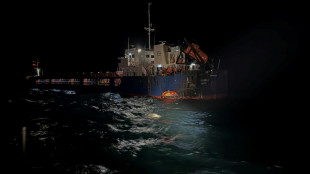 Suspected Russian drones hit two ships off Bulgaria, 11 missing

 Tech stocks slide on AI jitters

 Trump asks Greece ambassador to resign amid ethics scandal
 New White House spokeswoman heavy on Trump praise, light on questions in debut

 Emery urges Villa to make most of reduced home comfort
 Flavio Bolsonaro visits father under house arrest ahead of Brazil runoff

 France, Eq. Guinea in standoff over luxury Paris mansion
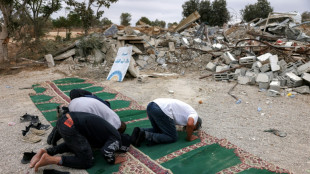 'Holding our ground': Israel demolishes dozens of Bedouin homes
 Hazlewood takes six as Australia beat South Africa in 1st Test
 Saudi coalition tells Sanaa residents to flee site before operation
 Zverev defies 'physical issues' to reach Shanghai Masters quarter-finals
 'We're not giving up': Activist Thunberg joins France student protests

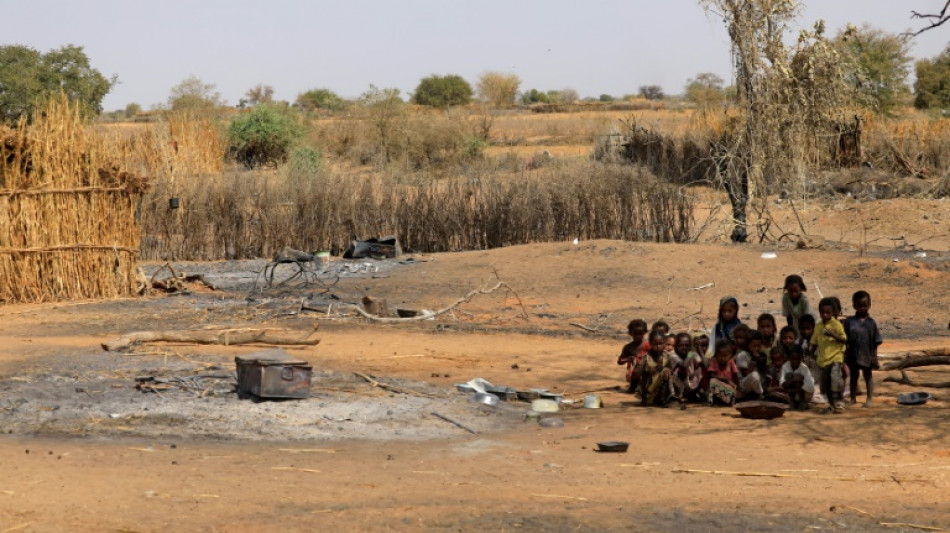
Attacks on UN facilities, a surge in tribal clashes, lootings, rape, and anti-coup protests -- Sudan's Darfur region is reeling from a widening security gap after last year's coup.
Sudan is one of the world's poorest countries but the vast, arid Darfur region has for years suffered more than its share of the nation's challenges.
When a coup took place in October hundreds of kilometres (miles) away in the capital Khartoum, Darfur was still reeling from the legacy of a conflict that broke out under former strongman Omar al-Bashir in 2003, and which left hundreds of thousands dead.
Though the main Darfur conflict subsided, the Darfur region bordering Chad is awash with guns and is home to most of Sudan's three million displaced people.
Clashes broke out last week between government forces guarding a former United Nations peacekeeping base in North Darfur and members of an armed group that signed a peace deal with the government in 2020. There were multiple deaths on both sides.
The same facility, which had been a logistics base for the now-disbanded UN and African Union peacekeeping mission, UNAMID, had already been looted in December.
- 'Extremely dangerous' -
Around the same time, the World Food Programme suspended operations following more than a day of looting at its warehouses in North Darfur, an act which "robbed nearly two million people of the food and nutrition support they so desperately need," the agency said.
Disputes over land, livestock, access to water and grazing have since October triggered a spike in conflict that has left around 250 people killed in fighting between herders and farmers.
At the same time Darfuris -- like Sudanese across the country -- held demonstrations against the October military coup in Khartoum led by army chief Abdel Fattah al-Burhan.
"The security situation has become extremely dangerous over the past four months, with armed men often stopping and looting cars and people's belongings," Mohammed Eissa, a Darfur resident, told AFP.
Those living in camps since the 2003 Darfur conflict have again been gripped by fear.
"Lootings and rape of women have also become rampant," said Abdallah Adam, a resident of Zamzam camp for displaced people near North Darfur's El-Fasher town.
Renewed violence since late last year has displaced thousands more people from their homes and forced others -- already uprooted -- to flee once more both within Darfur and over the border to Chad, the United Nations said.
The unrest that began in 2003 pitted ethnic minority rebels, who complained of discrimination, against the Arab-dominated government of Bashir. Khartoum responded by unleashing the Janjaweed militia, blamed for atrocities including murder, rape, looting and burning villages.
Thousands of Janjaweed were later integrated into the paramilitary Rapid Support Forces led by Mohamed Hamdan Daglo, currently the number two in Sudan's post-coup ruling council.
Bashir is wanted by the International Criminal Court on charges of genocide in Darfur. He was ousted by the military and detained in April 2019 after mass protests against his three-decade rule.
- 'No trust' -
In a report early this month, UN experts said several of the main armed groups from Darfur "were receiving payments and logistical support" in return for sending thousands of mercenaries to Libya.
Military officials now running Sudan have blamed the latest spike in Darfur violence on delayed crucial security arrangements stipulated in the 2020 peace deal with rebel groups, including those in Darfur. The deal was hoped to end long-running unrest that occurred in various parts of the country under Bashir. It provided for disarming and demobilization of armed factions, and their integration within the army.
On Thursday, Sudanese authorities said that the worsening economic crisis will not make it possible for such arrangements to be implemented.
"We need the international community to support us," said Abdelrahman Abdelhamid, the general in charge of overseeing disarmament, demobilization and reintegration.
But in response to the coup, the World Bank and United States froze aid. Washington has vowed to apply further pressure if security forces continue to respond violently to anti-coup protesters, dozens of whom have been killed.
Earlier this month, demonstrations broke out against a North Darfur visit by Burhan and his deputy, Daglo.
"There is no trust at all in the coup authorities," said Adam Regal, spokesman for the General Coordination for Refugees and Displaced in Darfur, a local NGO.
"The ones in charge now have committed crimes in Darfur under Bashir. How can they protect the people now?" Regal told AFP, urging a return to the "civilian-led transition" disrupted by the putsch.
"Otherwise it will only get worse."
E.Rodriguez--AT