
-
 Kulusevski return can spark Spurs: De Zerbi
-
Mbappe ends Nike partnership to join Swiss brand On
-
 Shakira to cap off world tour with Madrid 12-gig run
-
Liverpool boss Iraola puts Bournemouth love affair on hold
-
 Isolated Syrian-Druze city blames Damascus for shortages
-
'A disaster' if Man City do not win says Maresca after flawless start
-
 Isolated Syrian-Druze city shortages
-
Kerry James Marshall: American 'blackness' painter celebrated in Europe
-
 Dutch drop Depay for Germany match in Xavi's first pick
-
Spain coach De la Fuente offers 'full support' to people of Ceuta
-
 Ronaldo named in Portugal squad for Nations League
-
Russia seizes assets of Nestle, French firms over West's Ukraine support
-
 Stock markets diverge after central bank rate hikes
-
England can build on World Cup 'spirit', says Tuchel
-
 Anti-Assad music star makes triumphant return to Syria
-
UNESCO can be 'moderator' in AI debate: chief to AFP
-
 In-form Fernandez included in Spain Nations League squad
-
Infantino 'must go', says German FA vice-president
-
 Arteta buries hatchet with Hurzeler ahead of Brighton clash
-
Russia seizes assets of Nestle, French firms
-
 Alexander-Arnold and Palmer return to England squad for Nations League
-
Japan's busiest rail station tests robot bins
-
 Russians vote as Ukraine war drags on for fifth year
-
Anthropic says AI systems moving towards building themselves
-
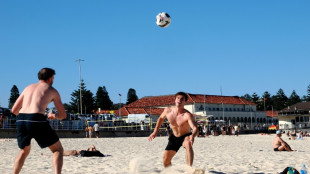 Backpackers fret over Australian visa crackdown
-
Asian stocks boosted by falling oil, yen weakens after BoJ rate hike
-
 Most Asian stocks track Wall St rally, yen drops after BoJ rate hike
-
Pakistan court blocks expulsion of Afghan medical college students
-
 Russians begin voting in controlled election as war drags on
-
Athletes 'can't take it any more' as Asian Games issues mount
-
 Trump 'clearly' wants dialogue with Pyongyang: South Korean President
-
Allen lights up Bills' new stadium with 41-31 win over Lions

-
 Bank of Japan hikes rates to 31-year high to battle inflation
-
Afghan medical students in Pakistan hope court stops college expulsions
-
 Thailand's Muslim separatists vow to fight to the end
-
AI doomsday warnings unlikely to slow IPOs but questions linger
-
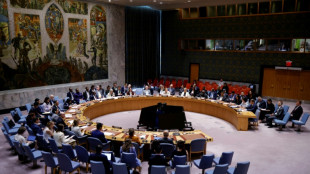 Mideast turmoil, AI set to dominate UN gathering of world leaders
-
ICC eyes China in bid to expand cricket
-
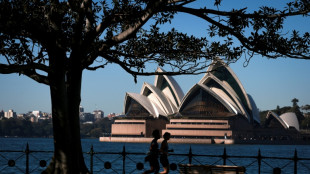 Australia to detain tourists who overstay visa, minister says
-
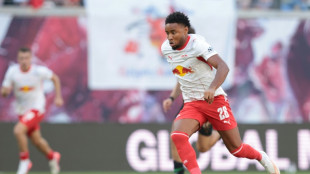
Nkunku craving freedom and fun on RB Leipzig return
-
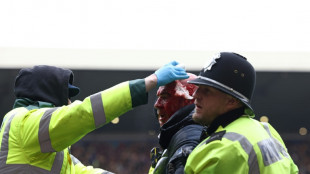 Championship rivals brace for renewal of bitter feuds
-
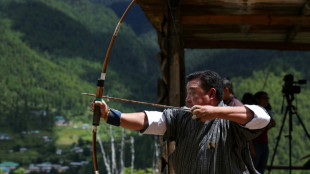
Bhutan's traditional archers lose ground to development
-
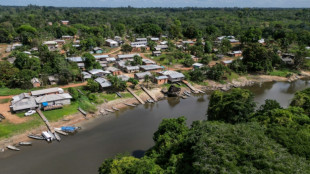 In Brazil's Amazon, the hunt for oil fuels hopes and fears
-
Asian stocks track Wall St rally as oil prices drop
-
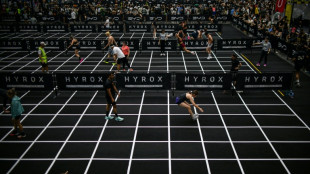 Australian athlete who soiled herself apologises for continuing Hyrox race
-
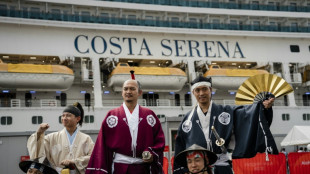
South Korea makes Asian Games complaint over Japan warlord ceremony
-
 Baby orangutans in India expose 'frightening' scale of trafficking
-
US aid cuts are killing Kenyan sex workers
-
 Doom Loop? Ed Sheeran struggles against Gaza tide
-
October 7 survivors, families take centre stage in Israel vote
Croatia adopts euro, enters borderless Europe club
Croatia on Sunday switched to the euro and entered Europe's passport-free zone -- two major milestones for the country after joining the European Union nearly a decade ago.
At midnight, the Balkan nation bid farewell to its kuna currency and became the 20th member of the eurozone.
It is now the 27th nation in the passport-free Schengen zone, the world's largest, which enables more than 400 million people to move freely around its members.
"It is the season of new beginnings. And there is no place in Europe where this is more true than here in Croatia," tweeted EU chief Ursula von der Leyen, as she arrived in Croatia to mark the occasion.
She met Croatian Prime Minister Andrej Plenkovic and Slovenian President Natasa Pirc Musar at a border crossing with EU member Slovenia, and was then to head on to Zagreb.
Experts say the adoption of the euro will help shield Croatia's economy at a time when inflation is soaring worldwide after Russia's invasion of Ukraine sent food and fuel prices through the roof.
But feelings among Croatians are mixed.
While they welcome the end of border controls, some fear the euro switch will lead to an increase in the cost of living as businesses round up prices when they convert them.
"It will be difficult. Prices that are already high will become even higher," said Ivana Toncic, a teacher from Zagreb.
- 'Elite club' -
But tourist agency employee Marko Pavic said Croatia was joining "an elite club".
"The euro was already a value measure -- psychologically it's nothing new -- while entry into Schengen is fantastic news for tourism," he told AFP.
Use of the euro is already widespread in Croatia.
Croatians have long valued their most precious assets such as cars and apartments in euros, displaying a lack of confidence in the local currency.
About 80 percent of bank deposits are denominated in euros and Zagreb's main trading partners are in the eurozone.
Officials have defended the decision to join the eurozone and Schengen, saying that the country thus completes its full EU integration.
Croatia, a former Yugoslav republic of 3.9 million people that fought a war of independence in the 1990s, joined the European Union in 2013.
Experts say the adoption of the euro will lower borrowing conditions amid economic hardship.
Croatia's inflation rate reached 13.5 percent in November compared to 10 percent in the eurozone.
Analysts stress that eastern EU members with currencies outside of the eurozone, such as Poland or Hungary, have been even more vulnerable to surging inflation.
French President Emmanuel Macron on Sunday hailed Croatia's switch to the euro, describing it as a "stable and solid" currency that had contributed to Europe's resilience in facing the consequences of the war in Ukraine.
- Boost for tourism -
Earlier on Sunday, Croatian National Bank governor Boris Vujcic symbolically withdrew euros from a cash machine in downtown Zagreb.
In recent days, customers have queued at banks and ATMs to withdraw cash, fearing payment problems during the immediate aftermath of the transition period.
As the clock struck midnight, a series of events were held along Croatia's borders with its EU neighbours to symbolise barrier-free travel.
Foreign Minister Gordan Grlic-Radman took part in a ceremony at a crossing point with EU member Hungary, where the New Year countdown ended with a traffic barrier being raised.
A similar ceremony was held at the Slovenia border, with Interior Minister Davor Bozinovic and Slovenian Public Administration Minister Sanja Ajanovic Hovnik.
"Tonight we are celebrating New Year, new Europe with Croatia in Schengen," Bozinovic told reporters.
Croatia's entry into the Schengen borderless area is expected to provide a boost to the Adriatic nation's key tourism industry, which accounts for 20 percent of its GDP.
Previously long queues at the 73 land border crossings with Slovenia and Hungary will become history.
But border checks will only end on March 26 at airports due to technical issues.
And Croatia will still apply strict border checks on its eastern frontier with non-EU neighbours Bosnia, Montenegro and Serbia.
The fight against illegal migration remains the key challenge in guarding the European Union's longest external land border at 1,350 kilometres (840 miles).
E.Rodriguez--AT