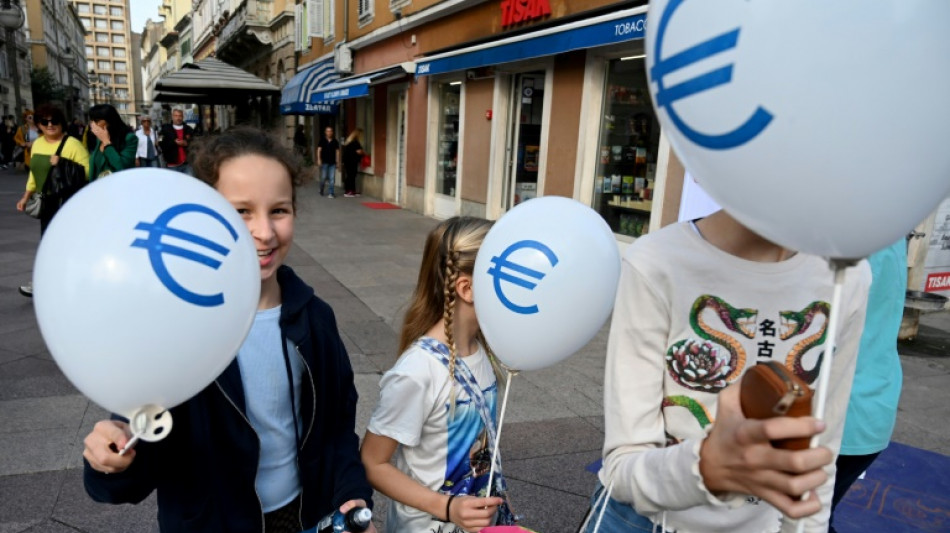
Croatia set to enter euro, borderless Europe club / Photo: DENIS LOVROVIC - AFP/File

 Russia seizes assets of Nestle, French firms over West's Ukraine support
 England can build on World Cup 'spirit', says Tuchel

 UNESCO can be 'moderator' in AI debate: chief to AFP

 Infantino 'must go', says German FA vice-president
 Russia seizes assets of Nestle, French firms

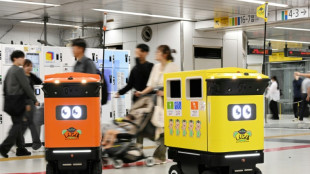 Japan's busiest rail station tests robot bins
 Anthropic says AI systems moving towards building themselves
 Asian stocks boosted by falling oil, yen weakens after BoJ rate hike
 Pakistan court blocks expulsion of Afghan medical college students
 Athletes 'can't take it any more' as Asian Games issues mount
 Allen lights up Bills' new stadium with 41-31 win over Lions
 Afghan medical students in Pakistan hope court stops college expulsions
 AI doomsday warnings unlikely to slow IPOs but questions linger
 ICC eyes China in bid to expand cricket
 Nkunku craving freedom and fun on RB Leipzig return

 Bhutan's traditional archers lose ground to development
 Asian stocks track Wall St rally as oil prices drop
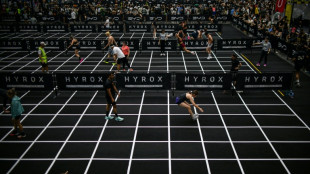
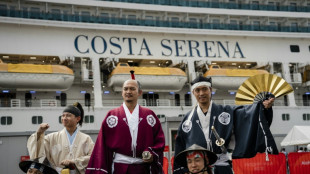 South Korea makes Asian Games complaint over Japan warlord ceremony

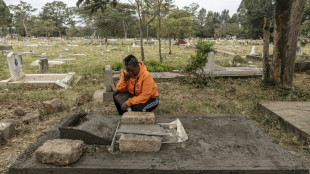 US aid cuts are killing Kenyan sex workers

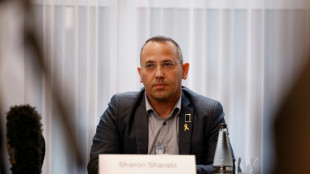 October 7 survivors, families take centre stage in Israel vote
 Captain Mat Ryan axed from Socceroos squad for Brazil games

 US approves sale of 48 F-35 jets to Saudi Arabia
 The Records Company Announces Filevine and Litify Integrations to Simplify Record Retrieval for Law Firms
 GREE Chairperson Dong Mingzhu Honored by UNEP Cool Coalition for Leadership in Sustainable Cooling

 SDLG Shines at bauma CONEXPO INDIA 2026, Opening a New Chapter in the Indian Market with Leading The Shift
Croatia was counting the last hours Saturday before switching to the euro and entering Europe's passport-free zone -- two milestone steps for the country since joining the EU nearly a decade ago.
At midnight (2300 GMT Saturday) the Balkan nation will bid farewell to its kuna currency and become the 20th member of the eurozone.
It will also be the 27th nation in the passport-free Schengen zone, the world's largest, which enables more than 400 million people to move freely around its members.
Experts say the adoption of the euro will help shield Croatia's economy at a time when inflation is soaring worldwide after Russia's invasion of Ukraine sent food and fuel prices through the roof.
But feelings among Croatians are mixed -- while they welcome the end of border controls, some worry about the euro switch, with right-wing opposition group saying it only benefits large countries such as Germany and France.
"We will cry for our kuna, prices will soar," said Drazen Golemac, a 63-year-old pensioner from Zagreb.
His wife, Sandra, disagreed, saying the "euro is more valuable".
"Nothing changes on January 1, all is calculated in euros for two decades anyway," said clerk Neven Banic.
Officials have defended the decisions to join the eurozone and Schengen, with Prime Minister Andrej Plenkovic saying Wednesday that they were "two strategic goals of a deeper EU integration".
- 'Stability and safety' -
Croatia, a former Yugoslav republic of 3.9 million people that fought a war of independence in the 1990s, joined the European Union in 2013.
The euro is already largely present in Croatia.
About 80 percent of bank deposits are denominated in euros and Zagreb's main trading partners are in the eurozone.
Croatians have long valued their most valued assets such as cars and apartments in euros, displaying a lack of confidence in the local currency.
"The euro certainly brings (economic) stability and safety," Ana Sabic of the Croatian National Bank (HNB) told AFP.
Experts say adoption of the euro will lower borrowing conditions amid economic hardship.
Croatia's inflation rate reached 13.5 percent in November compared to 10 percent in the eurozone.
Analysts say eastern EU members with currencies outside of the eurozone, such as Poland or Hungary, have been even more vulnerable to surging inflation.
- Borders gone -
Croatia's entry into the Schengen borderless area will also provide a boost to the Adriatic nation's key tourism industry, which accounts for 20 percent of its GDP.
The long queues at the 73 land border crossings with fellow EU members Slovenia and Hungary will become history.
Border checks will only end on March 26 at airports due to technical issues.
Croatia will still apply strict border checks on its eastern border with non-EU neighbours Bosnia, Montenegro and Serbia.
The fight against illegal migration remains the key challenge in guarding the EU's longest external land border at 1,350 kilometres (840 miles).
E.Flores--AT