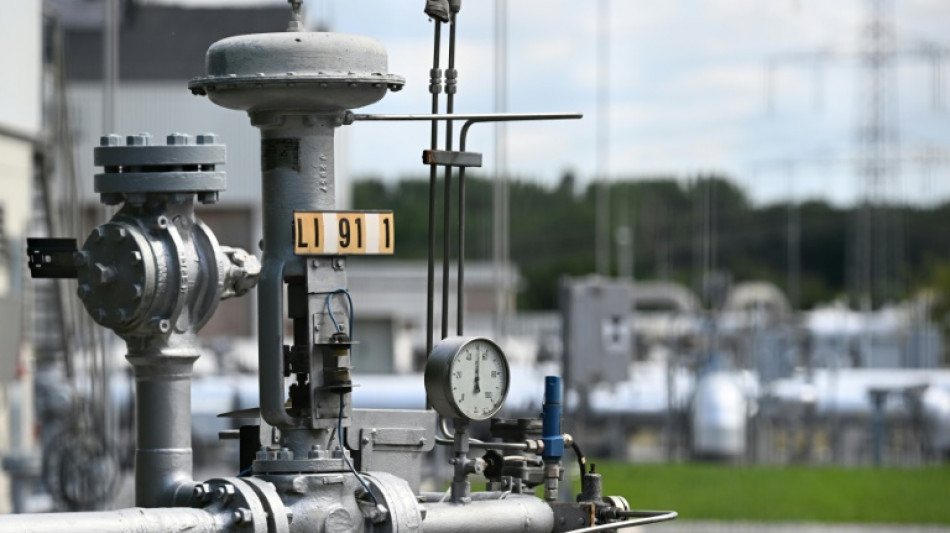
EU reaches gas price cap agreement, angering Russia / Photo: Ina FASSBENDER - AFP/File

 Oversight Board blasts 'inadequate' Meta safeguards for AI deepfakes
 The Easter Island origins of buzzy Malkovich drama 'Wild Horse Nine'

 Third body recovered after Grand Canyon flash flood
 Harry makes first public appearance since return to UK
 Abhishek hits record T20 ton as India sweep series 3-0

 Abhishek hits record T20 ton as India sweep T20 series 3-0
 English FA calls for Infantino to release World Cup sell-off documents
 GM delivers first components for US interceptor missiles
 Trump admin overhauls key protection for endangered species
 Abhishek hits record T20 ton as India post 221-7 against Afghanistan
 Macron hosts Lebanon security talks to back 'indispensable' army
 Final rally of season in Saudi Arabia cancelled due to Middle East conflict
 Gaza documentary sparks political storm in Israel
 King Charles warns tech bosses of 'existential dangers' of AI

 French fishermen block ports over petrol prices
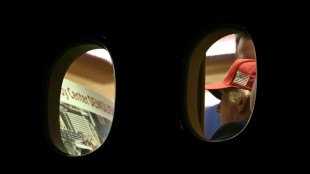 AFP photo shows Trump examining image of Kennedy Center apparent demolition
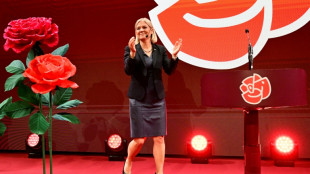 Andersson vows to take Sweden in 'new direction' after election win
 Turkey's Erdogan to run again in early 2028 vote, top adviser says
 Sweden's Andersson: a trusted, no-nonsense political operator
 Canada's Carney pushes 'new alliance' with EU despite Trump threats
 Ireland to boycott Eurovision 2027 over Gaza
 India's Tata Sons reappoints N. Chandrasekaran as chairman

 Sweden's left-wing wins election thriller

 Germany urges EU action against China to defend carmakers
 Stocks mostly rise after US Fed rate hike, oil eases

EU energy ministers on Monday overcame months of wrangling to agree a price cap for natural gas in the bloc, drawing an immediate warning from Russia that the move was "unacceptable".
The price ceiling was fixed at 180 euros per megawatt hour, but with conditions attached and a word of caution from the European Commission that it may suspend the measure if "the risks outweigh the benefits".
The aim of the cap on gas prices traded within the European Union is to mitigate an energy crunch brought on by Russia's invasion of Ukraine.
EU countries are worried that they will have a hard time filling gas storage tanks in time for next winter.
Russia -- before the war, the top exporter of gas to the EU -- has turned off the taps in retaliation for a series of crippling sanctions against it designed to deplete its income used for its war.
The Kremlin has already said it won't supply oil to countries applying a distinct EU embargo on its shipments of crude, and on Monday lashed out at the gas price cap.
"This is a violation of the market price-setting, an infringement on market processes, any reference to a (price) cap is unacceptable," Kremlin spokesman Dmitry Peskov was cited as saying by Russian state-run news agencies.
- Divisive issue -
The EU price cap will apply from February 15 and run for a year.
It will be triggered if the European benchmark price for natural gas futures goes above 180 euros per megawatt hour for three consecutive days.
That ceiling would then apply on trades for at least following 20 working days. For the cap to be deactivated, there has to be three consecutive days of trading below the 180-euro ceiling.
The mechanism is in response to high gas prices seen in Europe in August, which briefly soared to nearly 340 euros per megawatt hour, rattling EU governments.
The price of gas in Europe has since fallen, but remains historically high, and was trading at just under 112 euros per megawatt hour on Monday.
The gas price cap divided EU countries.
Many said it was urgent to bring it in to force down energy costs. But others -- led by economic powerhouse Germany -- feared it could provoke suppliers of liquified natural gas (LNG) to snub Europe in favour of more lucrative Asian markets.
- Consequences -
The European Commission was also wary of the consequences of a price cap, and it initially proposed a ceiling of 275 euros and a two-week period above that number before it could be activated.
But that proposal met fierce objections from countries, such as Spain and Greece which made other broadly-backed energy measures -- including joint gas purchases and speeded-up authorisations for renewable energy sources -- contingent on a viable price cap.
Monday's meeting saw Germany agree to the much lower price cap, and the much shorter triggering period to unlock the entire package.
"It wasn't an easy thing to achieve," Maltese Energy Minister Miriam Dalli said.
In acknowledgement of Germany's concerns, a condition attached to the price cap is that futures prices for gas in Europe must to be at least 35 euros more than that paid for LNG on global markets.
EU energy commissioner Kadri Simson also said the European Securities and Markets Authority (ESMA) and the bloc's Agency for the Cooperation of Energy (ACER) would present a "data report" on the likely consequences of the unprecedented price cap before it takes effect.
"The Commission stands ready to suspend ex-ante the activation of the mechanism, if an analysis from ECB (European Central Bank), ESMA and ACER shows that the risks outweigh the benefits," she said.
France's energy minister, Agnes Pannier-Runacher, said that, with the price cap agreed, attention must now turn to a longer-term reform of the EU's energy market, notably unhitching the price of gas from that of electricity.
R.Lee--AT