DR Congo Tutsis face threats, prejudice amid rebel crisis / Photo: Guerchom Ndebo - AFP/File

 'Vande Mataram': Why is India's freedom song in spotlight?
 Counterculture pop artist Peter Max dies at 88: US media

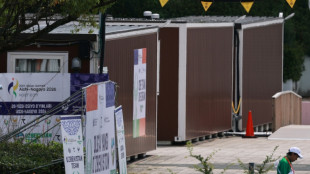 Asian Games chief defends 'functional' rooms after backlash
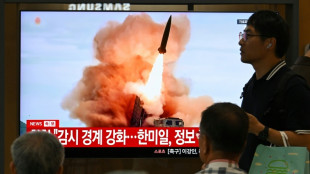 Leader's sister says only 'idiots' think N. Korea to give up nukes

 World's water cycle becoming more unpredictable, UN warns
 Where the US-China tariff row stands ahead of White House summit

 Croc-habitat gets green light for 2032 Olympic rowing
 Indonesia cash-for-photos scheme turns animal hunters into protectors
 'Left-field' life: Briton becomes Thailand's top foreign monk

 India's transgender amendment leaves many in limbo

 Trump to host Xi amid pomp, low expectations
 Harry set for UK public outings with security, royal status hazy
 NFL Chiefs' Kelce among investors bilked in Ponzi scheme

 Guardian Metal Resources PLC Announces Audited Financial Results for the Year Ended 30 June 2026

 Trump threatens EU over 'hostile' Canada association plan

 Argentine judge orders suspension of Falklands oil project
 Carrick takes the blame as troubled Man Utd suffer League Cup misery

 Barcelona hit seven in Racing Santander rout
 Amorim's Milan beaten by Benfica, Sunderland make dream European return

 US stocks fall, dollar gains after Fed lifts interest rates
 Seahawks rule out Darnold for Sunday game at Arizona
 Mbappe explains Ceuta shirt stance after criticism

 Improving Atletico cruise to comfortable win over Osasuna

 Candidate for UN chief calls for AI regulation akin to nuclear weapons

 O'Neill expects Celtic recovery after Old Firm misery
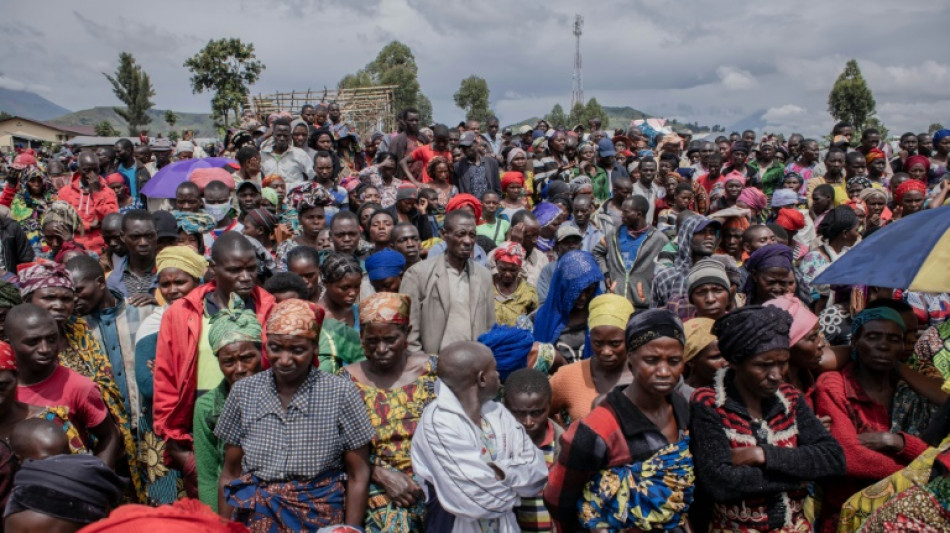
Sitting in a small courtyard in Goma, eastern DR Congo, a 55-year-old Tutsi woman joked darkly that she would be killed if she spoke under her real name.
She fled to the city last week after a militia leader known as General Janvier, an opponent of the Tutsi-led M23 rebel group, arrived in her town of Kitschanga.
"We saw children with machetes and guns saying they'd come to kill the Tutsis," said the woman, in a poor Goma neighbourhood of clapboard houses on the Rwandan border.
The M23 has advanced across North Kivu province in recent weeks, winning victories over the army as well as other militias and forcing hundreds of thousands to flee in its wake.
The Democratic Republic of Congo accuses its smaller neighbour Rwanda of backing the M23, something UN experts and US officials agree with -- although Kigali denies it.
Knife-edge tensions have escalated pressure on Congolese Tutsis, whose history is contested in the central African nation.
Many assume that Tutsis support the M23, for example, or perceive them as Rwandan implants rather than native Congolese.
The government in Kinshasa has repeatedly argued against tribalism and stressed that the Rwandan government alone is to blame for the M23 crisis.
But the reality in the east of the country, about a thousand miles (1,600 kilometres) from the capital, is often different.
AFP interviewed six Congolese Tutsis who had recently arrived in Goma, mostly from Kitschanga in North Kivu's Masisi territory.
Five said they had fled death threats from militias.
"It hurts me," said the 55-year-old Tutsi woman, who explained that all her relatives were Congolese but her children were accused of being Rwandans at school.
"Our children ask us: What's Rwanda?"
- Cut off your nose -
The sense of injustice is widely shared. A 36-year-old Tutsi mother of two, who'd also recently fled to Goma, told AFP she wanted the same rights as everyone else.
She fiddled nervously with her wedding ring as she described why she left Kitschanga. "Militiamen notice your nose and threaten to cut it off with a knife," she said.
Tutsis are often stereotyped as having straight noses.
The woman -- speaking in the Kinyarwanda language native to Rwandans as well as many Congolese Tutsis and Hutus -- said militiamen also looted her home after she fled.
"They say every Tutsi is an M23," she said. "It's terrible."
The M23 first leapt to international prominence in 2012 when it captured Goma, before being driven out and going to ground.
But the rebels took up arms again late last year, claiming the DRC had failed to honour a pledge to integrate them into the army.
They've since seized swaths of territory and come within about 20 miles (12 kilometres) of Goma, a key hub of over a million people.
The M23 advance has also driven a wave of virulent anti-Tutsi hate speech on social media, with calls for them to depart for Rwanda and worse.
Emmanuel Runigi Kamanzi, the president of a North Kivu livestock farmers' association, said his Tutsi ancestors arrived in the region in the middle ages.
"This is our home," he added, decrying extremist attitudes fanned by Mai-Mai militias and so-called Nyatura armed groups that claim to represent Congolese Hutus.
Nyatura means "those who strike mercilessly" in Kinyarwanda.
- 'Uproot us' -
In public statements, the M23 has frequently accused other armed groups as well as government forces of targeting Tutsis.
But Lieutenant-Colonel Guillaume Ndjike, the Congolese army spokesman in North Kivu, said soldiers have not attacked Tutsis and that the allegations are "excuses put forward by the Rwandan army".
M23 fighters have themselves committed alleged atrocities.
The rebels killed 131 civilians and raped 27 women and girls in two neighbouring villages in late November, according to a preliminary UN probe.
Congolese Tutsi leaders have also condemned the M23.
David Karambi, the president of a North Kivu Tutsi association, told reporters in December that recent massacres could not even be "committed by animals," for example.
Many Congolese Tutsis interviewed by AFP said they felt unfairly blamed, and in danger.
In a Goma district where many Tutsis recently fled, a 27-year-old woman said Mai-Mai and Nyatura members had threatened "to kill us as they did to Tutsis in Rwanda".
"This war, it's to uproot us," she said, eyes downcast.
A.Anderson--AT