Barcelona-Marseille pipeline: an ambitious but risky project / Photo: Patricio ARANA - AFP

 Rubio urges Cubans to work with CIA, but warns: be discreet
 Leclerc tops times for Ferrari in practice for US Grand Prix

 Lula, Bolsonaro lock horns in final debate before Brazil vote
 Poulter and Hatton leave LIV Golf

 Blakely vaults out of the shadow of Biles for all-around world title
 Oil tops $116 with stocks mixed on earnings, AI

 Trump orders lawsuit to block Alaska Senate result if Republicans lose

 Ebola patient in Nigeria is Swiss, had not visited DR Congo: Bern

 Messi receives top Spanish award from heir to throne

 Macron condemns 'racist terrorist attack' after deadly shooting near Paris

 Shiffrin sidesteps slalom in 'exploration' season
 Bayern Munich coach Kompany in hospital after collapsing: club

 Alonso sees Courtois similarities in Chelsea's Penders

 Melania Trump announces truce in Ukrainian city 'on brink of disaster'

 Saka to be carefully managed after latest injury setback, says Arteta
 Goodell says NFL's France debut 'just the beginning'

 Singapore widens haze probe to local firms linked to Indonesian fires

 Hundreds of Syrians protest repeated Israeli incursions

 El Salvador sends troops to Haiti to find 4 missing soldiers
 Liverpool must go 'full gas' despite injury issues, says Iraola

 Oil hits $115 with stocks mixed on earnings, AI

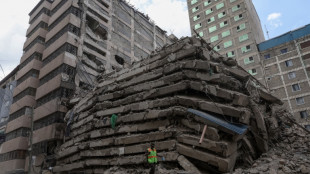 Casualties feared as multi-storey building collapses in Nairobi

 Man Utd defeat to Como 'unacceptable', says Carrick

 Hurzeler 'focused' on Brighton job despite Man Utd links
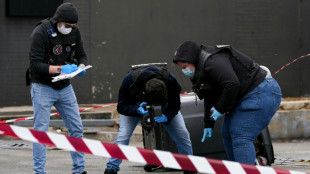
 Hammer blow for Kenya as world marathon champ Jepchirchir suspended for doping
A planned underwater hydrogen pipeline connecting Barcelona and Marseille is a risky project, but one that is key for the European Union's energy independence.
Here's what we know about the joint initiative by Madrid, Lisbon and Paris, which will be discussed on Friday on the sidelines of a summit of southern European Union nations in Spain:
- What is it? -
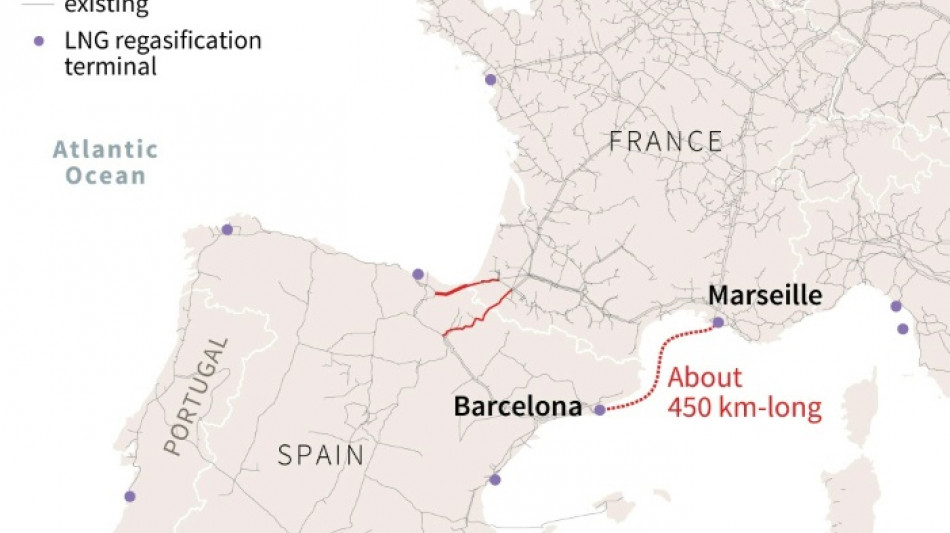
Dubbed "H2Med" or "BarMar" (from Barcelona and Marseille), the pipeline will connect the two ports that both have large oil and gas terminals, initially as a conduit for natural gas and later for green hydrogen, between Spain, France and the rest of Europe.
Announced at an EU summit in October, it offers an alternative to the defunct MidCat pipeline project launched in 2003 to carry gas across the Pyrenees from Spain to France that was eventually abandoned over profitability issues and objections from Paris and environmentalists.
- What are its goals? -
The pipeline aims to reduce Europe's dependence on Russian energy by improving gas interconnections between the Iberian Peninsula and its neighbours.
Spain and Portugal account for 40 percent of Europe's capacity to turn liquefied natural gas (LNG) that arrives in tankers back into gas form, but they are poorly connected to the rest of Europe.
The pipeline will also boost the decarbonisation of European industry, giving it access to clean energy on a large scale which Spain and Portugal hope to produce.
The two nations aim to become world leaders in green hydrogen thanks to their numerous wind and solar power farms.
- Why Barcelona and Marseille? -
According to the project's backers, it is "the most direct and efficient way of linking the peninsula with central Europe".
Barcelona "has one of the largest re-gasification plants in Europe" and occupies "a central place in Spain's gas network," said Jose Ignacio Linares, a professor at Madrid's Pontificia Comillas University.
Marseille is also a key point in the French network and a gateway to the Rhone Valley, northern Italy and Germany -- industrial regions that could become big consumers of green hydrogen.
- What route will it take? -
The route has not yet been decided, but "the most logical" option would be to run close to the shore to avoid deep waters, Linares told AFP.
If that's the case, H2Med would extend some 450 kilometres (280 miles).
- When will it be ready? -
French Energy Minister Agnes Pannier-Runacher told Spain's El Pais daily the pipeline could come online in 2030, while her Spanish counterpart Teresa Ribera said it could enter service in "five, six or seven years".
- How much will it cost? -
The cost of the project has not been revealed. But the European Hydrogen Backbone (EHB), that groups European energy pipeline operators, estimates a two-billion-euro ($2.1-billion) price tag.
Madrid, Paris and Lisbon hope much of the project will be covered by EU funds.
- What are the obstacles? -
"An offshore hydrogen pipeline at this depth and distance has never been done before," said Gonzalo Escribano, an energy expert at Madrid's Real Instituto Elcano think tank.
The innovative project faces certain technical challenges.
One of the main problems is that hydrogen is made up of small molecules which can escape through the joints and cause corrosion, said Linares, an engineer by training.
But such problems could be overcome by "installing a membrane inside (the pipeline), a kind of plastic that prevents the hydrogen from escaping," he said.
- What's the outlook? -
The biggest risk is its economic viability, experts say.
"It is not clear when the green hydrogen market is going to take off and whether Spain will be in a position to produce enough to export it," said Escribano.
But Linares said its construction would take so long "that we can't afford to wait".
"If we do, we'll end up with a huge volume of hydrogen that we won't be able to export."
O.Ortiz--AT