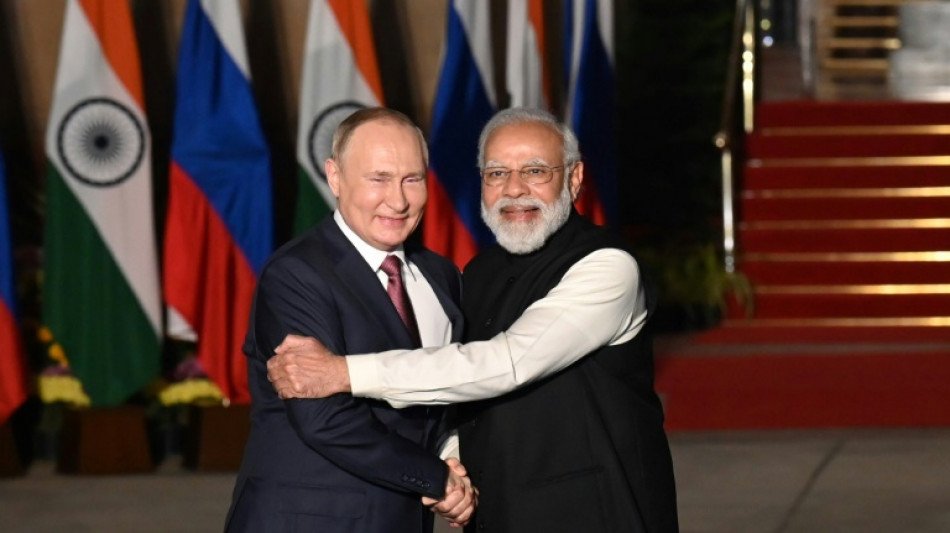
India at 75: Rising power finding its place on global stage / Photo: Money SHARMA - AFP/File

 Barcelona hit seven in Racing Santander rout
 Amorim's Milan beaten by Benfica, Sunderland make dream European return

 US stocks fall, dollar gains after Fed lifts interest rates
 Seahawks rule out Darnold for Sunday game at Arizona
 Mbappe explains Ceuta shirt stance after criticism
 Improving Atletico cruise to comfortable win over Osasuna

 Candidate for UN chief calls for AI regulation akin to nuclear weapons

 O'Neill expects Celtic recovery after Old Firm misery
 Man City midfield trio backed to emulate Rodri and Silva

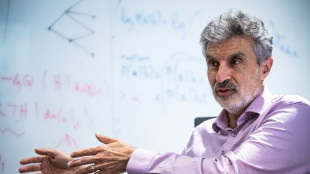 'We're losing control,' AI pioneer Yoshua Bengio tells AFP
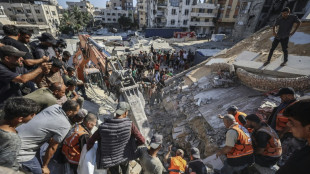
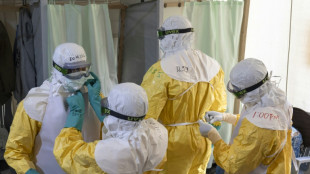 WHO eyes 'encouraging' signs in DRCongo fight against Ebola
 Liga boss criticises Real Madrid trio for Ceuta shirt incident
 WTA Finals moved to Charlotte from 2027
 Almost 8,000 excess deaths in France's scorched summer: statistics

 Ex-president's lengthy war crimes sentence shocks Kosovo
 US House faces test on sweeping Russia sanctions bill

 British PM says to make 'difficult decisions' as inflation rises

 TotalEnergies pumps up controversy in France with cut-price gas
 Global fuel price demos: a round-up

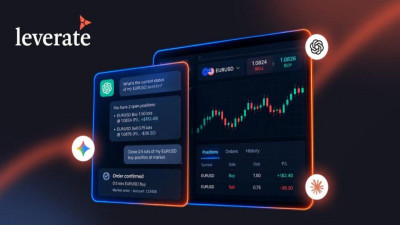 Leverate Launches MCP for Traders to Connect AI Assistants With Trading Platforms

 MEXC Launches $1M "Discover Your Wall Street DNA" Campaign to Help Traders Find Their Market Fit
 Emporio Armani names Dario Vitale new creative director
 Maresca defends VAR officials after Man City benefit from error
 Courts jails LGBTQ activists as Turkey crackdown widens
 French court to hear Depardieu's appeal against rape trial order: sources

Three-quarters of a century after independence, India is a nuclear power about to become the world's most populous country, and its economy has overtaken its former coloniser's to become the globe's fifth biggest.
But New Delhi has challenges to overcome if it is to secure a more central place on the world's diplomatic stage, analysts say.
India wants a permanent seat on the UN Security Council, like the five victors of World War II, including its former colonial power Britain.
A democracy of 1.4 billion people, India stands as a potential counterweight to Xi Jinping's increasingly assertive China and at the intersection of multiple geopolitical issues.
India is the only country to be a member of both the Shanghai Cooperation Organisation driven by Moscow and Beijing, and the US-led Quad initiative of democracies aimed at containing China.
It also co-founded the BRICS grouping that brings it together with Brazil, Russia, China and South Africa to challenge the dominant US- and European-led global governance structures.
For decades, India marginalised itself diplomatically, content with a role within the Non-Aligned Movement, which professed equal distance from both Cold War superpowers, while India shared close ties with Moscow -- still its biggest arms supplier.
Now, a series of heads of government and foreign ministers have visited in recent months.
In the 21st century's changing strategic landscape, India's "ambition to be present, to be heard, to shape and to lead is getting stronger", said Samir Saran, president of New Delhi-based Observer Research Foundation.
But he said the question remained: "Are we ready to bear the responsibility of being such an important actor?"
- India first -
India has a mixed record on the world stage and some compare a non-committal New Delhi to Beijing's actions during the Cold War, when China played both Washington and Moscow to its advantage.
India is the world's second-biggest coal user and third-largest carbon emitter, and was blamed along with China for blocking an international commitment to "phase out" coal last year.
New Delhi insists the dirty fuel is essential for an economy attempting to lift millions out of extreme poverty, and it plans to increase domestic production by 50 percent in the next two years.
Meanwhile, India says it will only aim to reach net-zero emissions by 2070 -- 20 years later than a key global goal.
Three months after visiting Russian President Vladimir Putin lauded India as "a great power, a friendly nation and a time-tested friend", his forces invaded Ukraine.
For months, New Delhi refused to criticise Moscow's actions, abstaining from key UN votes, and as Europe turned away from Russian energy, paying a huge economic price, India upped its purchases six-fold, taking its two-way trade to an all-time high, according to official figures.
- Window of opportunity -
Several factors have come together to present India with a window of opportunity, said Tanvi Madan, Washington-based senior fellow with the Brookings Institution.
Among them are the increasingly fractious economic relationship between the United States and China, and Beijing's decision to remain in self-imposed Covid isolation.
"Countries like the US, some in Europe, others in the Indo-Pacific see India as a geopolitical counterbalance to China and an economic alternative or a democratic contrast," Madan said.
"The big question" for India, she added, was whether it could "take advantage of this window before it closes".
The International Monetary Fund projects that India's economy will expand 6.8 percent this year, more than double the rate of China, and that it will be the world's fastest-growing major economy in 2023.
But so far Vietnam, Taiwan and Thailand have proven more attractive than India as alternative investment destinations to China, despite its vast domestic market, young and growing population, and widely spoken English.
It also has a convoluted bureaucracy and tax regime, a legal system where cases can last for decades, and widespread corruption.
- 'Louder, more present'-
The relationship between India and China themselves is strained by border, trade and technology disputes, and was sent into a deep freeze by a deadly frontier military clash in 2020.
Xi and Indian Prime Minister Narendra Modi have not met since, merely "exchanging courtesies" at the G20 meeting in Indonesia in November.
New Delhi has been building up its military, including its border defences and armaments industry, with a nuclear-powered submarine of its own, and recently unveiled its first locally made aircraft carrier.
Its low-cost space programme made it only the fourth nation to send an orbiter to Mars, and it has plans for a manned mission into orbit.
But it remains well behind China, which has it outmanned and outgunned, having reached those milestones years ago.
"We've probably never had it as good," India's former ambassador to UAE and Egypt Navdeep Suri told AFP.
Even so, "the transition to global power will come on the basis of economic and military strength", he added. "We are still some distance away from that."
But as those capacities increase, said Saran of the Observer Research Foundation, India will become a "more important and influential voice and a player" in pursuit of its own interests and values.
"It is not going to be in service of some other folks' agendas," he said.
"We are going to be louder, more present, and we are going to be more India."
T.Wright--AT