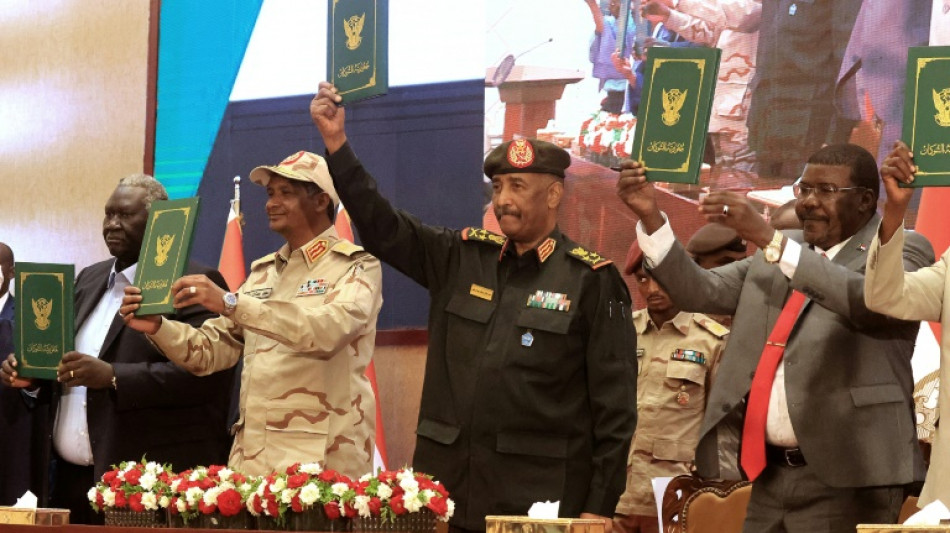
Scepticism greets Sudan's post-coup political deal / Photo: ASHRAF SHAZLY - AFP

 Barcelona hit seven in Racing Santander rout
 Amorim's Milan beaten by Benfica, Sunderland make dream European return

 US stocks fall, dollar gains after Fed lifts interest rates
 Seahawks rule out Darnold for Sunday game at Arizona
 Mbappe explains Ceuta shirt stance after criticism

 Improving Atletico cruise to comfortable win over Osasuna

 Candidate for UN chief calls for AI regulation akin to nuclear weapons

 O'Neill expects Celtic recovery after Old Firm misery
 Man City midfield trio backed to emulate Rodri and Silva

 'We're losing control,' AI pioneer Yoshua Bengio tells AFP
 WHO eyes 'encouraging' signs in DRCongo fight against Ebola
 Liga boss criticises Real Madrid trio for Ceuta shirt incident

 WTA Finals moved to Charlotte from 2027

 Almost 8,000 excess deaths in France's scorched summer: statistics

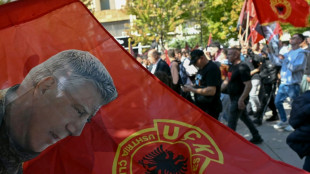 Ex-president's lengthy war crimes sentence shocks Kosovo

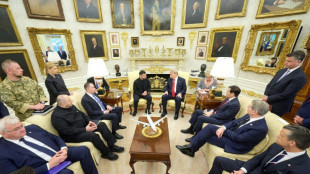 US House faces test on sweeping Russia sanctions bill

 British PM says to make 'difficult decisions' as inflation rises

 TotalEnergies pumps up controversy in France with cut-price gas
 Global fuel price demos: a round-up

 Leverate Launches MCP for Traders to Connect AI Assistants With Trading Platforms

 MEXC Launches $1M "Discover Your Wall Street DNA" Campaign to Help Traders Find Their Market Fit

 Emporio Armani names Dario Vitale new creative director
 Maresca defends VAR officials after Man City benefit from error
 Courts jails LGBTQ activists as Turkey crackdown widens

 French court to hear Depardieu's appeal against rape trial order: sources

The signing of an initial deal by Sudan's military regime and civilians has been widely hailed by the international community, but many at home eye it with deep scepticism.
Sudan, one of the world's poorest countries, has been mired in deep turmoil since army chief Abdel Fattah al-Burhan carried out a military coup in October last year, derailing a transition to civilian rule.
That power grab came just two-and-a-half years after enormous street protests had pressed the army into ousting long-time autocrat Omar al-Bashir.
Many dared believe the resultant power-sharing arrangement would guarantee freedoms and provide justice, but the coup extinguished those hopes, provoking donors into suspending funding and exacerbating a long-running economic crisis.
Events of the last year have also fed into worsening security crises in far-flung regions.
On Monday, senior military figures and civilian groups agreed an accord laying the groundwork for re-establishing a civilian authority -- a move welcomed by the United Nations, Washington, London, Brussels, Riyadh and Abu Dhabi, among others.
The deal, phase one of a two-phase process, was signed by the main civilian bloc, the Forces For Freedom and Change, which had for months opposed engaging with the army in the wake of the coup.
It stipulates that non-military signatories will agree on a prime minister to steer the country through a new 24-month transition.
"The soldiers will go to the barracks, and the parties to the elections," Burhan promised during the signing ceremony, to loud applause.
His deputy, paramilitary commander Mohamed Hamdan Dagalo, even admitted that the coup had been "a political mistake."
But Sudanese analysts, a senior cabinet minister and a regional governor caution that the deal risks being over-hyped.
- 'Merely symbolic move' -
Kholood Khair, founder of the Confluence Advisory, a Khartoum-based think-tank, notes that the agreement improves the international community's perception of Burhan.
But "it works out less well for the civilians ... who will have to do the hard work and sell it to the public."
And "it does not inspire confidence that it will lead to the kind of reforms that people want to see."
Pro-democracy activists have voiced strong opposition to the deal.
Crowds of angry protesters took to the streets on Monday, chanting "no to the settlement" and "betrayal."
"It's merely a symbolic move that should be developed further to a more concrete deal," said Sudanese analyst Othman Mirghani.
Otherwise, "it would be a meaningless step."
Monday's deal sets broad guidelines for a civilian-led transition that largely fell short on specifics and timelines.
It pledges accountability, reforms to the security sector and bars the army from conducting non-military related businesses, in a country where this institution has wide-ranging commercial interests.
Dagalo himself -- head of a long-feared paramilitary group -- has pledged justice to families of people killed by security forces over the years, a key demand of activists.
Signatories to the deal have pledged to hammer out the details of transitional justice, accountability and security reform "within weeks".
Mirghani says such complex issues could instead take months to thrash out.
- 'No trust' -
The deal "is also contingent on... public trust in the agreement and the protagonists," Khair said.
"And frankly that doesn't exist," she added.
The deal was met by strong opposition from key ex-rebel leaders who two years ago signed a peace deal hammered out with the short-lived transition government.
Discussions over implementation of the 2020 peace deal have been slated for phase two of Monday's agreement.
Ex-rebel leader Mini Minnawi, who is also governor of the restive Darfur region, slammed the agreement as "exclusionary."
Finance minister and ex-rebel Gibril Ibrahim said it was "far from a national accord and does not lead to free and fair elections."
"It will be hard to proceed with a comprehensive deal without agreeing with armed groups, most notably those of Ibrahim and Minnawi's," said the analyst Mirghani.
T.Perez--AT