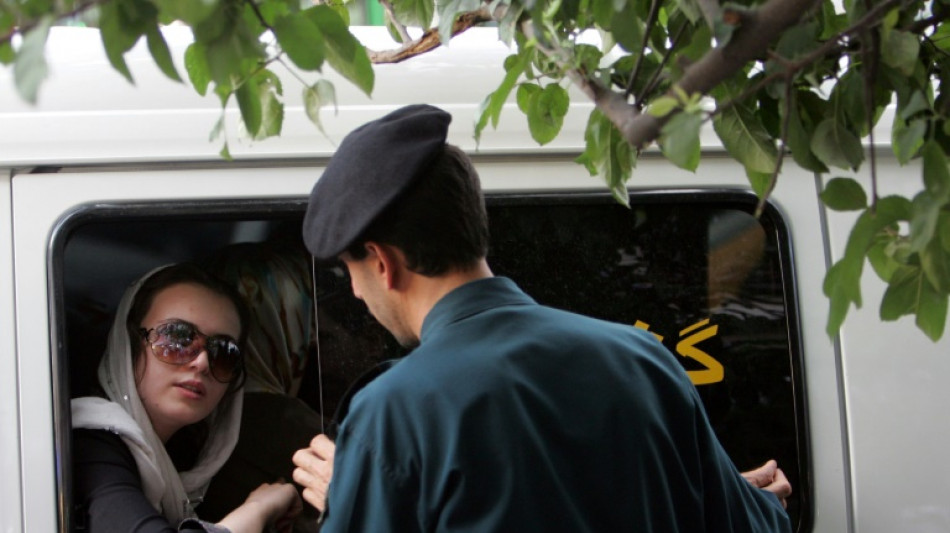
Protest-hit Iran abolishes morality police / Photo: Behrouz MEHRI - AFP/File

 Fitzpatrick 'not comfortable' over Dubai golf finale

 Gaza apartment block collapse kills 21, including 12 children
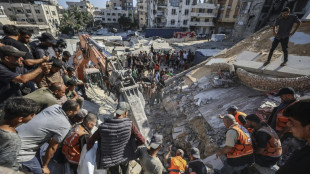 Gaza apartment block collapse leaves 21 dead

 US House targets data centers as midterm backlash grows

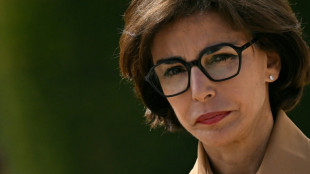 French ex-minister Dati goes on trial in Renault-Nissan corruption case
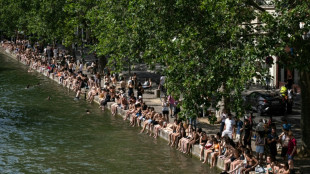
 'Being Heumann' captures joy in fight for disability rights
 Retired great Nadal to play in exhibition matches
 IR-MED and Dice Technologies Announce collaboration to Evaluate and Advance Pressure-Injury Prevention Platform in Japan
 Watts, Pitt, Cruz to light up Spain's top film festival
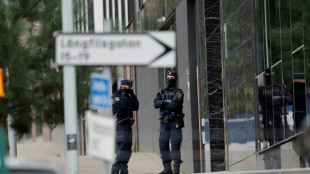 Sweden expels Iran embassy employee over anti-Jewish threats
 Toogood Gold's Table Mountain Sits in the Shadow of a Nevada Gold Rush

 MEXC July–August Security Report: 38.66M USDT in Risk Funds Intercepted, Futures Insurance Fund Hits 792M USDT

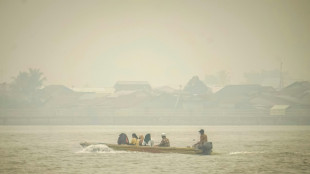 'Breathing toxin every day': Indonesians choked by haze feel helpless
 Stocks edge higher ahead of US Fed rate call

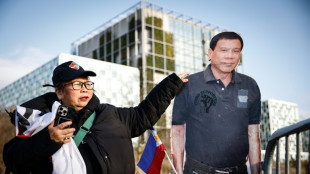
 Philippines ex-leader Duterte makes first in-person ICC appearance
 2027 Formula One calendar includes Monaco sprint race
 Palestinians are the real victims, Thunberg tells Ed Sheeran

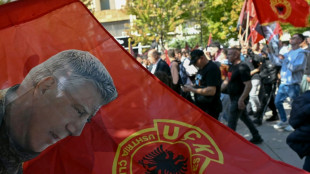
 Hashim Thaci: From 'George Washington of Kosovo' to Hague convict
 Amnesty says Iran committed 'crimes against humanity' in crackdown on 2022 protests

 EU to ban social media for under 13s, curb access until 15
 Philippines ex-leader Duterte makes first appearance at ICC
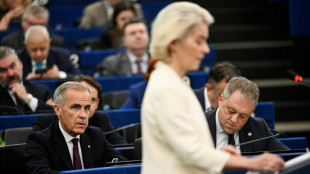 EU chief pitches 'associate member' status for Canada
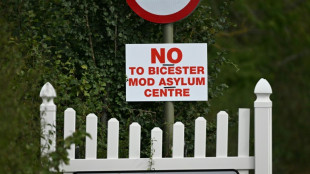 English village votes to 'secede' from UK over asylum centre plan

 Wildfires push endangered Sumatran elephants to brink: Indonesian NGO
 Stocks head higher as traders prepare for Fed decision
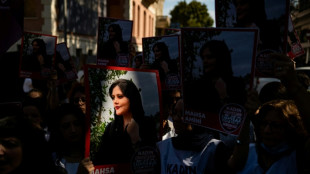
Iran has scrapped its morality police after more than two months of protests triggered by the arrest of Mahsa Amini for allegedly violating the country's strict female dress code, local media said Sunday.
Women-led protests, labelled "riots" by the authorities, have swept Iran since the 22-year-old Iranian of Kurdish origin died in custody on September 16, three days after her arrest by the morality police in Tehran.
Demonstrators have burned their mandatory hijab head coverings and shouted anti-government slogans, and since Amini's death, a growing number of women have failed to wear the hijab, particularly in parts of Tehran.
"Morality police have nothing to do with the judiciary and have been abolished", Attorney General Mohammad Jafar Montazeri was quoted as saying by the ISNA news agency.
His comment came at a religious conference where he responded to a participant who asked "why the morality police were being shut down", the report said.
Since the 1979 Islamic Revolution that overthrew Iran's US-backed monarchy, there has been some kind of official monitoring of the strict dress code for both men and women.
But under hardline president Mahmoud Ahmadinejad, the morality police -- known formally as the Gasht-e Ershad or "Guidance Patrol" -- was established to "spread the culture of modesty and hijab".
The units were set up by Iran's Supreme Council of the Cultural Revolution, which is today headed by President Ebrahim Raisi.
They began their patrols in 2006 to enforce the dress code which also requires women to wear long clothes and forbids shorts, ripped jeans and other clothes deemed immodest.
The announcement of the units' abolition came a day after Montazeri said "both parliament and the judiciary are working" on the issue of whether the law requiring women to cover their heads needs to be changed.
Raisi said in televised comments Saturday that Iran's republican and Islamic foundations were constitutionally entrenched "but there are methods of implementing the constitution that can be flexible".
- 'Spreading corruption' -
The hijab became mandatory in 1983.
Morality police officers initially issued warnings before starting to crack down and arrest women 15 years ago.
The squads were usually made up of men in green uniforms and women clad in black chadors, garments that cover their heads and upper bodies.
The role of the units evolved, but has always been controversial even among candidates running for the presidency.
Clothing norms gradually changed, especially under former moderate president Hassan Rouhani, when it became commonplace to see women in tight jeans with loose, colourful headscarves.
But in July this year his successor, the ultra-conservative Raisi, called for the mobilisation of "all state institutions to enforce the headscarf law".
Raisi at the time charged that "the enemies of Iran and Islam have targeted the cultural and religious values of society by spreading corruption".
Iran's regional rival Saudi Arabia also employed morality police to enforce female dress codes and other rules of behaviour. Since 2016 the force there has been sidelined in a push by the Sunni Muslim kingdom to shake off its austere image.
In September, the Union of Islamic Iran People Party, the country's main reformist party, called for the hijab law to be rescinded.
The party, created by relatives of former reformist president Mohammad Khatami, demands authorities "prepare the legal elements paving the way for the cancellation of the mandatory hijab law".
As recently as Saturday it also called for the Islamic republic to "officially announce the end of the activities of the morality police" and "allow peaceful demonstrations".
Iran accuses its enemy the United States and its allies, including Britain and Israel, and Kurdish groups based outside the country, of fomenting the street protests.
More than 300 people have been killed in the unrest, including dozens of security force members, an Iranian general said on Monday.
Oslo-based non-government organisation Iran Human Rights on Tuesday said at least 448 people had been "killed by security forces in the ongoing nationwide protests".
Thousands of people have been arrested, including prominent Iranian actors and footballers.
Among them was the actor Hengameh Ghaziani, detained last month. She had published on Instagram a video of herself removing her head covering. She was later freed on bail, Iranian news agencies reported.
L.Adams--AT