Concern rises as new Turkish media law squeezes dissent / Photo: Yasin AKGUL - AFP

 US House targets data centers as midterm backlash grows
 French ex-minister Dati goes on trial in Renault-Nissan corruption case
 'Being Heumann' captures joy in fight for disability rights
 Retired great Nadal to play in exhibition matches
 IR-MED and Dice Technologies Announce collaboration to Evaluate and Advance Pressure-Injury Prevention Platform in Japan
 Watts, Pitt, Cruz to light up Spain's top film festival
 Sweden expels Iran embassy employee over anti-Jewish threats
 Toogood Gold's Table Mountain Sits in the Shadow of a Nevada Gold Rush

 MEXC July–August Security Report: 38.66M USDT in Risk Funds Intercepted, Futures Insurance Fund Hits 792M USDT

 'Breathing toxin every day': Indonesians choked by haze feel helpless
 Stocks edge higher ahead of US Fed rate call

 Philippines ex-leader Duterte makes first in-person ICC appearance
 2027 Formula One calendar includes Monaco sprint race
 Palestinians are the real victims, Thunberg tells Ed Sheeran
 Hashim Thaci: From 'George Washington of Kosovo' to Hague convict
 Amnesty says Iran committed 'crimes against humanity' in crackdown on 2022 protests
 EU to ban social media for under 13s, curb access until 15
 Philippines ex-leader Duterte makes first appearance at ICC
 EU chief pitches 'associate member' status for Canada
 English village votes to 'secede' from UK over asylum centre plan

 Wildfires push endangered Sumatran elephants to brink: Indonesian NGO
 Stocks head higher as traders prepare for Fed decision
 English village votes to 'secede' from UK over asylum centre
 Hong Kong unveils plan to align economy with China's goals
 Brazilian voters the latest to eye Bukele security model with envy

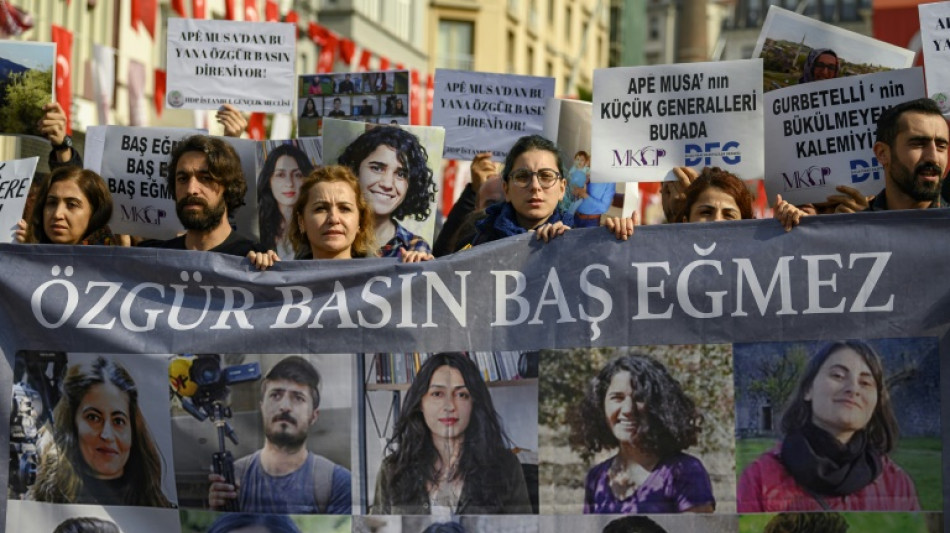
A new law gives Turkey fresh ammunition to censor the media and silence dissent ahead of elections in which President Recep Tayyip Erdogan plans to prolong his two decades in office, journalists and activists say.
Since 2014, when Erdogan became president, tens of thousands of people, from high-school teens to a former Miss Turkey have been prosecuted under a long-standing law that criminalises insulting the president.
The law, passed in parliament in October, could see reporters and social media users jailed for up to three years for spreading what is branded "fake news".
"Prosecution, investigation and threats are part of our daily life," Gokhan Bicici, editor-in-chief of Istanbul-based independent news portal dokuz8NEWS, told AFP at his news portal's headquarters on the Asian side of the Bosphorus.
"Being more careful, trying as much as possible not to be a target is the main concern of many journalists in Turkey today, including the most free ones."
Press advocates say the new law could allow authorities to shut down the internet, preventing the public from hearing about exiled Turkish mob boss Sedat Peker's claims about the government's alleged dirty affairs.
Or, they say, the government could restrict access to social media as they did after a November 13 bomb attack in Istanbul which killed six people and which authorities blamed on the outlawed Kurdistan Workers' Party (PKK).
Most Turkish newspapers and television channels run by allies toe the government line, but social networks and internet-based media remained largely free -- to the dismay of Erdogan.
Next June he faces his trickiest elections yet since becoming prime minister in 2003 and subsequently winning the presidency.
His ruling party's approval ratings have dropped to historic lows amid astronomical inflation and a currency crisis.
- 'Enormous control' -
Digital rights expert Yaman Akdeniz said the law provides "broad and uncircumscribed discretion to authorities" in its potential widespread use ahead of the election.
"It is therefore no surprise that the first person to be investigated for this crime is the leader of the main opposition party," he told AFP.
Kemal Kilicdaroglu, a likely candidate for president in next year's election, came under fire for accusing the government on Twitter over "an epidemic of methamphetamines" in Turkey.
Bicici says the government already had enough ammunition -- from anti-terror to defamation laws -- to silence the free media.
Erdogan has defended the new law, however, calling it an "urgent need" and likening "smear campaigns" on social networks to a "terrorist attack".
Paradoxically, Erdogan himself has a social media account and urged his supporters to rally through Twitter after surviving a coup attempt in 2016.
The government maintains that the law fights disinformation and has started publishing a weekly "disinformation bulletin".
Emma Sinclair-Webb of Human Rights Watch said the government "is equipping itself with powers to exert enormous control over social media."
"The law puts the tech companies in a very difficult position: they either have to comply with the law and remove content or even hand over user data or they face enormous penalties," she said.
- Uneasy future -
Turkish journalists staged protests when the bill was debated in parliament.
"This law... will destroy the remaining bits of free speech," said Gokhan Durmus, head of the Turkish Journalists' Union.
Fatma Demirelli, director of the P24 press freedom group, pointed to "new arrests targeting a large number of journalists working for Kurdish media outlets since this summer."
"We are concerned that this new law... might further exacerbate the situation by pushing up the number of both prosecutions and imprisonments of journalists significantly," she told AFP.
In October, nine journalists were remanded in custody accused of alleged ties to the PKK, which Ankara and its Western allies blacklist as a terror group.
Ergin Caglar, a journalist for the Mezopotamya news agency that was raided by police, said despite pressure "the free media has never bowed its head until today, and it will not after the censorship law and the arrests."
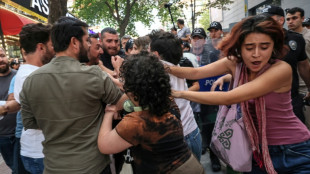
Dokuz8NEWS reporter Fatos Erdogan said reporting is getting tougher, pointing out police barricades to AFP as she filmed a recent protest against the arrest of the head of the Turkish doctors' union, Sebnem Korur Fincanci.
"I have a feeling there will be more pressure after the censorship law," she said.
Erol Onderoglu of Reporters Without Borders who himself stands accused of terror-related charges, said the law "rejects all the qualities of journalism and having a dissident identity.
"I don't believe the future is going to be that easy."
A.Williams--AT