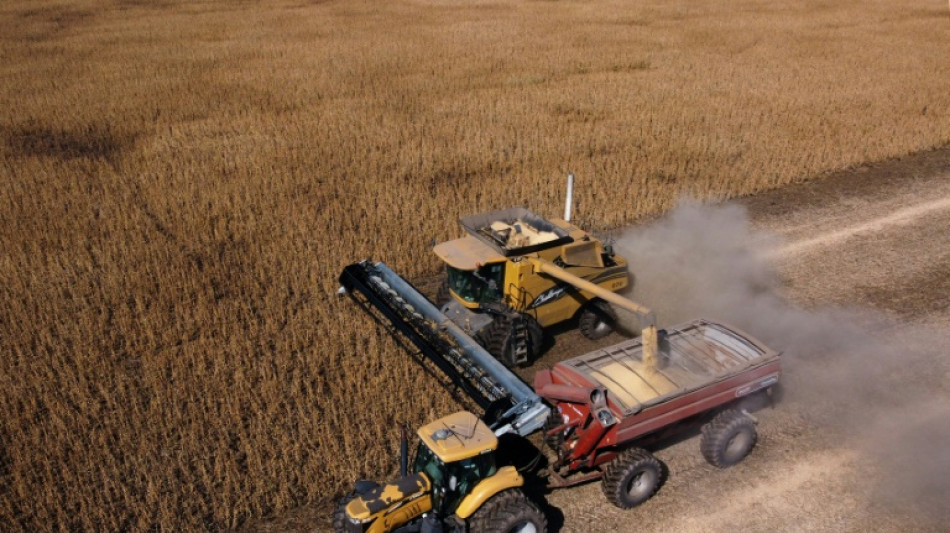
Argentina revives special 'soy dollar' to boost reserves / Photo: Juan MABROMATA - AFP/File

 Brazil's Supreme Court clashes over handling of probe involving judge

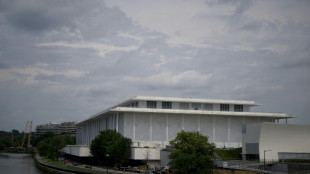
 Trump threatens to keep Kennedy Center shut if his name not added

 i-payout Expands U.S. Money Transmitter Licensing Footprint and Advances European EMI Strategy

 Artists exit Sheeran tour in solidarity with Macklemore pro-Palestinian comments
 Espi saves Real Madrid with late winner at Elche

 Liverpool pile on misery for Spurs in League Cup, Dowman dazzles for Arsenal

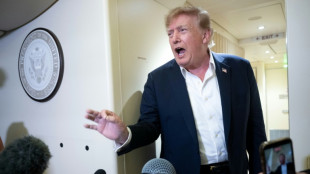
 Trump blasts Supreme Court justices over 'horrible' mail vote ruling

 Maduro ally pleads guilty to US money laundering charges

 Finnish president Stubb speaks to AFP about Trump, Russia and saunas
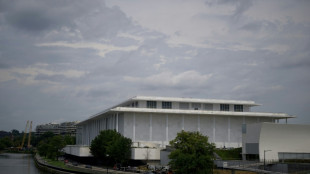 Trump says Kennedy Center to close after judge bars name change
 South Africa intensifies hunt after eight women found dead
 'Battle of Chile' documentary-maker Patricio Guzman dies, aged 85

 Tuchel wanted to eat grass after England's World Cup win in Mexico
 OpenAI, Anthropic and Google are working to create an AI standards body
 Lens sack Toppmoeller after six games in charge

 Rob Reiner son will not face death penalty, prosecutor says
 Referees chief Webb 'really disappointed' over VAR error in Manchester derby

 Maiden Renshaw ODI century sets up Australia win in Zimbabwe
 EU calls Russia 'reckless' after flares fired at Danish helicopter

 US Treasury chief says to meet Chinese counterpart at weekend

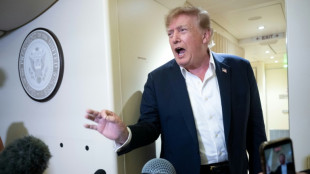 Trump slams 'horrible' Supreme Court mail-in ballot ruling

 Brazil's crisis-hit Supreme Court probes judge's ties to jailed banker
 Sterling admits dangerous driving after Lamborghini crash

 Ambassador to Thailand plays down anti-Israeli protests

 BingX Evolves into a Multi-Asset Trading Platform, Connecting Users to Global Opportunities

Argentinian soy farmers will be able to sell their product at a preferential exchange rate, as the country seeks to shore up its central bank reserves, according to a decree published Monday.
Argentina is one of the world's largest exporters of soybeans and soy oil. However, with year-on-year inflation of 88 percent and constant fears of currency devaluation, farmers often hoard their supplies waiting for a better rate.
The plan is to "increase reserves so that the economy reaches the end of the year with $10 billion available," Secretary of Industry Jose de Mendiguren told Futurok radio.
The incentive kicks off Monday and will last until December 30.
Instead of selling soy products for the tightly-controlled official rate of around 166 pesos per dollar, producers will receive a much higher 230 pesos.
A similar preferential soy rate was applied in September, when soybean sales earned the country almost $8 billion.
Argentina imposed a raft of exchange controls in 2019 in its constant battle to keep dollars in the country and fight low foreign exchange reserves.
These include blocking citizens from buying more than $200 in greenbacks per month.
This has led to a multitude of dollar exchange rates. Demand for scarce dollars is so high that they are exchanged for over 300 pesos at the "Blue Dollar" rate on the streets of Buenos Aires.
The "Qatar Dollar" imposes higher taxes on those using their credit cards abroad -- such as those spending valuable dollars at the World Cup in Doha.
Meanwhile, the "Coldplay Dollar" was the name given to the higher rate applied to entrance tickets to international shows.
"Nobody wants various exchange rates, the economy must be normalized and stabilized. But it is a solution, a tool for the exceptional circumstances Argentina is experiencing," De Mendiguren said.
Argentines have so little faith in their currency that many exchange it into dollars as fast as they can and store it in safes or under their mattresses.
Under an International Monetary Fund deal to refinance debt of more than $44 billion, Argentina must boost its international reserves and reduce its fiscal deficit.
F.Wilson--AT