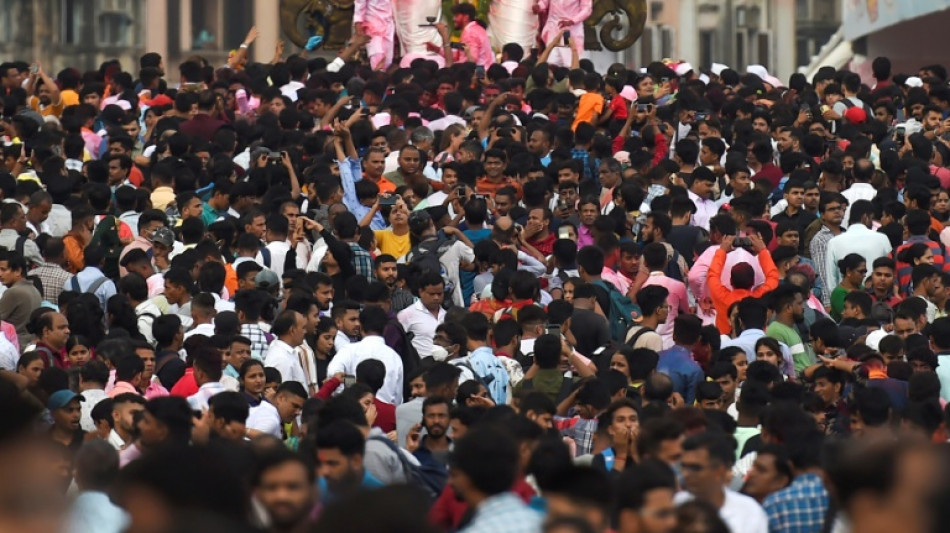
Cities under strain: India's predicted urban boom / Photo: Punit PARANJPE - AFP

 Brighton run rampant against 10-man Coventry

 Late Mbappe goal sends Lille top of Ligue 1

 Five-star Brighton crush 10-man Coventry

 Team Europe beat United States to reclaim Solheim Cup

 US House Speaker warns curbing AI too sharply could leave China ahead

 張國榮70歲誕辰音樂會西九舉行 唐鶴德錄音致意

 Iran's economic ties to Dubai hard to break despite war

 iPhone 18預購後出現可疑扣款 四間銀行調查未授權交易

 《浪花男女》辦特別謝票場 馮志強談票房與導演客串拍攝

 Former captain De Villiers hails 'fantastic' Springboks

 Galaxy Tab S12系列效果圖曝光 Ultra擬配雙鏡頭及瀏海螢幕

 اليورو يستقر في البنوك المصرية وأعلى سعر للبيع 59.85 جنيه

 حمزة قورقماز يناقش العلاقة بين وضوح المبادئ واحترام الاختلاف

 Altman tells Fortune OpenAI will not go public in 2026

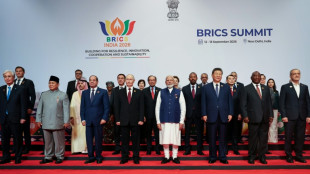 China, Russia, India seek economic cooperation at BRICS

 ستاندرد آند بورز تثبت تصنيف السعودية عند A+
 دول عربية ومنظمات تدين استهداف خط أنابيب في السعودية
 One dead, 102 rescued from stricken ferry off Indonesia's Java
 Garcia keeps WBC welterweight title by stopping Benn
 Lights out in Laos as electricity exports surge

 'This is the test': All eyes on US Fed to tackle high inflation

 Scars of Marawi siege linger as Philippines poll nears

 Trump turns to golf, family business on Irish visit's second day

 Best Online Gold Dealers in USA 2026 Rankings Released By Experts

 South Africa defeat New Zealand 43-28 to complete 3-1 series victory

India is projected to see an explosion in its urban population in the coming decades, but its cities already cannot cope and climate change will make living conditions harsher still.
The metropolis of Mumbai, one of India's biggest, grew by some eight million people in the past 30 years -- the rough equivalent of the whole of New York City -- to a population of 20 million, and is forecast to add another seven million by 2035.
Like other Indian megacities, Mumbai's housing, transport, water and waste management infrastructure has not kept pace, with around 40 percent of people living in slums.
These crowded collections of ramshackle buildings, side by side with some of India's richest neighbourhoods, often have no regular water, power supply or proper sanitation.
As the world's population approaches eight billion, most of them in the developing world, it is a situation replicated globally.
Those living on the outskirts of Mumbai commute for hours to work, with many hanging out of doors on packed trains, and others travelling by car or motorbike on clogged, pothole-filled roads that flood during the monsoon.
In the biggest slum, Dharavi of "Slumdog Millionaire" fame, where a million people live, Mohammed Sartaj Khan arrived from rural Uttar Pradesh as a teenager and works in a tannery.
"My childhood was wonderful in the village. It has a peaceful environment unlike the crowd here," Khan, now 35, told AFP in Dharavi's warren of lanes.
"When I came here, I saw people running like ants," he said. "The way ants keep walking in their lanes despite the crowd... Nobody cares about others."
But in his village, he added, "people don't have money".
At first, he earned 6,000 rupees ($70) a month in Mumbai but now operates a machine and makes four times that, most of which he sends back to his wife and children -- whom he can seldom afford to visit.
- Premature deaths -
The UN projects that India's population will rise from its current 1.4 billion to overtake China's and peak at 1.7 billion in the 2060s, before dropping back to 1.5 billion by the start of the next century.
By 2040, 270 million more people will live in Indian cities, according to the International Energy Agency, driving carbon emissions higher from power generation and transport, and from the production of steel and concrete to house them.
Overcrowding, shoddy infrastructure and severe air, water and noise pollution are part of everyday life in India's megacities.
About 70 percent of the billions of litres of sewage produced in urban centres every day goes untreated, a government report said last year.
Every winter, the capital New Delhi, home to 20 million people, is cloaked in toxic air pollution that, according to one Lancet study, caused almost 17,500 premature deaths in 2019.
- Droughts and floods -
Millions of people in Indian cities have no regular running water and rely on deliveries by truck or train.
People in Delhi and elsewhere are digging ever-deeper wells as groundwater levels sink.
Chennai in southeastern India ran out of water in the summer of 2019, a crisis blamed on both insufficient rains and urban sprawl onto former wetlands.
At the same time, urban flooding is increasingly frequent.
The tech hub of Bengaluru -- formerly Bangalore -- has some of India's worst traffic congestion and saw inundations in September blamed on unauthorised construction.
Natural catastrophes are forecast to cause more and more misery for India's cities as the planet's climate warms and makes weather more volatile.
Scientists believe the annual monsoon rainy season is becoming more erratic and more powerful, causing more flooding and also more droughts.
Rising temperatures are making Indian summers ever more scorching, particularly in urban areas full of concrete trapping the heat. This year, India saw its hottest March on record.
And while Covid-19 did not affect India's slums as badly as some had feared, overcrowding puts them at risk in future epidemics.
Poonam Muttreja from the Population Foundation of India said more investment in the rural economy could stem migration to cities, while new incentives could encourage people to move to smaller urban centres.
"Poor people, especially migrants in cities, are at the worst risk of climate change, whether it is the changes in the weather or flooding, jobs, lack of infrastructure," Muttreja told AFP.
"India has to have a paradigm shift. And instead of complaining, we need to start doing something."
N.Walker--AT